
Your marketing stack might look like a series of AI tools these days. I’m sure that feels either exciting or exhausting, depending on the week you’re having and how much time you’ve spent on LinkedIn today. Either way, it’s true, and the implications for persona work are significant.
The good news is that the tooling is catching up. You just need to understand how the pieces fit together now.
Automatic Persona Generation (APG) is the idea that persona creation can be driven by machine learning rather than manual workshops. The vision has been around for years but the reality is finally worth talking about.
It’s been reported that in 2026, 88% of marketers use AI tools daily, and 93% use AI to accelerate content creation. However, 63% of marketers report inaccuracies in AI-generated content as a significant challenge. Speed doesn’t equal accuracy.
The difference between APG done right and APG done fast comes down to what you’re feeding the system. When AI pulls from generic data and sanitized content, the result isn’t a more accurate persona. It’s just a faster way to get the same shallow answer. And as Michael Brito writes, because AI doesn’t have access to things like group chats, private Slack communities, DMs and other personal communications, it can miss a lot of what defines your audience.

Real APG pipelines combine four distinct layers, and understanding each one is how you avoid building a faster version of the same old mistake.
This is the foundation. Before any LLM touches your persona, you need behavioral signal data to learn where your audience actually spends time, what they read, what they search for, and who they follow. Tools like SparkToro are a good option here.
SparkToro crawls tens of millions of social and web profiles to find what your audience reads, listens to, watches, follows, shares, and talks about online. It also recently added a natural language audience refinement tool to describe an audience, as well as an AI Prompt Topic Discovery tool that surfaces the AI prompt topics your audience is using in LLMs. When building personas for the AI search era, you need to map how your audience talks to AI assistants.
You can upload your email list and it will give you a personalized report of your exact audience. It includes insights like which search and AI tools they use, as well as websites they visit often:
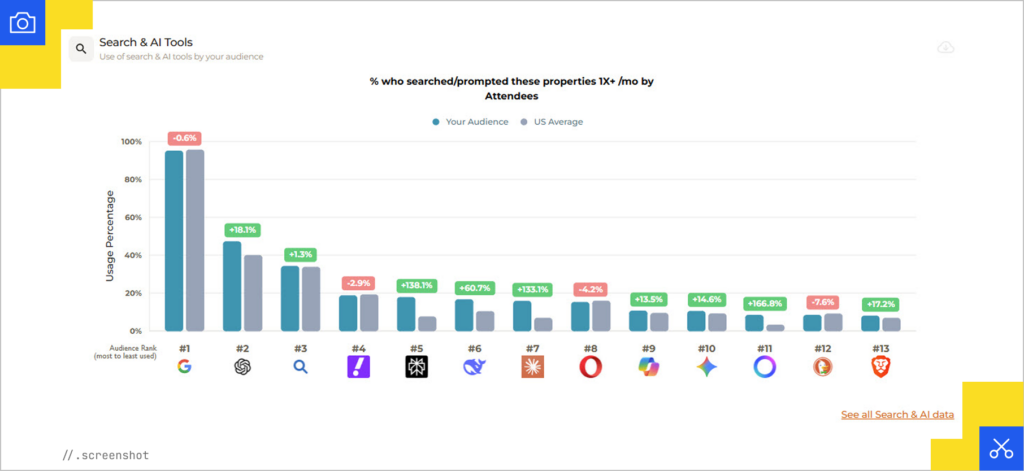
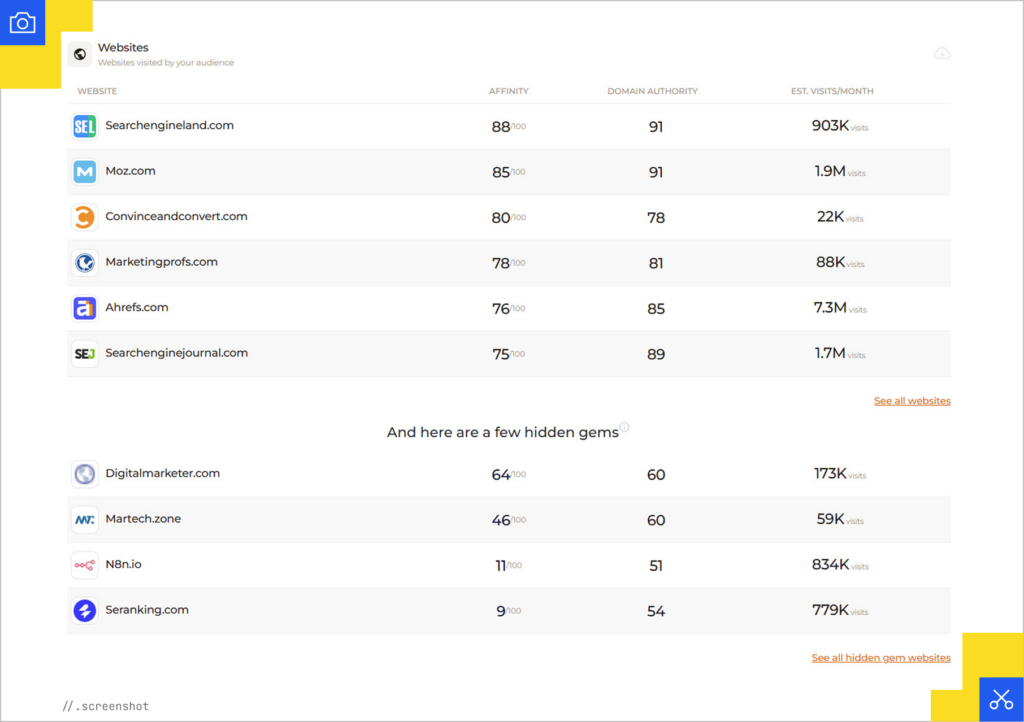
However, SparkToro also offers a free version that lets you enter in a description of your ideal customer and then it creates an audience report for you (you get five free reports a month):
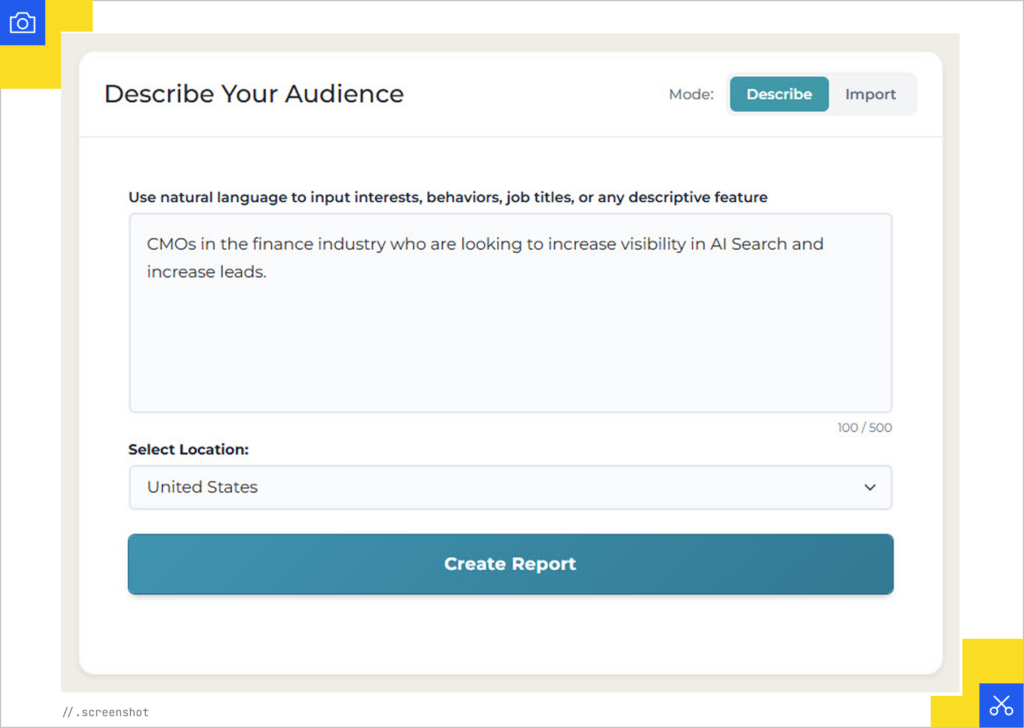
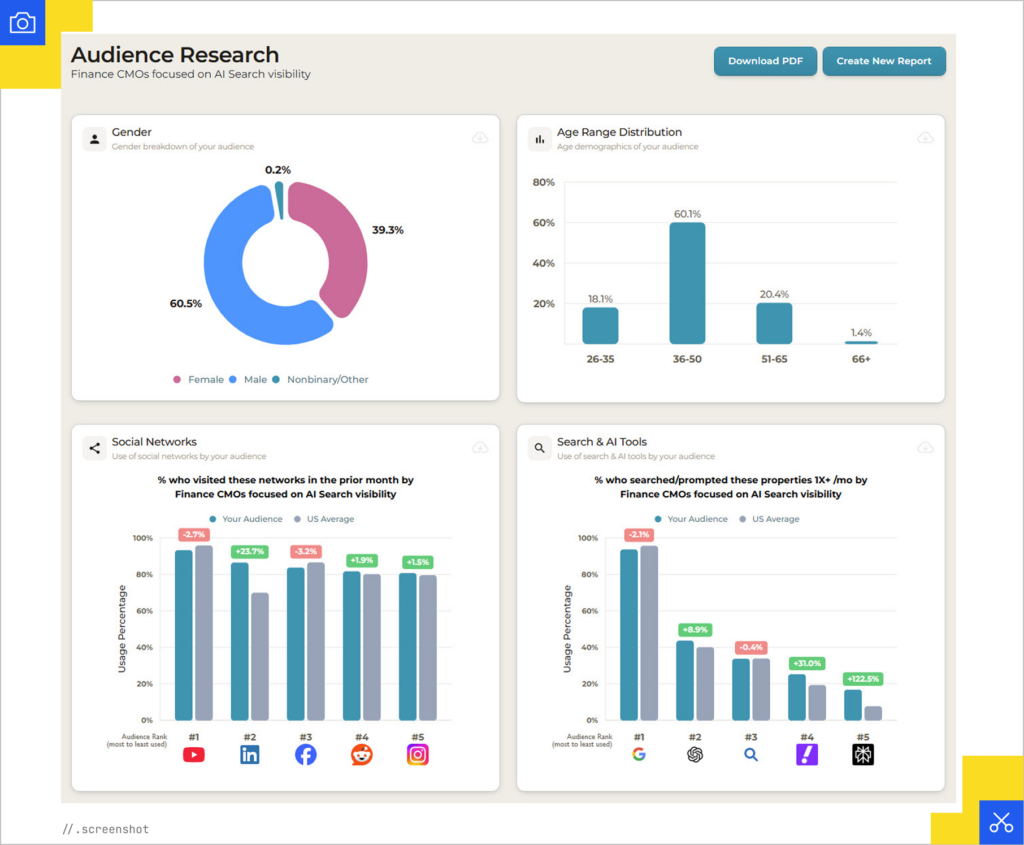
You can see their example of a complete report here.
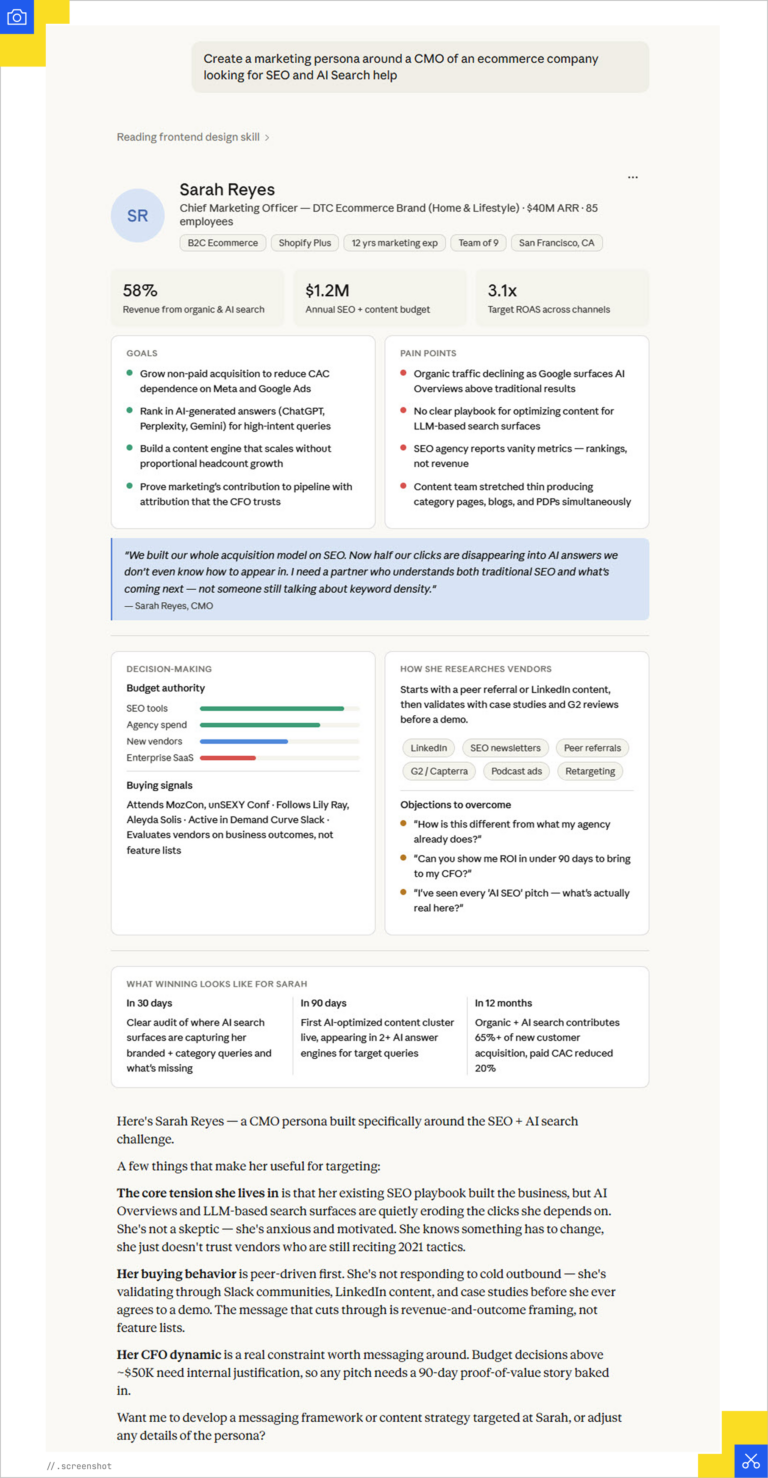
Using an LLM is free as well so you could input your description and upload any information you might have into a program like Claude and it will create a persona for you:
Audience intelligence tells you where people are. Enrichment tells you who they are once you have some of them in your system. This is where platforms like Delve AI come in, which combines first-party data (CRM, Google Analytics), second-party sources (social audience analytics, competitor intelligence), and 40+ public data sources (like data from news, blogs, and reviews) to identify the demographic, psychographic, and behavioral attributes of segments most likely to convert.
Connect your HubSpot or Salesforce data and the platform automatically groups customers into segments based on psychographics, demographics, technographics, transaction history, behavioral patterns, and geographic location, typically generating three to six distinct buyer personas per business.
If your budget is restrictive, HubSpot offers a free “Make My Persona AI” tool in which you describe your ideal customer and it creates a persona overview, like this example I created for a fictional company that sells hiking and camping equipment:

While enrichment gives you attributes, clustering gives you structure (as we discussed in chapter 4). AI conducts high-level clustering of audiences, segmenting based on demographics, purchase patterns, and behavior. Once AI identifies persona segments, the machine learning algorithm can auto-fit customer datasets against them, and as new data becomes available, the models continuously learn and update group information.
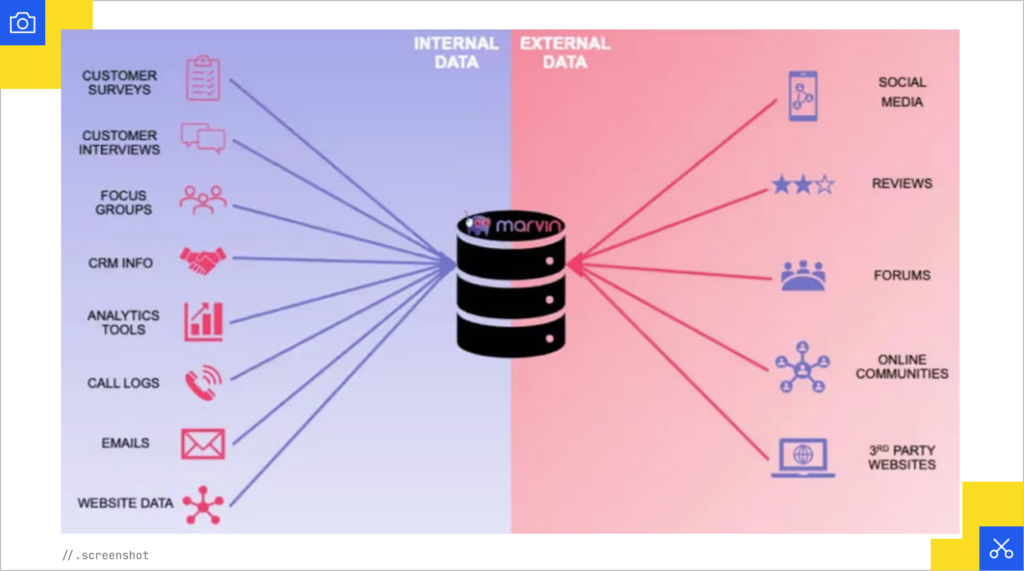
This is what makes modern personas living documents rather than snapshots. Your highest-value segment in Q1 may look different by Q3 and a clustering model using new data can catch that shift.
Once you have behavioral data, enrichment, and segment clusters, an LLM’s job is to synthesize those inputs into a coherent, humanized persona profile: the goals, challenges, motivations, conversational patterns, and content preferences that make a segment feel like a real person.
When AI has access to a centralized knowledge base, it can detect shifts in sentiment, identify emerging audience concerns, and spot recurring behavioral patterns that static personas often miss.
Skip layers one through three and jump straight to the LLM, and you get hallucinated personas that sound credible (we’ll discuss this problem in more detail in chapter 9). Work through all four, and you get something that actually maps to your real audience.
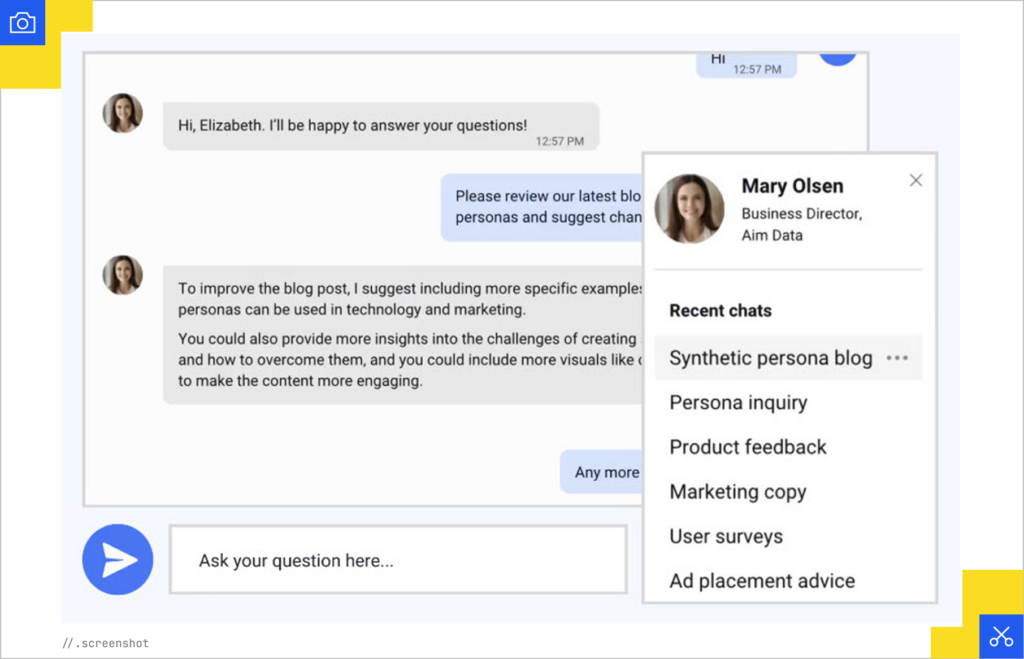
New tools like Delve AI let you chat with an AI version of your persona so you can ask it questions and gain more insights:
The European Union’s General Data Protection Regulation (GDPR) protects the personal data and privacy of EU residents. If you’re building AI-powered persona models using data that includes EU residents, the regulation applies to you regardless of where your company is headquartered. The good news is that the right tooling approach can make compliance easier, not harder.
The cleanest path is synthetic data. As Influencers Time reports, synthetic audiences are built from non-identifiable data and curated solely through artificial means, ensuring full compliance with major privacy regulations including GDPR and the California Consumer Privacy Act (CCPA). They also report that synthetic audience modeling has slashed A/B testing costs by up to 60%.
One important caveat is that synthetic data isn’t automatically GDPR-compliant just because it’s artificial. GDPR does not define anonymity based on how data is created but on whether identification is possible. If identification is possible, GDPR applies. Fully synthetic data generated without correspondence to specific real individuals can fall outside GDPR’s scope. Partially synthetic data, which blends real data patterns with generated elements, typically doesn’t. Document your methodology and know which category your process falls into.
For teams building models on first-party data rather than synthetic sources, privacy-preserving techniques like synthetic data generation, differential privacy, and federated learning (which trains models locally without centralizing personal data) are all viable GDPR-compliant approaches.
So what does a functional persona workflow actually look like in practice? Here’s the architecture that makes sense right now:
Overall, your stack is only as good as the data you put into it, and the persona is only as useful as the intent signatures and behavioral patterns you build into it.
Next, we’ll look into ethical issues with synthetic personas and analyze some objections to using AI for this task.
If your brand isn’t being retrieved, synthesized, and cited in AI Overviews, AI Mode, ChatGPT, or Perplexity, you’re missing from the decisions that matter. Relevance Engineering structures content for clarity, optimizes for retrieval, and measures real impact. Content Resonance turns that visibility into lasting connection.
Schedule a call with iPullRank to own the conversations that drive your market.