

So far, we’ve talked a lot about market segmentation, but once you’ve done all that, you still need to create your personas so you can personalize your marketing to appeal directly to them. You’ll want to build a persona that epitomizes each of the primary segments you aim to market to.
The advent of LLMs has revolutionized how we build and test personas. Why guess how your customers feel when you can simulate them? This allows you to stress-test a new landing page or an ad headline by asking the AI-simulated persona for immediate, data-driven feedback before you spend a single dollar on a live campaign.
SparkToro’s Chief Evangelist/VP Marketing Amanda Natividad said she typically viewed building personas as something the product marketing team would do. But these days the responsibility should be on the entire marketing team.
“I really think it needs to be a true shared effort among the whole team,” she said. “Maybe it’s the VP of Marketing, or whoever is the lead of the marketing team, who’s responsible for it, pulling in information and resources from everyone.”
There’s also more research to include now that there wasn’t before, like where potential buyers are spending their time online.
“You may include a lot of stuff relevant to their demographics and what you know about their motivations,” she said, “but you don’t cover anything like what magazines they read, what blogs they read, the social accounts they follow, so you don’t really know what’s informing their decision.”
In fact, she believes that we should start thinking about them as audience personas, many of whom are probably not going to become customers.
“This includes people like media, creators/influencers, investors — people who influence your customers’ buying decisions,” she said.


I really think [creating personas] needs to be a true shared effort among the whole team.
Chief Evangelist/VP Marketing, SparkToro

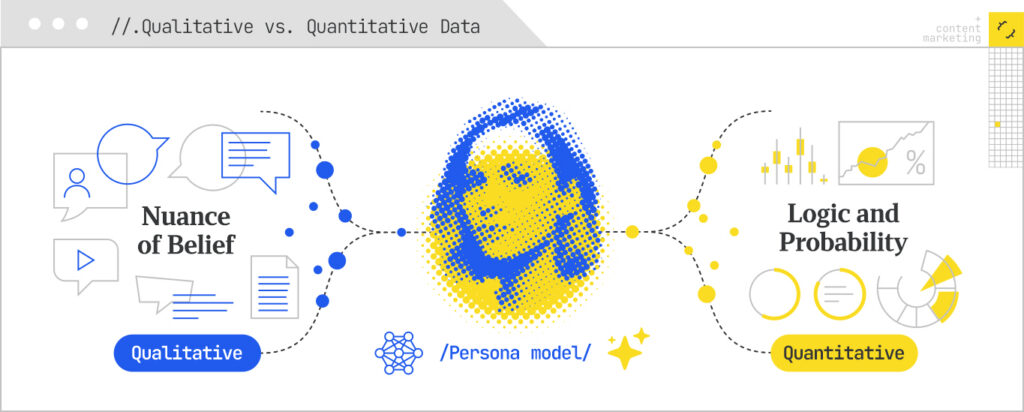
To build a persona capable of being simulated, you need high-quality data gathered through research:
Every persona must also include a detailed Use Case now. It is no longer enough to know that “Accountant Anne” likes gardening. You must detail exactly how she interacts with your product to achieve a specific goal. We are moving from surface-level labels to profiles that include:
A customer journey map shows the stages your customers go through when they interact with your company. However, the journey map is no longer a static diagram. It is a living document that must account for the AI agents now sitting between your brand and your buyer.
Mapping the customer journey is a way to uncover problems and implement ways to make the experience more fulfilling.

Follow these updated steps for crafting your map:
Choose the Type of Map:
Content only works if it’s relevant. And relevance comes from specific personas.
We’ll go into more detail with these steps below.
Once you’ve gathered your research, it’s time to actually build the persona.
Start with one primary persona for each of your key segments.
Your persona sheet should include:
Also map:
Okay, you’ve built your personas. Now let’s actually use them for something.
The internet is currently teeming with generic content and AI slop. Delivering content that’s relevant and informative and that your audience will find useful is only possible if you create it for specific personas and the problems they experience.
As part of your market segmentation and persona research, you’ll have identified the interests and needs of your target audience. During your customer journey research, you’ll likely have uncovered touchpoints where customers aren’t getting the information that they need. Use your customer personas to develop content for your website, blog, on- and off-site SEO, social media, email marketing, marketing automation, and paid media.
New AI tools will be a big part of this process today. According to research by the Digital Marketing Institute, nearly 9 out of 10 marketers already use AI tools in their workflows to streamline workflows and increase ROI.
Use your personas to generate content ideas that actually matter to your audience.
Instead of guessing, build topics based on what your personas care about:
Your segmentation research should have given you a good idea of the type of content your personas are most likely to consume. An older demographic might prefer written content, for example, while the younger generations will probably consume video more often. Choose the format most likely to be accessed by the persona you’re trying to reach.
“You could start with customer interviews, for instance, and ask them what are the publications you read, stuff like that,” Amanda said. “You might not get the perfect answers, but at least you’re going to have a starting point.”
Different personas have different preferences when it comes to where they consume content.
Today’s audiences are spread across a wide range of digital platforms, including:
It’s important to select the channels most likely to reach the person you’re targeting, and develop content in the most suitable format for that channel.
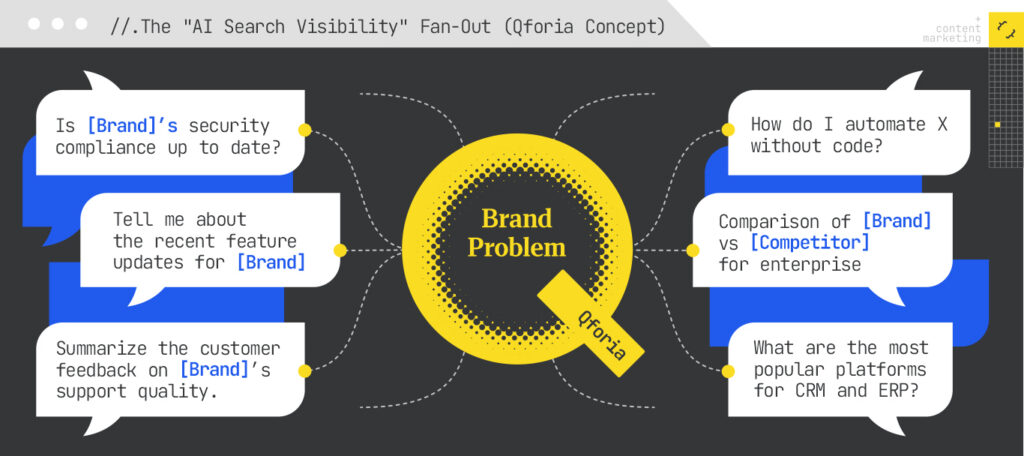
Persona-driven keyword research is much more effective than simply running a list of key terms and search volumes. This works by classifying keywords according to the personas most likely to search for them and their need state, or the stage of the user journey they are in. Aside from standard SEO tools like Semrush or Ahrefs, use a tool like iPullRank’s proprietary Qforia to simulate a query fan-out so your research covers LLM visibility as well.
Next, you choose respondents from each of your market segments who match the customer personas you want to target, and send them a survey asking about their search behavior.
Paid advertising such as PPC models are based on the premise that you pay only for the click-throughs you get. That’s one of the features that makes paid advertising excellent value for money because you aren’t paying for random ads that don’t reach their target. It only works, however, if your audience targeting is very carefully set, so you don’t get — and pay for — clicks that don’t bring business. Create your PPC audiences based on analytics for each persona, and use these to develop look-alike audiences for later ads.
Many ad programs have built-in AI features now, making it easier to generate text or images, improve your bidding strategy, and create better landing pages.
As we first mentioned in chapter 3, A/B testing of your digital content and advertising gives you verifiable data on what resonates with your customers based on their actual behavior, and using AI makes it even easier to create different versions of content. While having comprehensive personas helps you to plan out your testing activities, it also works the other way around. The test results can be very useful in fine-tuning your personas by narrowing down their attributes to make them as close as possible to real users. Whatever assumptions you have about your customers, A/B testing will help you find out how accurate they are.
As you’ve seen, there are many ways you can use both buyer personas and audience personas in your marketing strategy. But how can you measure the results? We’ll dive into that in the next chapter.
If your brand isn’t being retrieved, synthesized, and cited in AI Overviews, AI Mode, ChatGPT, or Perplexity, you’re missing from the decisions that matter. Relevance Engineering structures content for clarity, optimizes for retrieval, and measures real impact. Content Resonance turns that visibility into lasting connection.
Schedule a call with iPullRank to own the conversations that drive your market.

Sign up for the Rank Report — the weekly iPullRank newsletter. We unpack industry news, updates, and best practices in the world of SEO, content, and generative AI.

iPullRank is a pioneering content marketing and enterprise SEO agency leading the way in Relevance Engineering, Audience-Focused SEO, and Content Strategy. People-first in our approach, we’ve delivered $4B+ in organic search results for our clients.


