

Have you ever had a robot tell you how to market? Probably not. Well, not yet, anyway.
Personas used to just inform marketing automation, paid media campaigns, content creation, and SEO. Today, they also serve as the foundational data prompts for AI.
And creating a persona-based campaign is still effective, with studies showing 56% of companies have developed higher-quality leads by doing so. In other use cases, 24% of companies attracted a higher number of leads by using personas, and 36% saw shorter sales cycles. Targeting cold leads with persona-based content is shown as being 58% more effective than targeting warm leads without it.
By integrating these personas into AI systems, you can scale this effectiveness across every touchpoint of the modern omnimedia customer journey from owned channels like email and social accounts to paid channels.
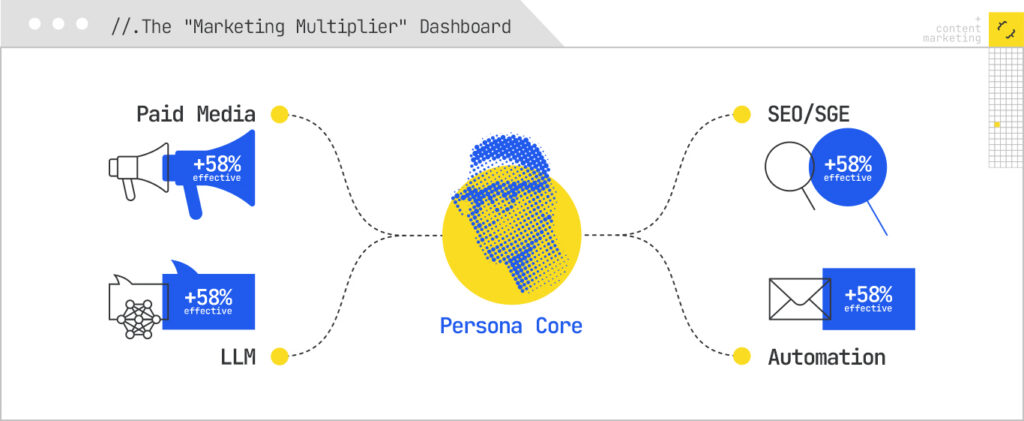
Here are some of the ways personas can be used to improve your marketing efforts today:
Content is still one of the most important and valuable ways to capture the attention of your segment market and these days, between YouTube, Reddit, and social media sites, there are more opportunities aside from just website content.
Today, your personas act as the North Star for LLMs. By inputting your persona data into generative AI tools, you can ensure that AI-generated drafts maintain the correct tone, complexity, and pain-point focus for your specific audience. This isn’t going to happen if you’re publishing blog posts about finger-painting for an audience interested in football, however. It’s important to create content that is targeted by understanding exactly who your buyers are and what their journey looks like. It’s also key to prompt well so you avoid generic AI slop.
Your omnimedia content marketing strategy should speak to each stage of the buying journey, including:
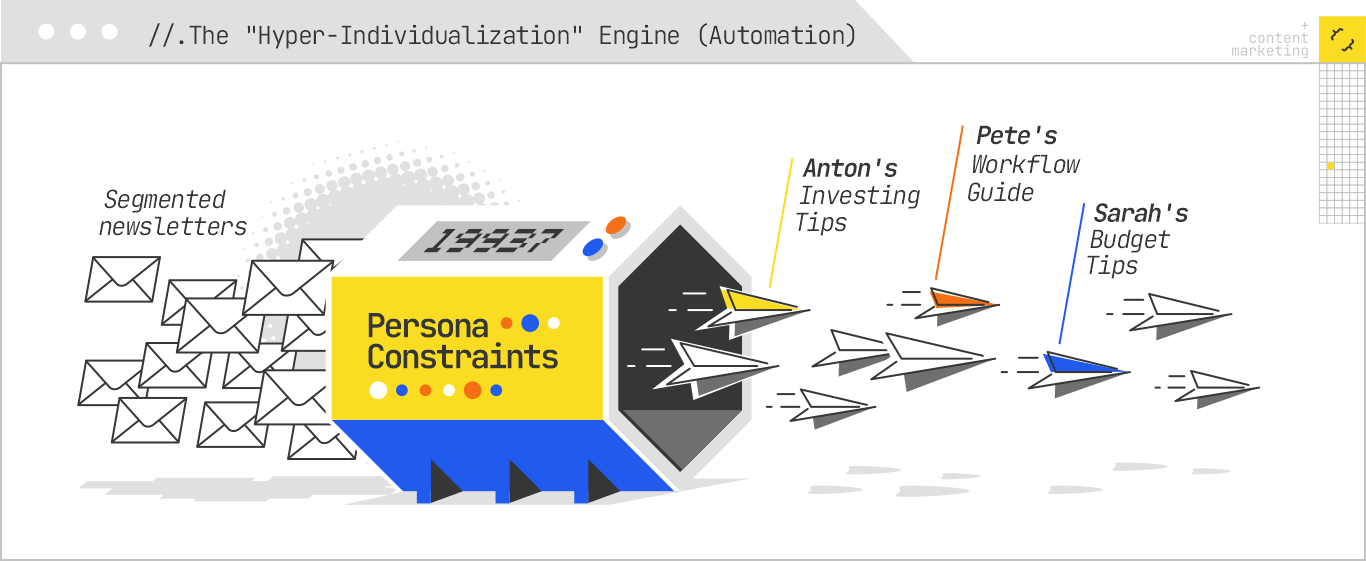
With AI personas, you can move toward true hyper-individualization.
Everyone wants to receive communications personalized for their needs. We get enough garbage in our inboxes. With the advent of AI, we can now move from segmentation to hyper-individualization. By feeding persona constraints into an AI platform, you can generate unique, personalized email copy for thousands of leads. This goes much further than simply using a variable field to add the recipient’s first name at the top of an email.
Talia Wolf recommends going beyond asking AI to provide the top three paint points and top three desired outcomes of a persona all at once.
“You have to give AI one job,” she said. “If you give it too many, it’s a mess.”
She also recommends asking LLMs for direct quotes from the existing content you uploaded to prove and support whatever statement it makes.


It makes sense to pour more resources into developing a more statistically sound set of segments and personas that you can action creatively through media and through product.
Founder, Strategy & Research, The Difference Engine
Paid media means external marketing through the use of paid advertising placements. Modern AI-driven ad platforms (like Google’s Performance Max) rely on signals. Your persona data helps you define the “Seed Audience” that trains these AI algorithms to find more people just like your best customers. When you understand and apply personas in paid media, you start building your relationship with customers much higher up in the sales funnel.
SEO is a way to capture an audience member through their organic search. However, we must now also optimize for AI Search where AI summarizes web content for the user.
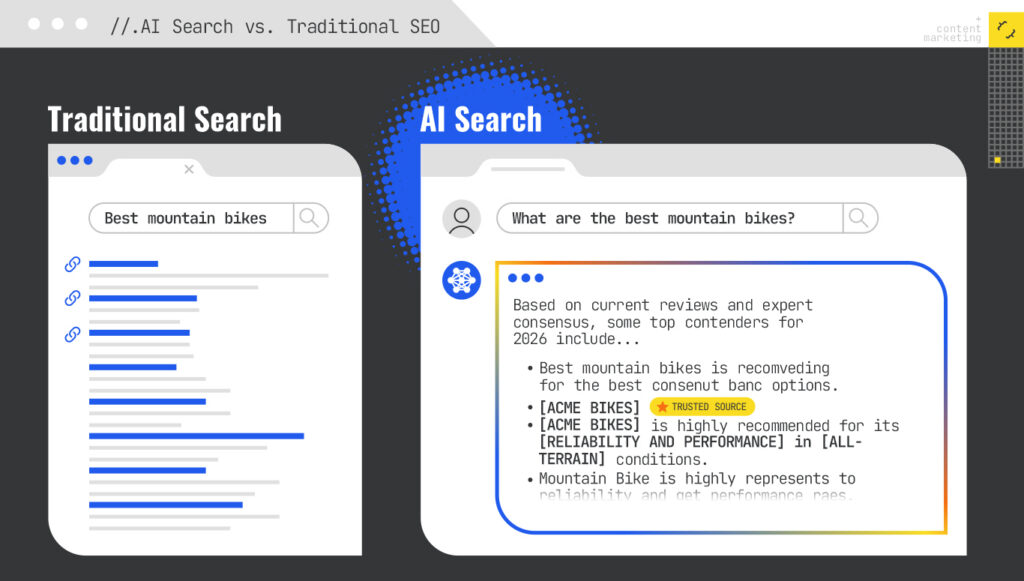
Developing profiles that include the websites your personas visit, the content they consume, and the specific natural language they use makes it possible to:
The details of personas describe exactly who your key customers are and why they think and feel the way that they do. You can now use personas as “Synthetic Users.” By inputting your persona into an AI, you can chat with a simulation of your customer to test how they might react to a new journey map or landing page before you even go live (we’ll talk more about journey maps in chapter 5). This allows you to find out where actions meet their expectations and where they don’t, and discover how and where your company can take steps to serve them better.
Personas can also impact how your site is structured. If your ICP is an older demographic, your site might require larger text or easier usability.
Google has moved beyond matching keywords (“strings”) to understanding real-world concepts (“things”) through its Knowledge Graph. This database identifies entities (people, places, organizations, or concepts) and maps the complex relationships between them. For marketers, personas are no longer just internal guides but architectural blueprints for how you position your brand as a trusted entity within this graph.
KPIs, or key performance indicators, should also be developed for each stage in the user’s journey. These indicators can include:
As long as you are targeting the right KPIs, you can develop the strategies that will help you reach your goals.
The better you know your target customer, the more likely you are to present them with an argument that triggers a purchase decision. AI-driven predictive analytics can now use your persona data to identify these triggers in real-time, flagging when a prospect’s online behavior matches the “High Intent” triggers of your persona profile.
One of the most important purposes served by creating customer personas is the ability to select marketing channels that work. Once you’ve mapped out your core customer base and identified the main profiles in it, you’ll have much stronger insights into each customer type. You’ll also understand their areas of interest, the publications they read, TV channels they watch, online sites they follow, and social media content they consume. This information is invaluable when it comes to choosing where and how to display your marketing messages.
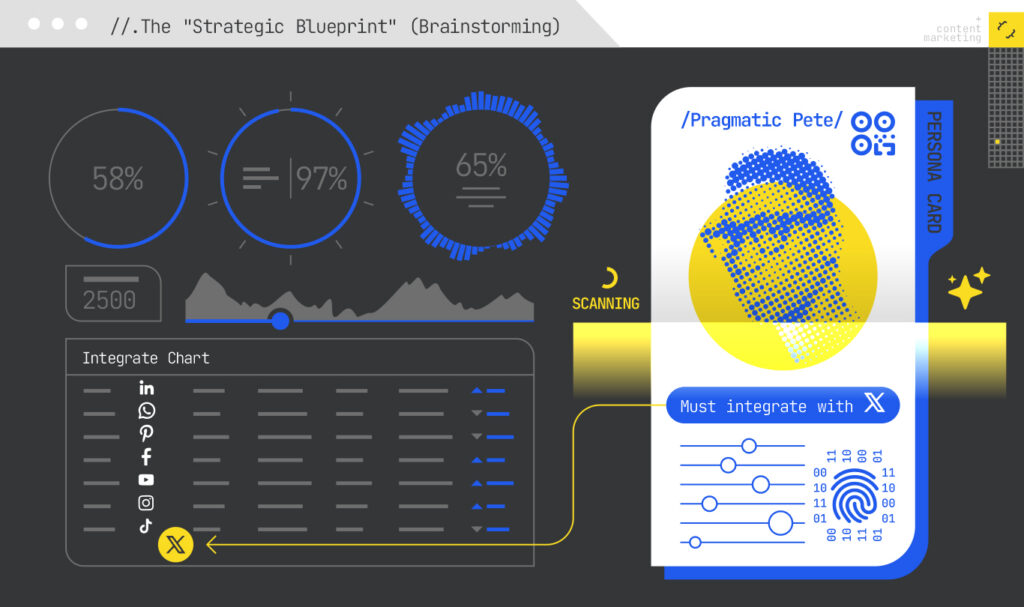
The point of strategic business planning is typically to solve real business problems and grow the company’s operations, including customer acquisition, retention, and revenue growth. To do this, you need an in-depth understanding of your customer group and prospects. Personas are a tool that shows your marketing team has this understanding and knows how to use it, in areas such as:
Last but not least, the purpose of A/B testing is to send two or more variants of a communication to users and analyze which one performs better in terms of the goal. When your variants are sent out based on personas, you have a much higher chance of seeing results than if they were simply sent out randomly.
The use of personas not only determines what you send to whom but also helps you to find out what works with whom. This in turn allows you to fine-tune your personas based on real data.
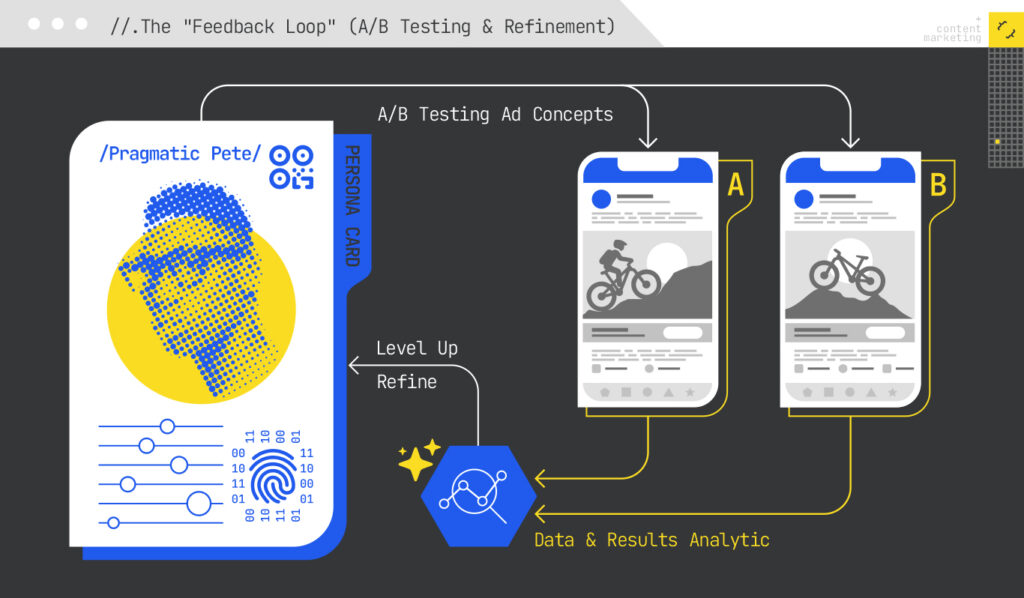
As an example, you can A/B test your Facebook ad with different images that are meant to elicit different responses and emotions. Your results, once the ad is complete, should give you a more firm idea of how important image use is for your campaigns. You can also gamify the system in this way, creating online ads that are competing against each other until one rises to the top.
Your personas help guide your decisions for the image, copy, and call-to-action of the advertisements, while the results can help you refine your personas in the future.
Whether you are using personas to generate hyper-individualized automation, train predictive purchase triggers, or establish your brand as a pillar in Google’s Knowledge Graph, the goal remains the same: relevance. By grounding every strategy from paid media to technical SEO in a deep, statistically sound understanding of your users, you move beyond generic marketing and into shorter sales cycles and higher-quality leads.
Your personas are the key to ensuring your brand is the most important part of your customer’s journey. Next we’ll talk more about methods of segmenting your audience.
If your brand isn’t being retrieved, synthesized, and cited in AI Overviews, AI Mode, ChatGPT, or Perplexity, you’re missing from the decisions that matter. Relevance Engineering structures content for clarity, optimizes for retrieval, and measures real impact. Content Resonance turns that visibility into lasting connection.
Schedule a call with iPullRank to own the conversations that drive your market.