An AI Search platform can show you that a competitor appears in answers where your brand is missing. The next decision is harder: what should your team change, and who has time to do it?
That question belongs in the buying process. A platform demo can make the work look manageable because the data and recommendations are all in one place. Once the contract is signed, those recommendations still have to compete for attention with your product launch and existing content calendar.
If you're deciding between a platform, an agency, or both, start with how the work will get done inside your organization. You'll need someone who can investigate a change in visibility and secure support from the people responsible for fixing it. That person also needs a way to evaluate whether the response was worth the investment.
A platform-only approach works when your team already has that expertise and capacity. If it doesn't, fund those responsibilities alongside the software.
What a Platform Can and Can't Tell You
Checking AI answers manually helps you explore a question, but it leaves you with scattered observations. A platform makes that monitoring repeatable, giving your team a record of how your brand appears across the engines and topics you track.
That record lets you examine a visibility gap by product category and see which competitors appear alongside your brand. You can also look at the role your brand plays in an answer. Being mentioned in a list is different from being recommended to a prospective buyer.
Evaluate the coverage behind those reports. The engines supported, prompts sampled, and frequency of collection determine what the dashboard can tell you. A tracked prompt set gives you a defined view of visibility; it doesn't represent every conversation your customers have with AI.
Apply the same scrutiny to recommendations and automation. If a vendor offers content briefs or automated fixes, ask it to demonstrate the path from a finding to a proposed action. Your team needs to understand the evidence behind that recommendation and the review required before anything goes live.
Data access deserves attention before you sign, too. Confirm what you can export, how much history you can retain, and what happens when the subscription ends. Paying for a platform doesn't automatically mean you can take its full record with you.
Before you sign, ask the vendor to show you:
- Which engines it covers, how many prompts it samples, and how often it collects data
- The path from a specific finding to a proposed action, with the evidence behind it
- The review your team must do before any automated fix goes live
- What you can export, how much history you keep, and what happens when the subscription ends
A Visibility Gap Still Needs a Diagnosis
Suppose a competitor keeps appearing in answers about a product category you both serve. Your platform flags the gap and recommends new content.
Before commissioning an article, someone needs to investigate the answers and their sources. Your existing product documentation might already address the question but be difficult to access. The answers might rely on third-party comparisons that omit your brand. Or the pattern might be too inconsistent to justify a response yet.
Each explanation would lead to different work. Publishing another article before investigating often leaves the original issue untouched.
An experienced lead can investigate those explanations and choose a response your team can test. Even a specialist can't always establish exactly why an AI system produced an answer. You should still expect them to distinguish what they observed from what they think caused it.
The investigation also needs somewhere to go. If the next step requires a change to product documentation, the person reviewing the dashboard needs access to the team that maintains it. If third-party coverage needs attention, PR needs to be involved. An SEO lead can coordinate the program, but they'll need colleagues with the authority and time to act.
Before adding another source of recommendations, check whether your team can work through the ones it already has.
Measure Beyond Mentions and Citations
Visibility reports help you understand how your brand appears in AI answers. Explaining the business value requires a broader measurement plan.
We use three groups of metrics: input, channel, and performance. Input metrics examine the content and technical conditions that support discovery. Channel metrics track visibility, including citations and how the brand is described. Performance metrics follow what people do, including visits and conversions.
Those measures should inform one another. If your team improves product documentation, you can record what changed, monitor the relevant answers, and watch for changes in customer behavior. That gives you a basis for evaluating the work without assuming that every movement in a dashboard is a result of it.
We also treat AI Search as a brand channel. An answer can introduce your company or influence how someone evaluates it before they visit your website. Our approach to AI Search measurement accounts for both brand and performance goals.
For your organization, that means agreeing on the evidence leadership will find useful. Alongside identifiable referrals and conversions, you might examine branded search trends or ask buyers how they discovered you. Those signals inform the assessment, but a rise in branded search alone doesn't prove that AI Search caused it.
A good agency helps you design and interpret that measurement, and it's clear about what the evidence cannot establish.
When an Agency Is Worth Hiring
An experienced agency helps your team investigate unfamiliar patterns and turn findings into work. Its exposure to other accounts provides useful hypotheses, though those still need to be tested against your market and your customers.
Ask prospective partners to walk you through a decision they've made:
- What did they observe?
- What other explanations did they consider?
- What did they change, and how did they evaluate the result?
That conversation will tell you more about their judgment than a dashboard screenshot.
Look closely at delivery as well. If the recommendation involves content, PR, and technical changes, the proposal should identify who does each part and what your team must provide. An agency adds expertise and capacity, but your organization still controls internal priorities and approvals.
The content itself needs to serve the people you want to reach. We use Resonance Design to connect audience needs with content and experiences that encourage action, alongside the technical work of Relevance Engineering. For your team, that means evaluating whether a proposed page helps a buyer understand a decision as well as whether it can be found in search.
An agency relationship also needs clear terms for access and learning. Your people should be able to inspect the underlying evidence, understand the recommendations, and retain the agreed records when the engagement ends. If developing internal expertise is part of the brief, give it deliverables and review dates.
Ongoing agency support still has value after your team learns the process, whether that's specialist help or production capacity. Make that choice knowing what your team can run independently.
Assign the Responsibilities Before You Choose the Vendors
The work is easier to budget when you separate what the software provides from the responsibilities people must carry.
Your in-house team may already cover much of the right-hand column. The buying decision should reflect that. Hiring an agency to duplicate established capabilities is as wasteful as buying software nobody has time to use.
Match the Investment to Your Team's Readiness
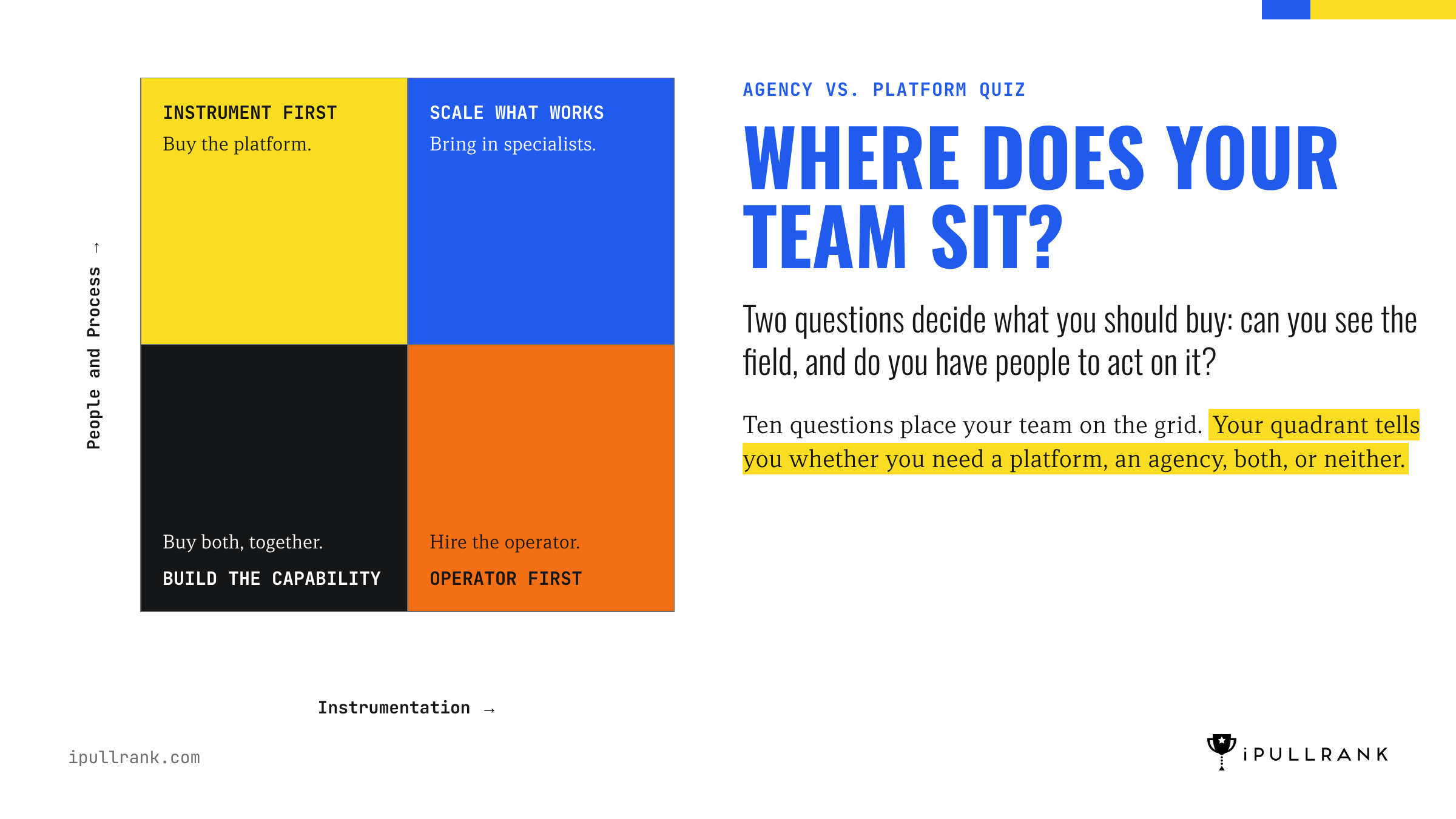
Assess your access to reliable data separately from your ability to act on it. The quiz below scores both: instrumentation (whether you have useful visibility data) and people and process (whether your team has the expertise and working process to respond).
Each profile is named for its next move. When you finish, we'll email you the playbook for your profile. The matching section below explains where additional investment would help.
Instrument First: Add Reliable Monitoring
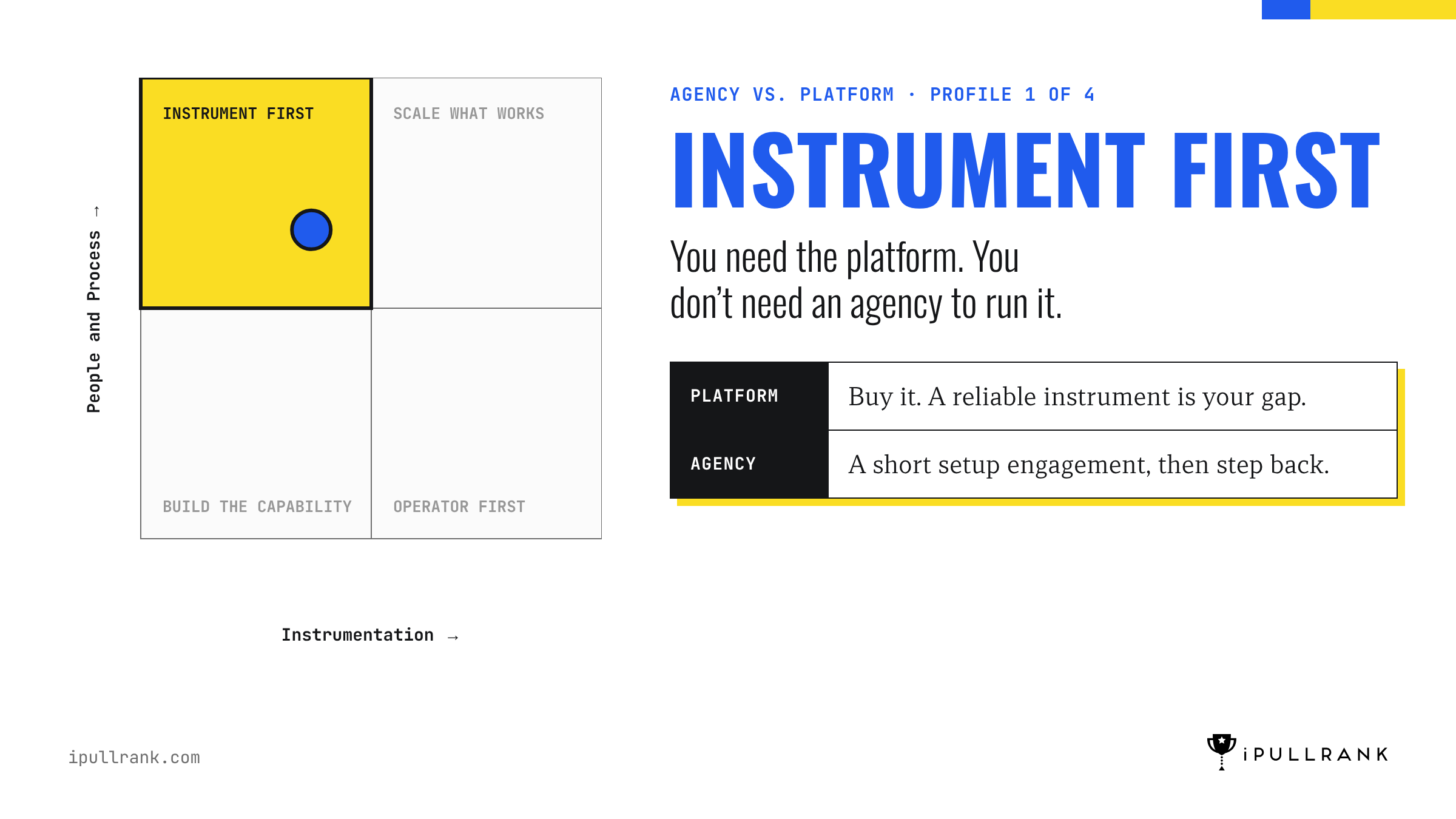
Your team has the experience to investigate visibility changes and coordinate a response, but its view of AI Search depends on manual checks or scattered reports. Better monitoring would give that expertise a more consistent basis for decisions.
Focus the platform purchase on coverage and usable data. A short setup engagement helps establish the reporting process without creating a need for ongoing outside management.
Before committing, ask the people who will use the platform to work through a real finding during the evaluation. Their questions will expose gaps a feature checklist won't.
Operator First: Add Expertise or Capacity
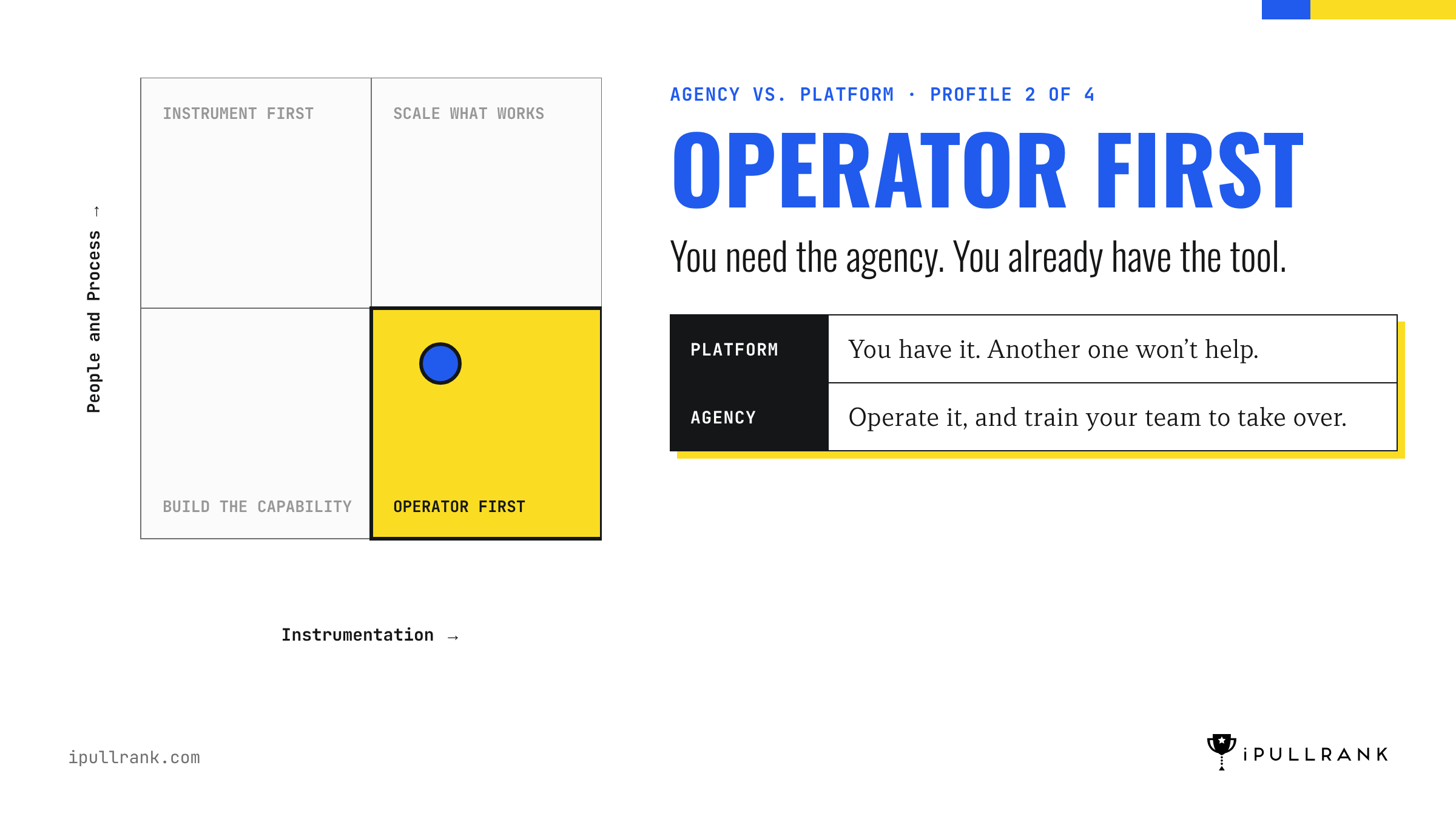
You have visibility data, but the findings aren't consistently leading to action. Before adding support, establish where the work stops. Your team may need help interpreting the data. It may already know what to do and lack the time to deliver it. Or the work may be waiting on approvals outside marketing.
Scope support around that constraint. A specialist who diagnoses problems won't solve a production backlog unless delivery is included. Additional writers won't resolve an approval process that nobody can move forward.
Build the Capability: Develop the Data and the Team
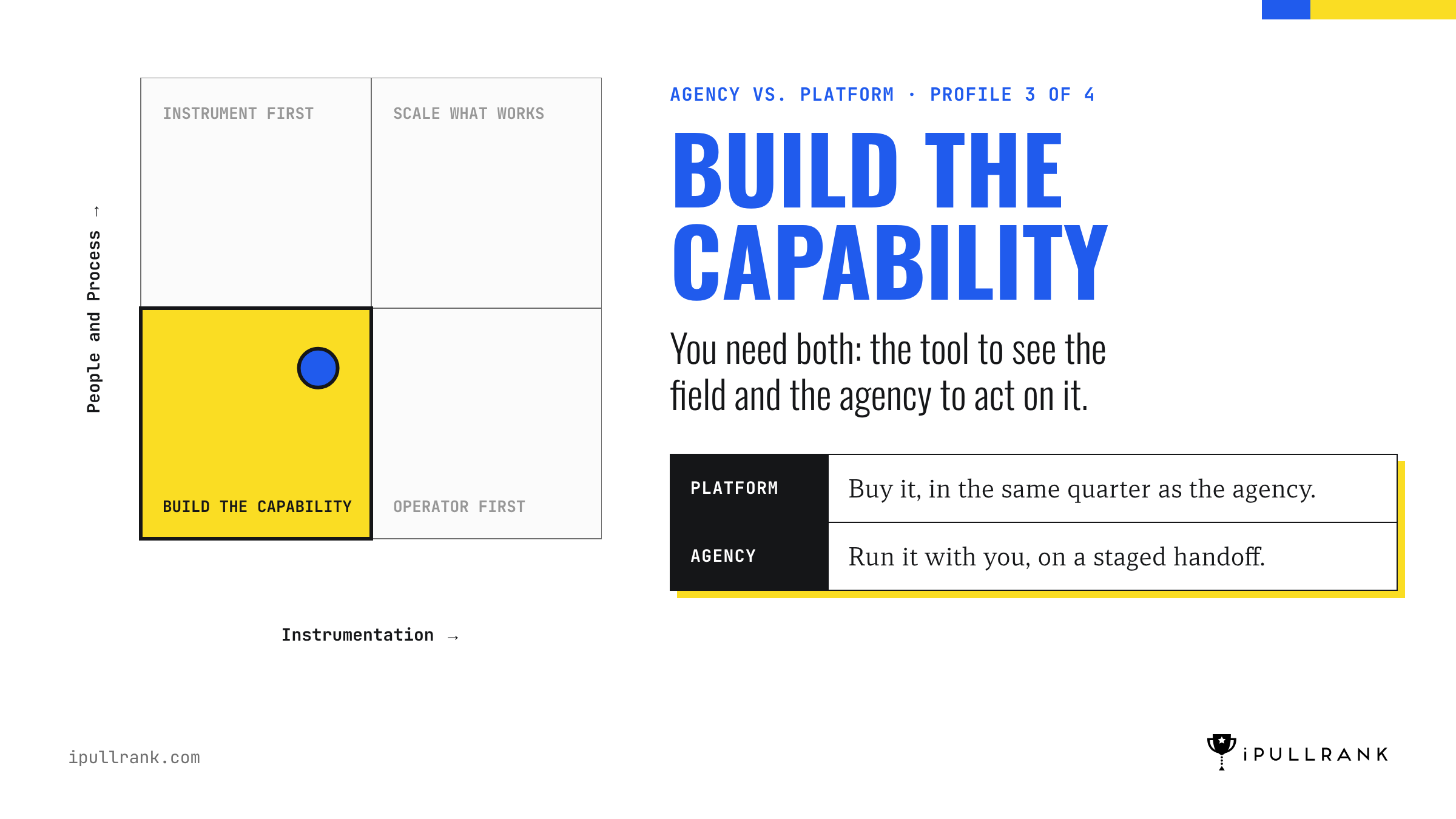
You need more consistent monitoring and people who can turn it into useful work. Budget for both from the start. You can combine a platform with agency support, hire internally, or use a mix of the two.
Keep the initial scope manageable. Choose a business area where the team can establish a baseline, investigate findings, and complete changes. Set an early review point to assess the quality of the decisions and the work delivered. Commercial results take longer to evaluate.
Scale What Works: Expand Selectively

Your team has reliable monitoring and a working process for investigating findings and delivering changes. The next investment should address a specific limit on what it can accomplish.
That might mean support for a new market, a technical problem, or more content than your current staff can maintain. Scope outside help around that need and agree on how you'll evaluate its contribution.
Your internal owner keeps responsibility for the program while bringing in additional expertise where it earns its cost.
Put the Working Arrangement in Writing
If you choose a platform and an agency, define how they'll work together before treating the budget as settled.
Name an internal owner with enough authority to coordinate the work and enough time to participate. Give that person direct access to the platform and make clear which decisions they can approve.
Agree on a review schedule. A weekly review examines meaningful changes in the tracked answers, assesses proposed responses, and assigns the next actions. Keep a record of the evidence and reasoning so the team can revisit decisions when results come in.
The agency's responsibilities should be equally specific. For each proposed change, expect an explanation of the evidence, the intended effect, the delivery owner, and how the result will be assessed. Your internal teams need to know what is coming and what they're expected to contribute.
If the aim is to bring more of the work in-house, define progress through responsibilities your people can demonstrate. They start by reviewing findings alongside the agency, then take over prioritization and eventually run the review themselves. Check progress quarterly and adjust the support as needed.
A 12- to 18-month transition can be a planning target, but the pace should reflect your team's staffing and ability to take on the work. Agree on what will transfer and how you'll know the team is ready.
Before signing either agreement, ask your proposed internal owner to describe what happens when the platform flags a problem on Monday. They should be able to name who investigates it, who decides on a response, and how that response gets delivered.
Any unanswered part of that process belongs in the budget conversation.
If you haven't taken the readiness quiz yet, start there. We'll email you the playbook for your profile, with the steps to close those gaps.
Take the Quiz >