
Who has the time to buy products online anymore? With the onslaught of new artificial intelligence advancements comes agentic commerce, an automated checkout that puts the purchasing power in the hands – grippers? – of AI agents.
For your brand to be ready for this new age of ecommerce, your site must meet certain technical requirements. More importantly, your content must also be up to par. Let’s discuss the ways product descriptions are evolving and how you can beef them up to catch the attention of these clankers.
What Is Agentic Commerce?
Agentic commerce is a recent advancement in online shopping where artificial intelligence agents can compare products and make purchases on a user’s behalf. These agents provide streamlined options for the shopper, which cuts out much of the manual research and decision-making that was once required.
You can type in a specific prompt with parameters for size, color, material, price, local availability, and more. The agent will spit out a few options for you, and you don’t even have to open a new tab.
This new ability cuts out the human middleman that would potentially spend hours online, scouring results, suffering from analysis paralysis, before eventually making a purchasing decision. Now, the bots are designed to give you what they deem is exactly what you’re looking for.
Current agentic commerce partnerships
Major players like OpenAI, Google, Wal-Mart, and Perplexity are among the growing number of brands that have announced agentic commerce protocols over the last couple of years.
Here’s a quick look back at the latest advancements:
- January 12, 2024: Constructor launches AI Shopping Assistant
- October 15, 2024: Google relaunched Google Shopping with Gemini for AI-enhanced commerce
- November 18, 2024: Perplexity announces Buy with Pro
- January 28, 2025: OpenAI introduces Operator agent that can complete tasks like shopping and ordering on a user’s behalf
- April 29, 2025: Mastercard announces partnership with Microsoft for Agent Pay
- May 14, 2025: Perplexity partners with PayPal to offer Agentic Commerce
- September 16, 2025: Google announced Agent Payments Protocol (AP2) through Google Cloud
- September 29, 2025: ChatGPT and Stripe rollout the Agentic Commerce Protocol
- October 14, 2025: Walmart announces partnership with OpenAI for Instant Checkout
- October 14, 2025: Salesforce announces partnership with Stripe and OpenAI to also support Agentic Commerce Protocol
- October 28, 2025: OpenAI partners with Payal to support more merchants in Instant Checkout
Agentic commerce in action: Who’s using it?
The folks most likely to use this shiny new AI functionality are those who have already played around with LLMs like ChatGPT and Perplexity. 250 million customers have used Amazon’s AI shopping assistant, Rufus, this year – up 140% compared to 2024.
Virtually anyone can take advantage of these tools, as they’re designed to be super easy to use. It’s as simple as chatting with your friendly neighborhood robot, so even your Boomer Mom could do it if she wanted to.
Agentic commerce allows for more personalization for the customer. The agents remember each user, their preferences, location, past purchases, and more. This allows for less fluff, and more things they care about.
Agents will give direct answers. That means, there’s no room for upsells, especially if a user prompts the agent with specific dollar-amount limits. Agentic commerce could raise conversion rates because these users are ready to make a purchase. However, this allows for fewer opportunities for a brand to “interact” with a consumer. Many buyers may not even see your site’s homepage (or About Us) before they confirm a purchase.
So, your content strategy needs to cast a wider net.
Your Content Strategy Should Go Beyond Your “Pages”
In these early stages of agentic commerce adoption, now is the perfect time to get your product listings ready.
User search behavior is ever-evolving. Conversations with bots are quickly becoming more purchase-focused, essentially skipping the Consideration stage in the traditional user journey. Instead of educational “pros and cons” or comparison questions, users can now type in actionable queries like, “Find me this specific product.” They’re ready to buy when they make these searches, and they often don’t want to do the thinking.
These changes reduce the multi-stage funnel that we marketers are used to. You’re now “marketing” to the third-party agent, who will pass info on to your customers. The agent will do their dirty work – reading product descriptions, comparing reviews, and providing a few options, as well as a button to complete the purchase.
Check out James Cadwallader’s talk from SEO week.
Opportunities in ecommerce content strategy
In agentic commerce, if you’re not visible to the agent, you lose your chances of being shown as an option to the user. You must ensure that your site is properly structured for agents to easily find information about your products, related items, and benefits for a customer.
It’s important to consider how you present your brand in this new conversational marketplace. Here are some factors to consider when approaching your ecommerce strategy in 2026:
- Optimize your product listings to show the most helpful information, taking into account a user’s search intent. Now more than ever, personalized results are crucial.
- Update, improve, and differentiate your brand’s voice and tone guidelines. Your brand personality is not only expressed through copy, but through how AI agents interpret and communicate your identity across channels.
- Expand your targeted personas. Refer to existing customer data to analyze which audience segments are most likely to use AI assistants to shop or make decisions. Then, shape your customization to fit those users’ behavior.
- Run a competitive analysis to track which brands in your industry are optimizing their data, product feeds, and APIs for agentic commerce.
Is Your Brand Ready for Agentic Transactions?
Before you can plan out your content strategy, your site needs to be technically ready for agentic commerce. Structured content is more likely to be visible to AI agents. At the least, each product should have clear information on real-time pricing and availability.
Personalization is also key. Your site must be set up with the proper behavioral metadata and APIs that allow your site to speak to agents, helping them decipher user behavior and intent. This is where you can set up triggers to show related products or packaged deals based on user behavior.
OpenAI and other platforms require certain technical specifications. Your site must be ready with the proper structured data to allow LLMs to properly crawl and synthesize your product offerings. Also, sellers aren’t automatically entered into OpenAI’s Agentic Commerce Protocol. You must apply to have your marketplace join, and they’re accepting new sellers on a rolling basis.
Product Descriptions Will Become a Part of Your Brand Story
We are now in a new era of product discovery and purchase. AI agents acting as the middleman may cause unease for some marketers. How do we connect with our audience if we’re supposed to be marketing toward bots? While there may be a gap in the customer relationship, brands and marketers still have the opportunity to show their voice, tell their brand story, and stick out among the competition – you just need to make sure these agents can read it first.
It’s crucial to put forth an ecommerce content strategy that is unique and shows value. In your product descriptions and other attributes like Q&A sections, your brand’s personality should shine. Agents will show users snippets from those areas of your site. So, while the customer may not visit your site directly, they can still read the synthesized content that AI presents them with.
It’s still not about keyword-stuffing
As with other evolving SEO tactics, agentic commerce is about more than just keywords. It’s about context and understanding to provide consumers with the best match for their needs. Sure, we all love the desperately over-optimized Amazon product listing, but ecommerce SEO isn’t – and never was – about simple keyword stuffing.
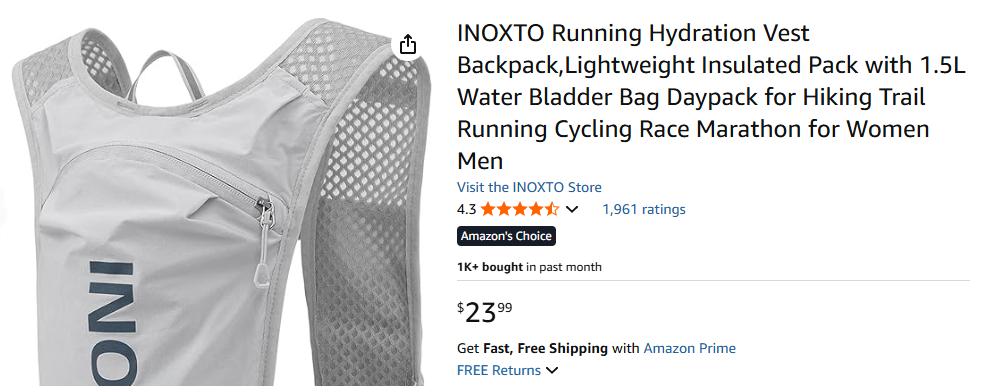
Name your product what it is in plain and simple terms, and then use your descriptions, related products, questions and answers, and other details to showcase what makes your product special.
This is where it’s important to have voice, clarity, and context within your content. Capture the emotional appeal, introduce the value for the consumer.
Expand the Capabilities of Your Ecommerce Product Listings
In this new Agentic Commerce Protocol, OpenAI combines structured data into a single feed of information, compared to Google’s split-feed system. Through this multi-modal application, brands now have more opportunities to provide agents with information about their products, in ways that enhance personalized customer experiences.
Because of this system’s novelty, best practices have not yet been defined. Innovation and experimentation are the name of the game right now. Marketers must develop ideas for content that balance “agent-first” optimization with building a relationship with the audience.
Explore the new attributes in ChatGPT, and consider launching some experiments to determine what works best for your audience’s needs and search intent:
- Relationship attributes: Not available in traditional Google Shopping, this gives relationships to similar products.
- Media assets: Media like video and 3D models are available on OpenAI’s system, so your audience can get a more comprehensive visual of your products.
- Variants and options: OpenAI allows for custom variants in addition to product group ID, color, material, and pattern. These allow for more flexible, unique ways to categorize your products than Google Shopping.
- Reviews and Q&A: Shown as separate feeds in Google Shopping, reviews and Q&As are consolidated into a single schema in ChatGPT.
- Metadata: Unique to OpenAI, brands can create structured data around when an item was created and updated, improving user trust and brand transparency.
I did some exploration in ChatGPT with a few sample prompts to see some of the ways the agent will respond, as well as the brands that are already positioned well to have visibility in agentic commerce. My goal was to give it prompts that would look for these specific attributes like reviews, media, questions & answers, related products, and more.
Reviews and video for finding a tricycle
Here’s what I got when I submitted this prompt: I am looking for a tricycle for my 3-year-old with easy assembly.
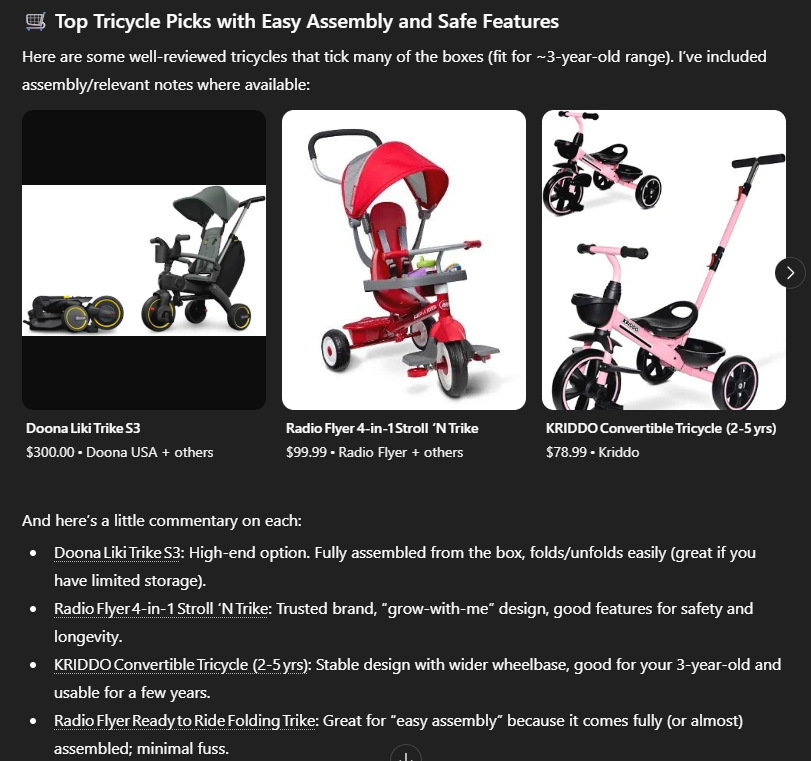
The original response did not show me a video directly in the chat, but it provided products with customer reviews mentioning the ease of assembly, as well as some products that came fully assembled in the box.
Chat then asked me if I wanted to see products available in my area or products with the least assembly time (and a video to go with it). When I said “yes,” the video it showed was a user-generated video, not owned by one of the brands. So, to all the tricycle manufacturers, there’s an opportunity to include an assembly video in the product listing and make it available to OpenAI. #FreeGame
Color, material, and Q&A for finding a knitted blanket
Prompt: I need a warm knitted blanket that is long enough for a 6-foot-tall adult and is a neutral solid color.
Chat asked me to clarify the original prompt, looking for my preference for a specific color. After I told it brown, black, or cream, it responded with a list of eight options in the size I wanted and the colors.
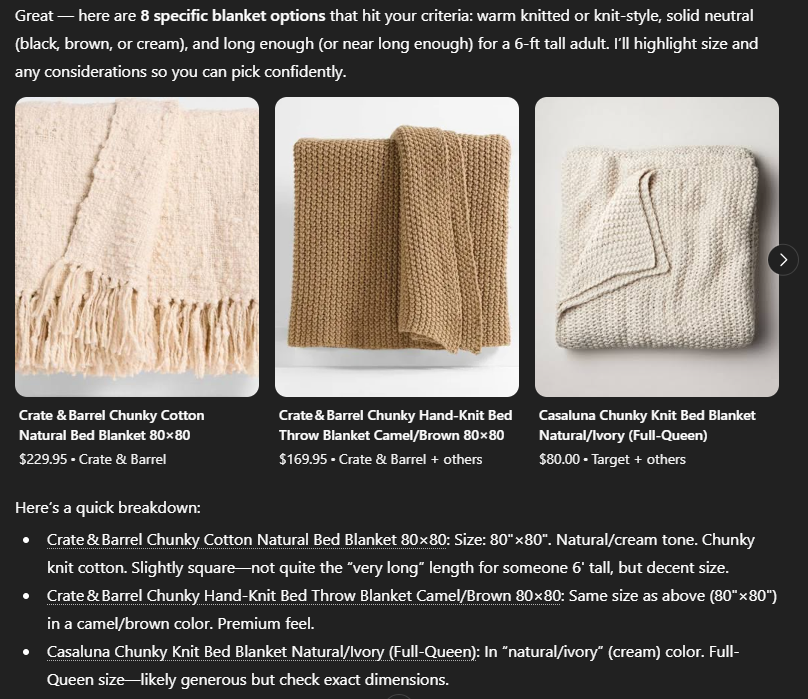
I clicked over to a couple of the options, and found one store had optimized product descriptions that included the blanket dimensions:

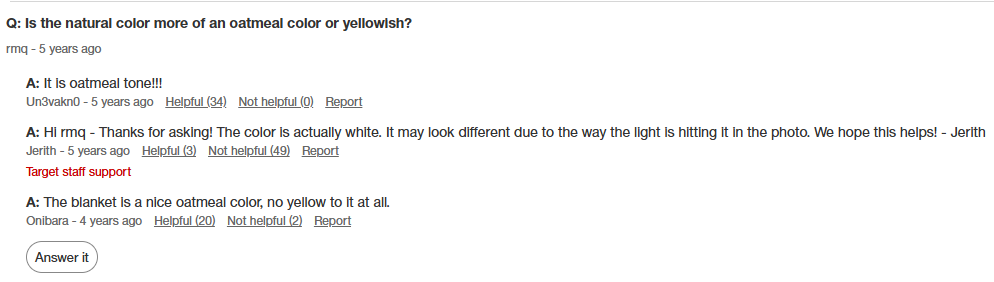
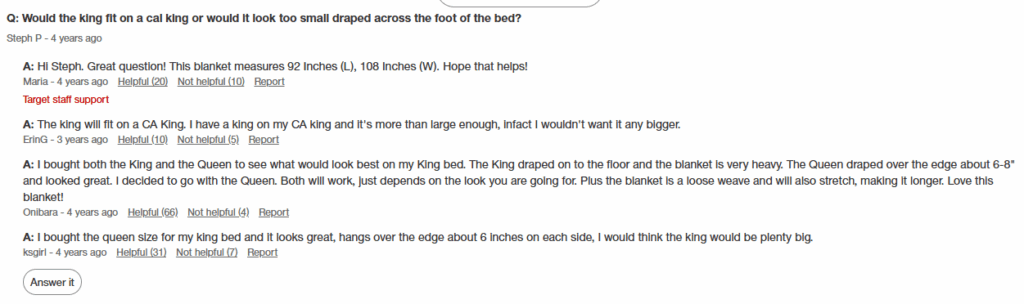
Another seller had a great Q&A section that directly answered the questions I was looking for, (plus a CTA for users to leave their own answer to a question that’d been posed).
Related products to find a specialty coffee maker
Prompt: I love my Ninja Single-Serve Specialty Coffee Maker. Help me find a similar one that makes bigger batches that I can gift to my married sister.
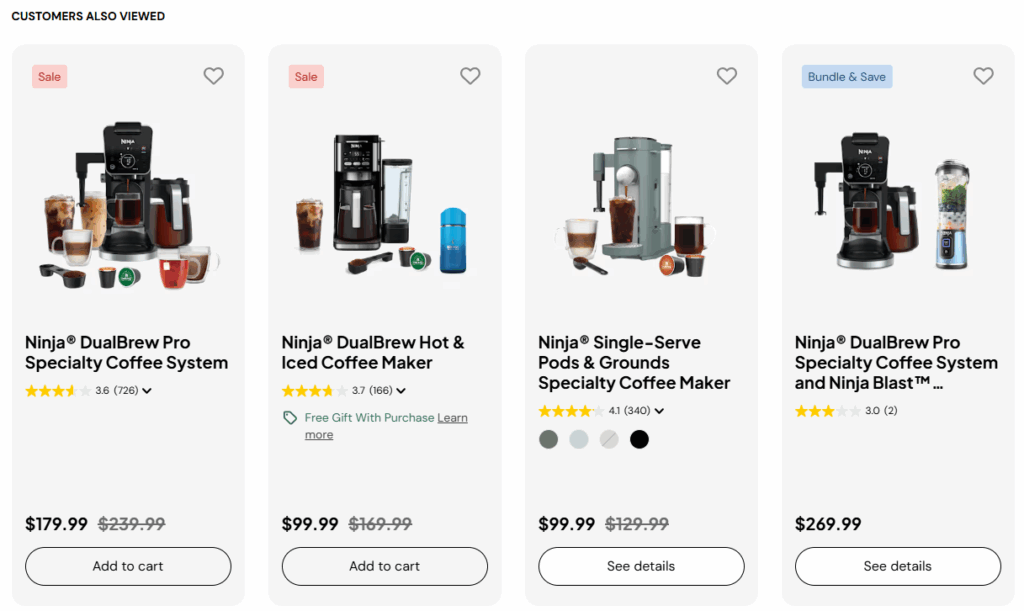
Chat showed me lots of options and its reasoning for the choices. On the Ninja site, there were many details about their products, like a section for suggested accessories and add-ons, “What’s in the box,” shipping details, reviews, Q&A, and a “Customers Also Viewed” section.
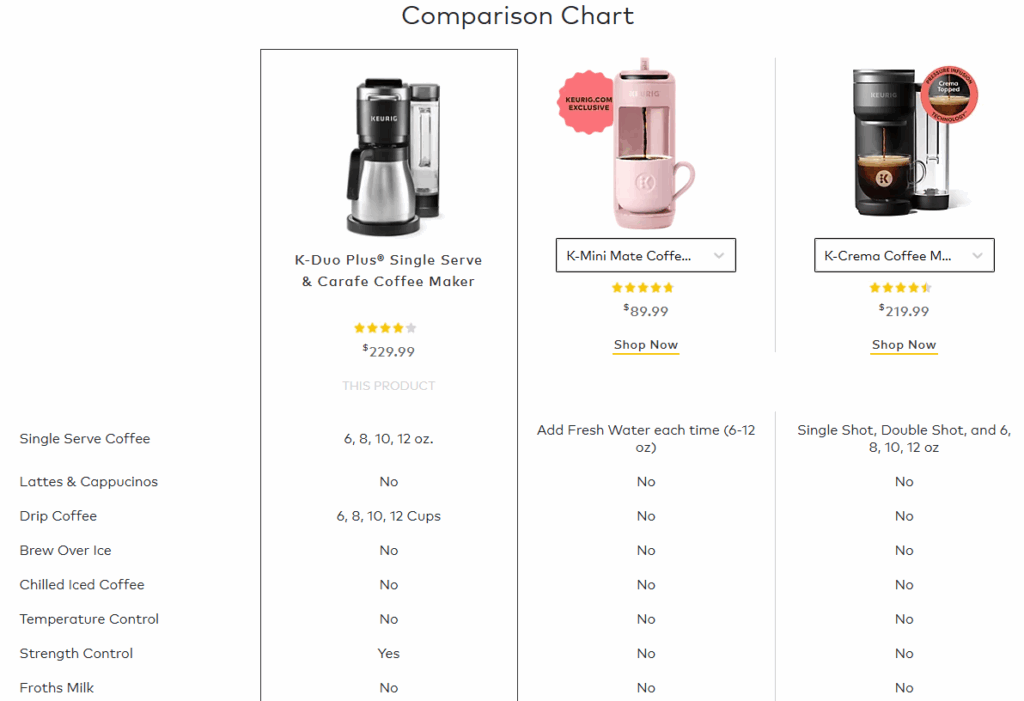
The Keurig site had a nifty little comparison chart to show the differences between three related products in an easily digestible format.
Q&As, reviews, and custom attributes to find an ergonomic office chair
Prompt: Help me find a comfortable ergonomic office chair with solid reviews from users with back pain.
After clicking into the provided options, I found this listing that’s optimized with custom attributes for product type. Who knew there were different types of back support?
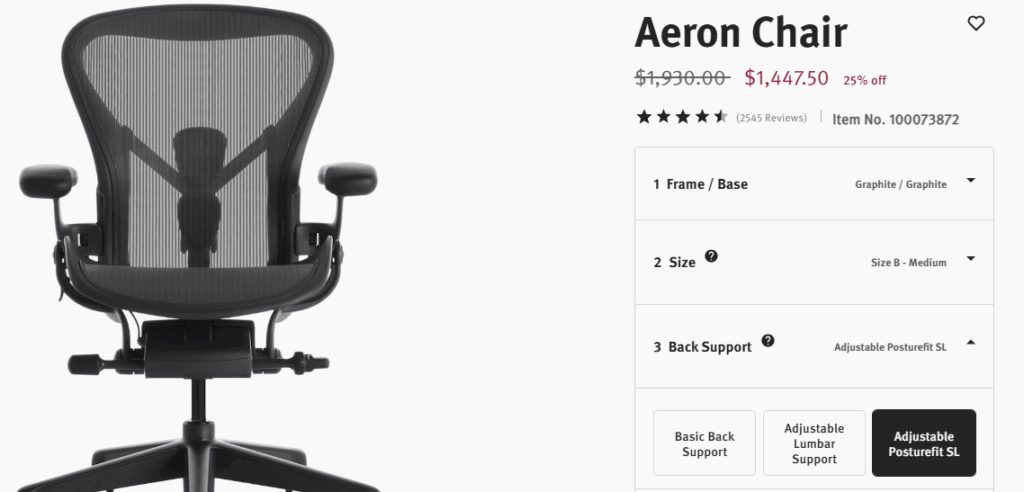
This Steelcase chair even came with a whitepaper on how their chairs helped customers with a 17.8% increase in productivity. Impressive!
Build Your Content Strategy for Agentic Commerce
Okay, so now that you’ve seen some examples of stellar product descriptions and the many ways you can customize it for your potential customers and their agents, consider how to update your selling platform.
If your ecommerce site only has product names and a short description, you’re missing out. Embrace the possibilities and enhance the content you give to agents through:
- Give your audience the capability to answer other users’ questions, and make that its own call-to-action.
- Utilize product groupings, so shoppers can see which are related by material, size, accessory/add-ons, and more.
- Customize your brand’s unique categories and product types. Go beyond materials and color by adding product quality or other attributes specific to your inventory.
- Develop a plan for multimedia, adding images, video, and 3D visuals wherever you can.
Plan for the Post-Purchase Experience
Shoppers trust other consumers to tell them if a product is worth buying. Plus, much of the material that agents will pull from is user-generated content, like reviews and answered questions. Naturally, it should also be in your content strategy to plan for the post-purchase experience so more of your customers will contribute with helpful information.
Send an email to follow up after a purchase
Most CRMs allow you to create an automated “post-purchase” workflow triggered by your fulfillment system. When an item is marked “delivered,” you can set up the workflow to wait 7-14 days, then automatically send a customized review request. Giving one to two weeks allows your customers to get the full experience and be able to leave a more constructive review.
In the email, consider giving them questions to think about. Use your CRM to dynamically include review prompts based on the product type. If someone bought new furniture, you could ask, “How easy was setup and assembly?”, while someone who purchased a skincare product will get, “How does this compare to your previous routine?”.
These questions are also great to incorporate into the functionality of your review section. For instance, adding dropdowns with easy multiple-choice response selections can help users leave reviews more easily, and it categorizes the types of reviews for you (and agents)!
Question: How did you find the installation process?
Dropdown response selection: Easy Setup, Intermediate, Difficult to Assemble
Review tools can often integrate with your CRM, so when someone completes a review, that data becomes a part of their customer profile. Then, your agents can identify repeat customers, troubleshoot issues, and follow up if a buyer is unhappy.
In addition to asking for reviews, invite your customers to view the specific questions other users have asked about the item they purchased. (Again, giving them ample time to experience the product first.)
Encourage brand loyalty by offering a discount or other offers when a customer leaves a review or answers a question on a product listing. Most CRMs can automatically send a discount code or loyalty reward as soon as a customer leaves a review. That way, the incentive feels instant and personalized.
Allow for media in reviews, and incorporate influencer marketing
In your review section, make sure that customers can upload videos and images of the product(s) they purchased. This lets people show how they’re using your products, and it’ll be especially helpful to the next person or bot comparing their options.
Invite customers to share their experience on social media. Many people turn to platforms like TikTok and YouTube to compare products, learn how they work, and find out what they can expect from the purchase.
Take this further by considering an influencer campaign. Even micro-influencers with a few thousand followers can create authentic product videos and early reviews that can improve your listings’ visibility. You can offer free products, commission, or early access in exchange for honest review content that other users can trust.
Get permission to feature these customer-submitted visuals in a newsletter or on social. This could excite the folks who are featured and invite new users to get involved. When you see mentions about your brand in the wild, repost them and thank them for the review.
Build site functionality with personalization in mind
For the best customer experience, your site should be able to respond to certain customer actions. For instance, it should remember a user’s past purchases, color or material preferences, and location.
Make sure your site can display customized related products. When a repeat customer (or their agent) is on your site, this functionality should understand what they’ve viewed and purchased in the past, and show related products. Think, “Now that you have this, check out this item that goes with it.”
Are Consumers Ready for Agentic Commerce?
Because there’s often some back-and-forth among consumers when it comes to the adoption of artificial intelligence, brands have a role to build an ethical framework and make their values clear to their audience.
A survey by Bain & Company found that 30-45% of consumers are using AI for product research and comparison, but 51% of respondents say they still don’t trust AI agents to handle the end-to-end transaction.
People are curious, and brands can bridge that readiness gap by sending strong trust signals at every stage of interaction. This includes transparency around when and how AI tools are being used, providing clear explanations for automated recommendations, and highlighting verified data sources or partnerships.
Brands may also play a role in teaching customers how to engage with Agentic commerce. You can offer guided demos or interactive tutorials to show how agentic assistants work – all while keeping your human support resources easily available.
Sending trust signals
To build trust, establish your brand’s internal guidelines around verification, credentials, and authorization. Verify product information and ensure that all data you share with AI systems is accurate, current, and compliant.
Maintain human review for high-stakes actions like purchases or data sharing. Align these practices with your published brand values, especially those regarding transparency, privacy, and inclusivity. The brands that thrive in agentic commerce will be those that make trust and responsibility as crucial an aspect of their strategy as innovation.
We’ve Got Your Omnimedia Content Strategy
In this new world of SEO, your brand must be active and optimized across multiple channels to earn visibility in AI search. You need a multimodal content strategy that spans from blog to video to stellar product descriptions. Chat with our team today to learn how we partner with you to develop a strategy that reaches your target audience – wherever they shop.