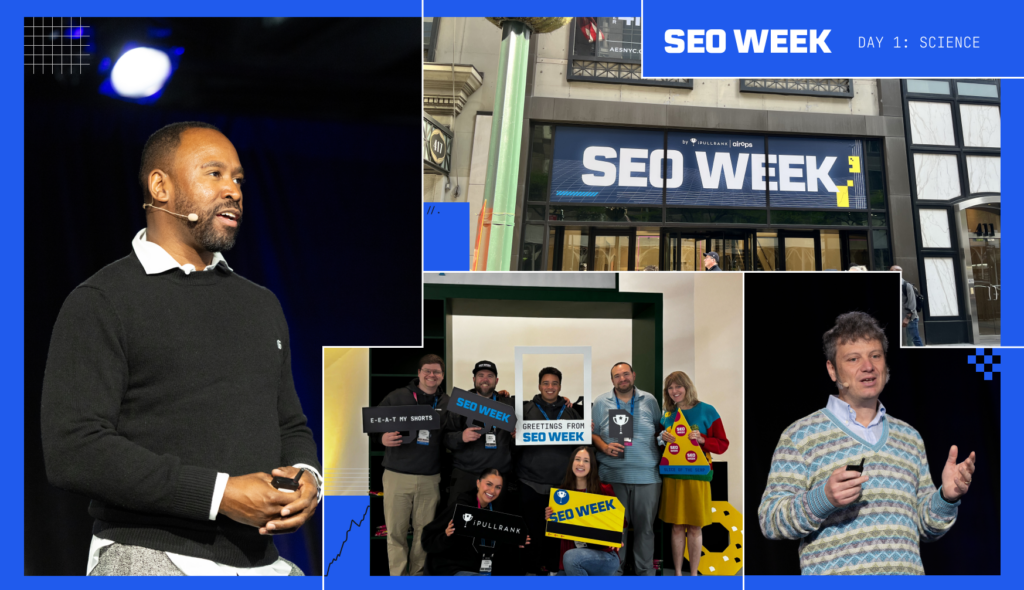
SEO Week 2026 opened exactly the way you’d expect on a day called The Science of SEO: with people casually discussing vector embeddings before 10 AM, someone explaining entropy with alarming (well, to some of us) confidence, and a Microsoft head of AI dropping brand new tool features.
Day 1 was all about the infrastructure underneath modern search. Retrieval systems, indexing, rerankers, knowledge graphs, embeddings, passage-level retrieval, agentic systems, (lions and tigers and bears, oh my!). It was a showcase of the invisible, let’s say, plumbing that decides whether content gets selected, cited, summarized, ignored, or quietly tossed into the void.
It was definitely nerdy, in the best possible way.
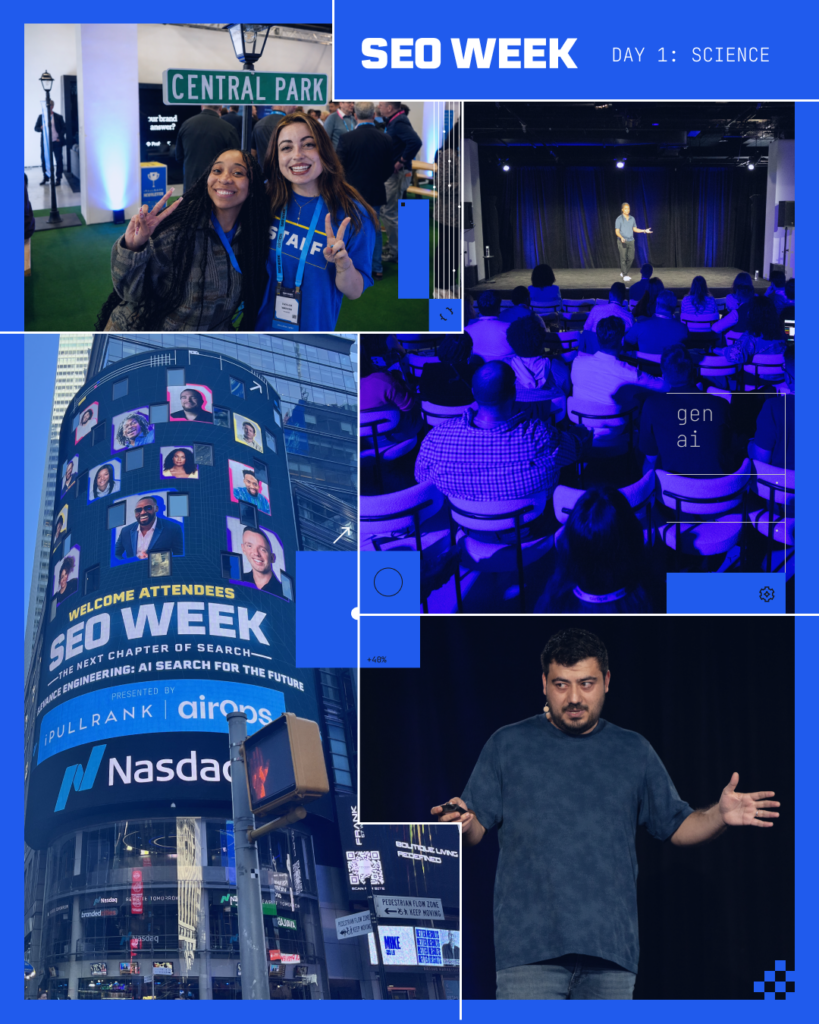
As an iPullRank team member who was blown away by how amazing last year’s event was, I was really looking forward to how this year’s rolled out. And at the risk of straight up sounding like ChatGPT…honestly? (😂) It was wild and even better than I hoped. Everyone was super engaged from the very first session. People were taking photos of slides every 12 seconds, arguing in hallways about chunking strategies (please bear with me and I still get used to literally typing out the word “chunking” in all seriousness), and immediately opening laptops after talks to test ideas in real time.
Also, several speakers indirectly caused existential crises. Sorry, kinda.
Here’s a look back at Day 1 of SEO Week 2026.
Jump to the speakers
Download all of the decks from our SEO Week day one speakers
The Invisible, Converged Web: Architecting Visibility for the AI Economy

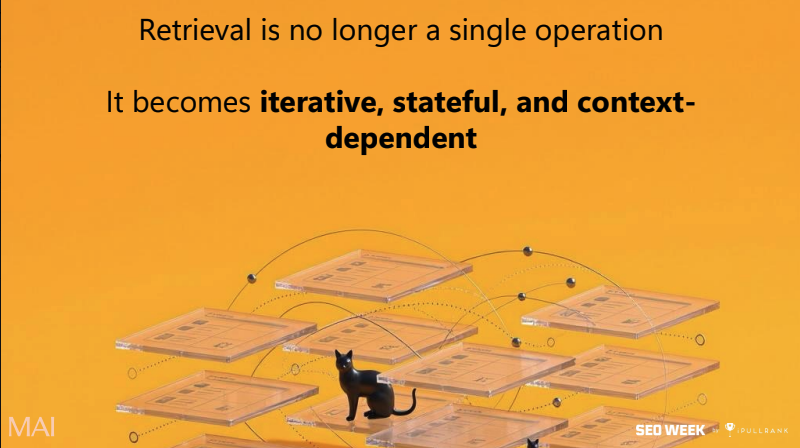
Krishna Madhavan kicked off the conference by immediately reminding everyone that AI systems now decide what gets reused, grounded, surfaced, or ignored based on a massive stack of invisible infrastructure happening behind the scenes. Also…cats. Lots of cats.

His talk focused on the “AI Answer Chain” and how modern search systems evaluate content through layers of trust, eligibility, safety, grounding, and retrieval logic before it ever reaches a user. Basically, your content is now running through several different levels and types of criteria before it gets selected.
Then he went ahead and dropped not-yet-announced new AI Search reporting features for Bing’s Webmaster Tools. Killer start to the day.

““Visibility belongs to content that AI can trust, understand and ground.”
- Krishna Madhavan
Key points
- AI systems evaluate text, images, video, code, and structured data together
- Visibility depends on whether AI systems can trust and ground your content
- Indexes are transformed representations of the web, not copies of it
- Ranking still exists, but happens across many interpretations simultaneously
- Speed and freshness signals matter more than most people realize
Important Takeaway
Modern visibility is about making content understandable and usable for systems that increasingly act like autonomous decision-makers.
Resources
Beyond the Million-Token Window: TurboQuant and RLM-on-KG
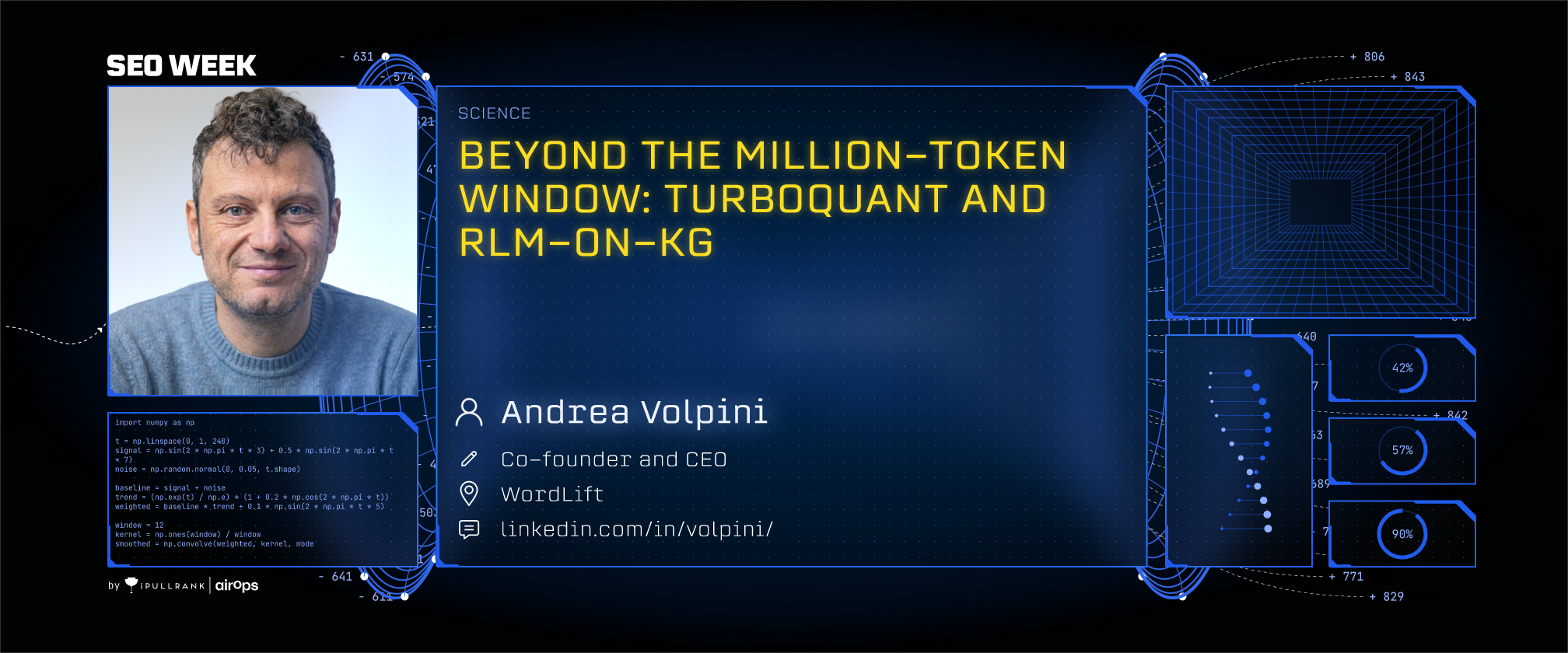
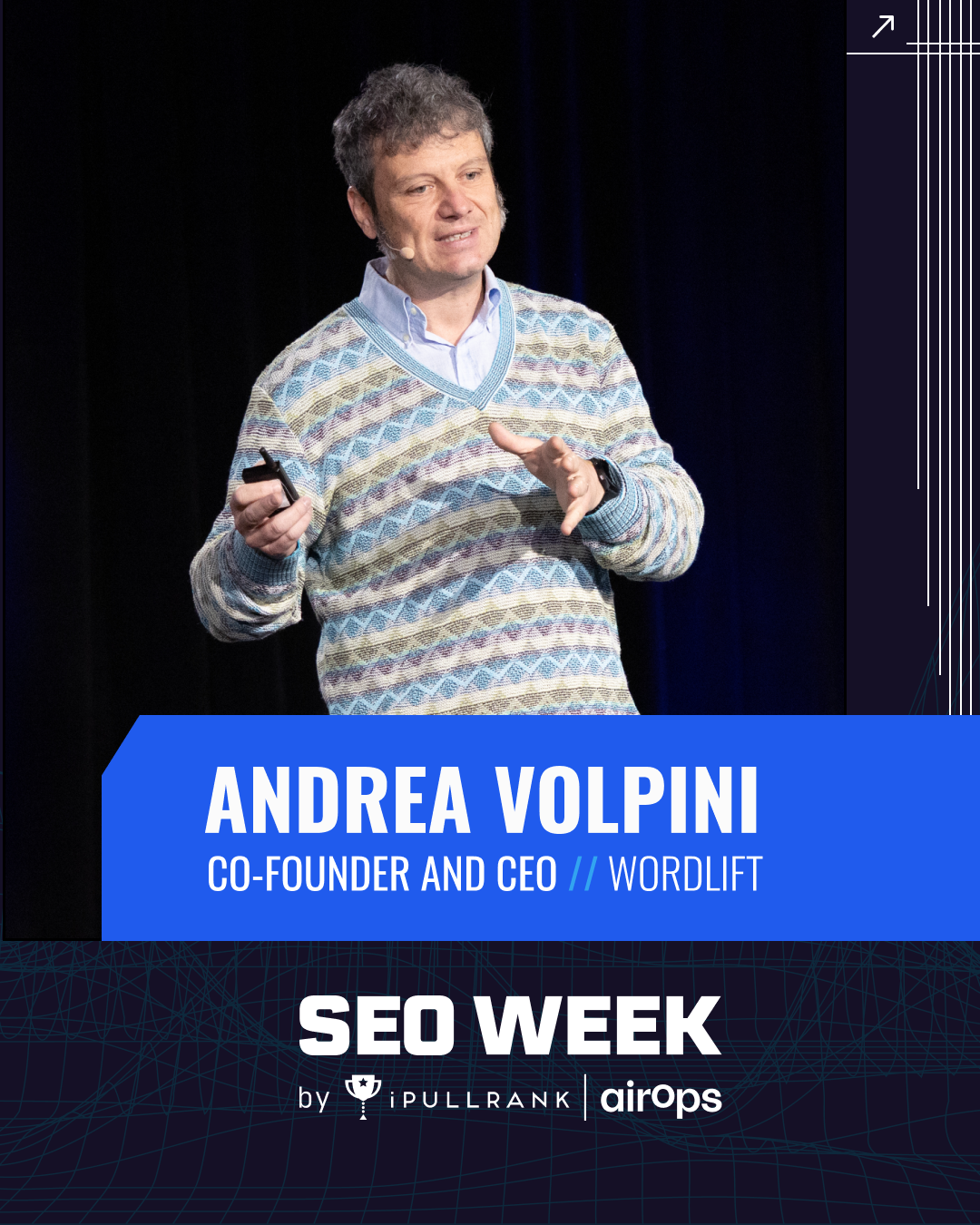
Andrea Volpini somehow managed to make knowledge graphs sound philosophical.
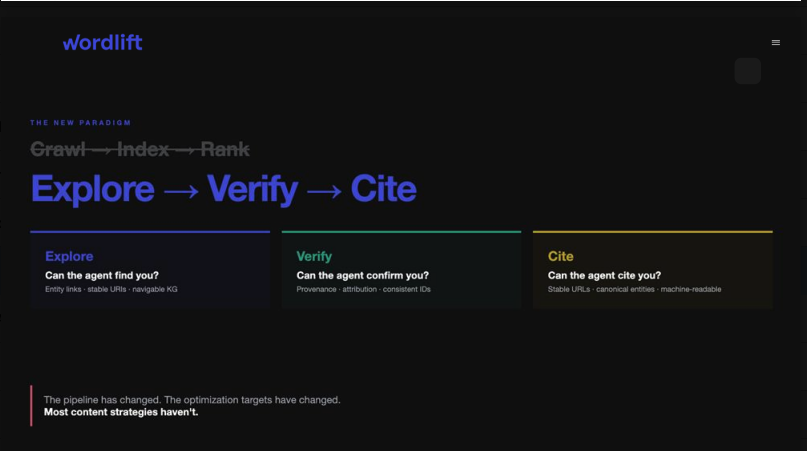
His session focused on the limits of infinite AI context and why simply throwing more information into models is not actually solving retrieval problems. Instead, he argued that AI systems need better navigation and structure, not just bigger context windows.
A recurring theme throughout his talk was that semantics and relationships matter more than sheer volume. Search is becoming less about matching words and more about connecting meaning.
“We are entering into this world where search is about navigation.”
- Andrea Volpini
Key points
- Infinite context windows still suffer from “context rot”
- Structured knowledge improves retrieval accuracy
- AI systems increasingly navigate information step-by-step
- Semantic relationships are becoming critical for discovery
- Content structure directly changes retrieval behavior
Important Takeaway
The future isn’t about creating connected, structured, meaningful information systems.
Resources
F*CK it, I’ll Do it Myself
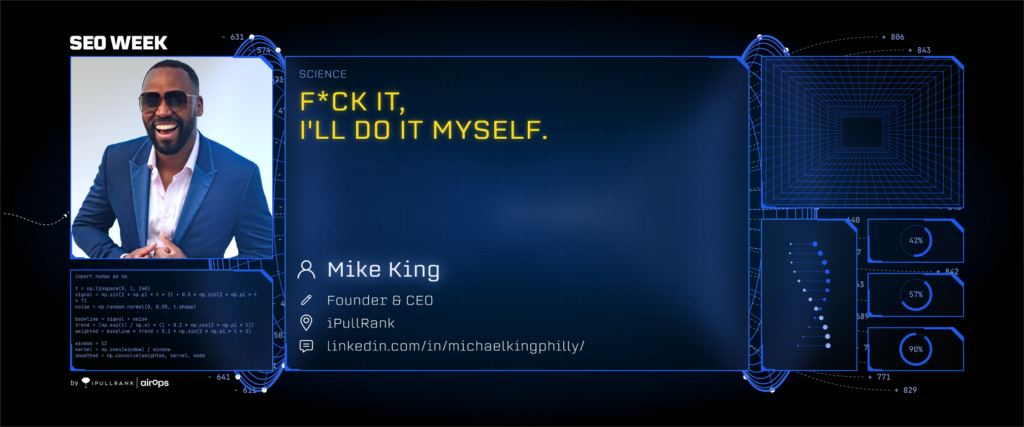
Mike King’s talk (which, frankly, was the title I loved the most) was basically part keynote, part manifesto, and part controlled demolition of the current SEO tooling ecosystem.
So…very on brand for Mike.
He argued that most SEO tools are still solving outdated problems while search itself has fundamentally shifted toward semantic systems, AI interpretation, hybrid retrieval, and agent-driven experiences. Instead of waiting for vendors to catch up, Mike basically said, “Build your own stuff.”
This was one of the most talked-about sessions of the day because it felt, unsurprisingly, less like a presentation and more like a challenge to the industry.
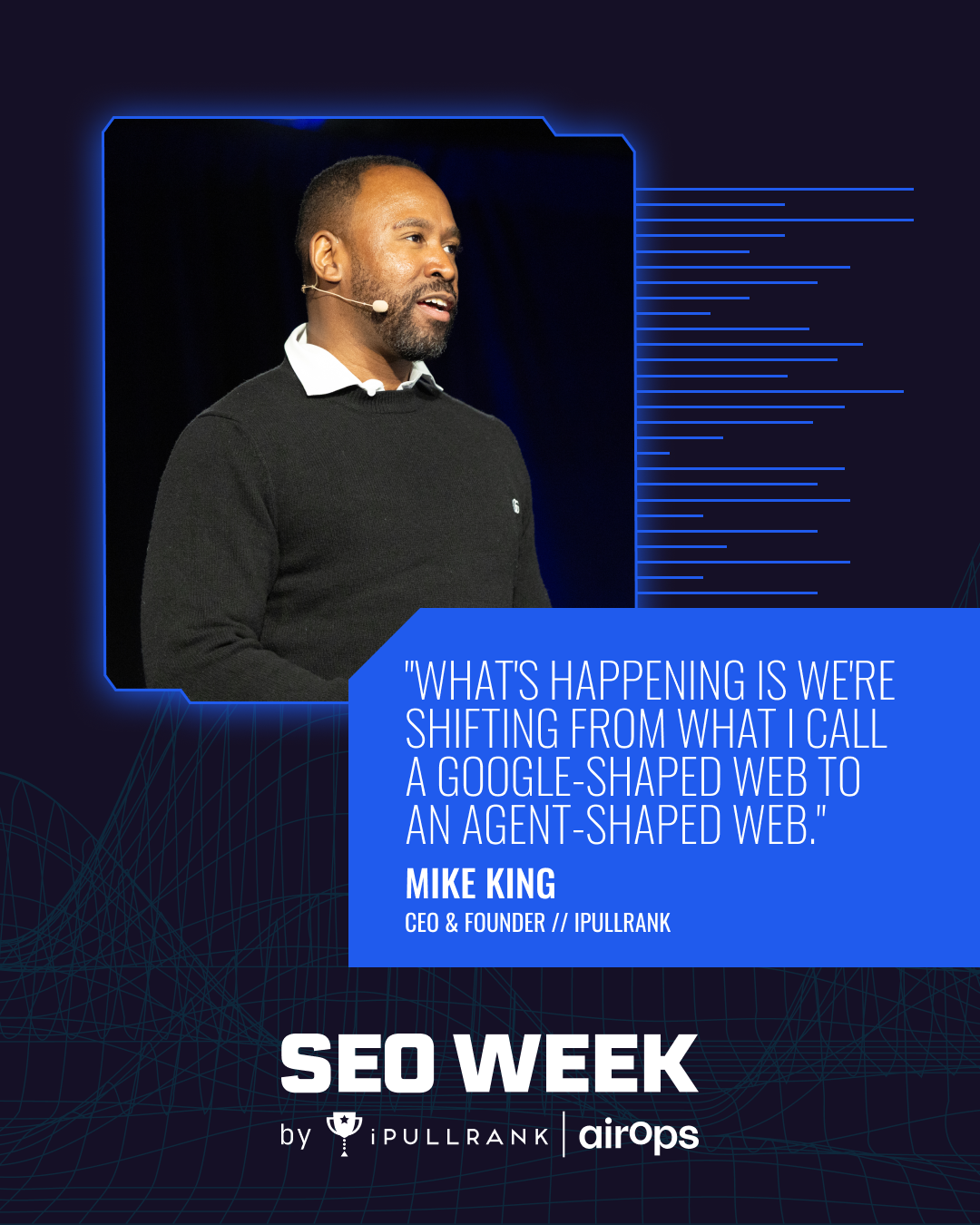
“We’re shifting from what I call a Google-shaped web to an agent-shaped web.”
- Mike King
Key points
- Search is becoming an invisible interface
- AI agents increasingly shape how information gets interpreted
- Traditional SEO tooling is lagging behind reality
- Open-source alternatives now exist for nearly everything
- “Human in the loop” systems are still critically important

Important Takeaway
The people willing to experiment, build systems, and rethink old workflows are going to move much faster than the people waiting for the industry to hand them a playbook.
Resources
Build the Tool Your Team Actually Needs: A Product Thinking Playbook for SEOs
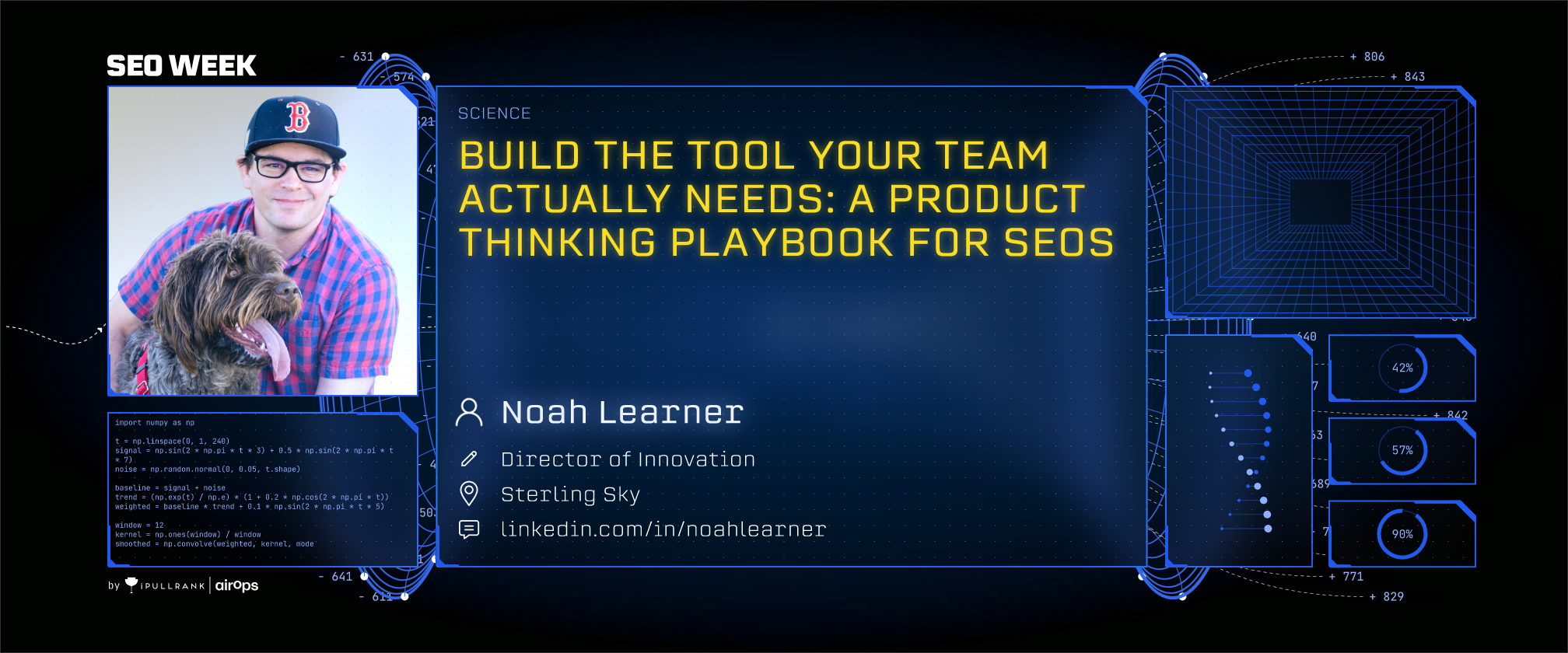
Noah Learner brought a much more operational perspective to the day, focusing on how teams can build internal tools that solve real business problems instead of endlessly duct-taping together software subscriptions.
His presentation centered around product thinking, AI-assisted development, and building systems around actual organizational pain points rather than trendy features. It was practical, honest, and refreshingly free of hype.
“Focus on building painkillers. It’s not about vitamins.”
- Noah Learner

Key points
- Build “painkillers,” not “vitamins”
- AI makes it easier than ever to prototype useful internal tools
- Revenue alignment matters more than vanity metrics
- Product thinking is becoming a valuable SEO skill
- Content decay management should be automated wherever possible
Important Takeaway
The best tools are often the ones designed specifically around your team’s workflows, not generic software trying to serve everyone.
Resources
From Vibes to Veteran: 7 Tips to Disaster-Proof Your Code
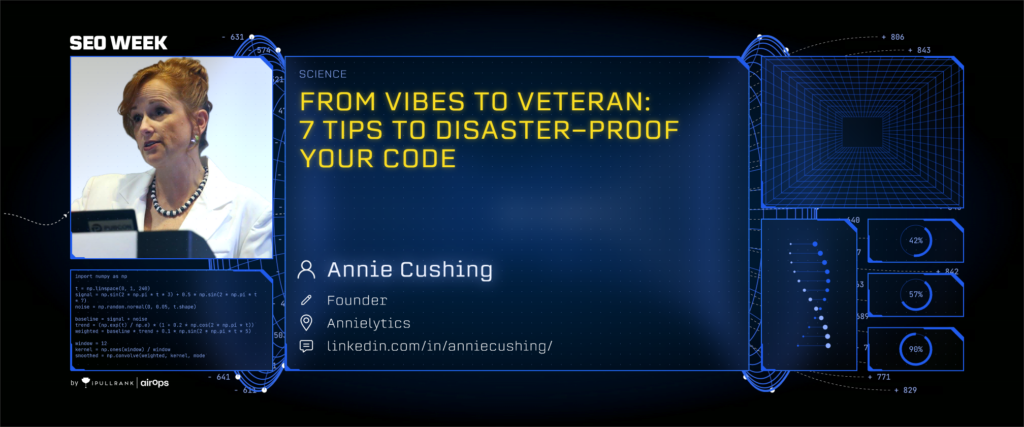
Annie Cushing’s session was a bit of a much-needed intervention for everyone currently vibe-coding their way into technical debt.
She walked through real lessons from building applications with AI assistance and explained why architecture, testing, modularity, and validation still matter even if AI can generate code instantly. Her overall message was basic but important: speed without structure eventually becomes chaos.
Honestly, several people in the audience looked personally attacked. Again, sorry. Kinda.
“AI is a notoriously lazy programmer.”
- Annie Cushing

Key points
- AI-generated code still requires strong architecture
- Lightweight guardrails prevent catastrophic failures
- Technical debt compounds quickly
- Modular systems are easier to maintain and scale
- AI should be treated like a new hire that requires supervision

Important Takeaway
“AI is a notoriously lazy programmer.”
Resources
Prioritize GEO Investments by Financial Impact
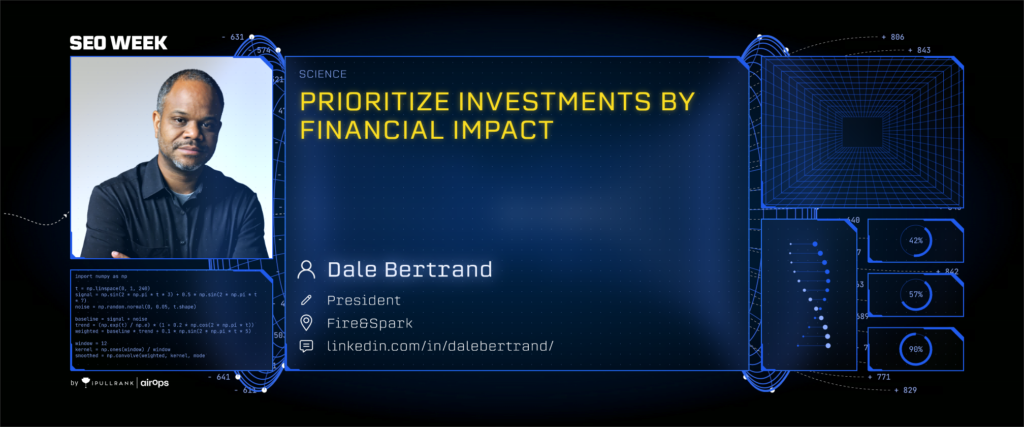
Dale Bertrand tackled one of the biggest frustrations in modern search: measurement.
His talk focused on how traditional traffic metrics increasingly fail to reflect actual business impact in AI-driven environments where attribution is fragmented and user journeys are harder to track. Instead of obsessing over clicks alone, Dale argued for tying visibility work directly to financial outcomes.
In other words, CFOs do not care about your impressions graph. Cue more chagrined looks in the audience, but also some excitement as it felt a little bit like being given permission to look outside the box, so to speak.
“Traffic growth is now divorced from business growth.”
- Dale Bertrand

Key points
- Traffic growth no longer directly reflects business growth
- AI Search has broken traditional attribution models
- GEO measurement must connect to revenue impact
- Executive communication matters as much as technical execution
- Precision and accuracy are not the same thing

Important Takeaway
The teams that survive the next era of search will be the ones that can clearly connect visibility work to business value.
Resources
HEO: The Hybrid Engine Score

Jori brought some much-needed calm to a room full of people spiraling over dashboards.
Always the data queen, her talk focused on Hybrid Engine Optimization (HEO), a framework for measuring traditional search and AI visibility together without losing operational focus. The larger point was that many teams are drowning in tools, alerts, and fragmented metrics while losing sight of what actually matters.
This talk felt like therapy for overstimulated marketers, and it was definitely soothing.
“Everything is broken and shattered, the earthquake has occurred, but it’s okay.”
- Jori Ford
Key points
- Traditional and AI search visibility must be measured together
- More data does not automatically create better decisions
- Focus and clarity matter more than endless tooling
- Deterministic, transparent measurement systems are essential
- Operational simplicity reduces panic-driven decision making

Important Takeaway
The future of measurement is not exactly about collecting more data, but creating systems that help teams focus on what’s actually actionable.
The future of measurement is not exactly about collecting more data, but creating systems that help teams focus on what’s actually actionable.
Metehan Yeşilyurt delivered one of the most technical talks of the day and somehow kept the room fully locked in. That’s a tall order.
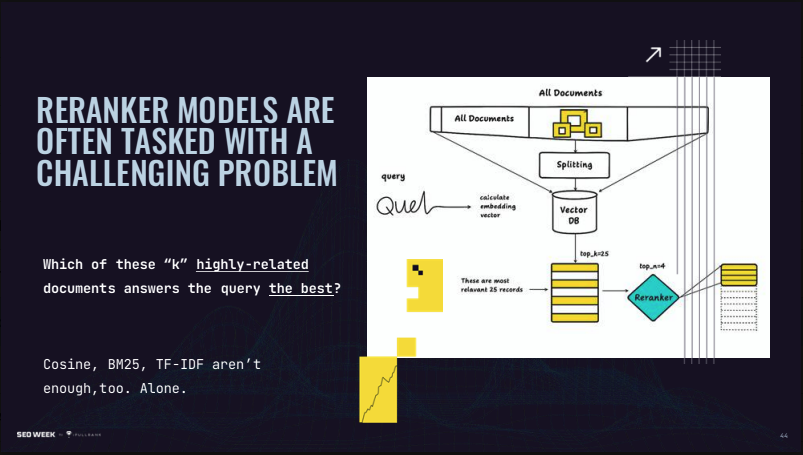
His session explored how AI systems retrieve, rerank, and prioritize information based on entropy reduction and confidence scoring. He walked through how retrieval systems often favor passages that reduce uncertainty, which means vague, hedging, or overly broad content can lose visibility even when it’s technically accurate.
Metehan talked a bit about how newer businesses have a hard time showing up in AI search, but improving authority signals in datasets like Common Crawl could help increase visibility, though there are no guarantees.
Also, everyone left wanting to immediately open Chrome DevTools.
“The internet is chaos. Everything is increasing the entropy.”
- Metehan Yeşilyurt
Key points
- Retrieval systems reward low-entropy, high-confidence information
- Rerankers prioritize passages that reduce uncertainty
- Information gain increasingly matters in AI retrieval systems
- Passage-level optimization impacts citation likelihood
- Crawl quality can significantly impact AI visibility
Important Takeaway
Modern retrieval systems increasingly reward clarity, specificity, and confidence over generic informational content.
Resources
Is AI Seeing the Brand You Think You’ve Built?
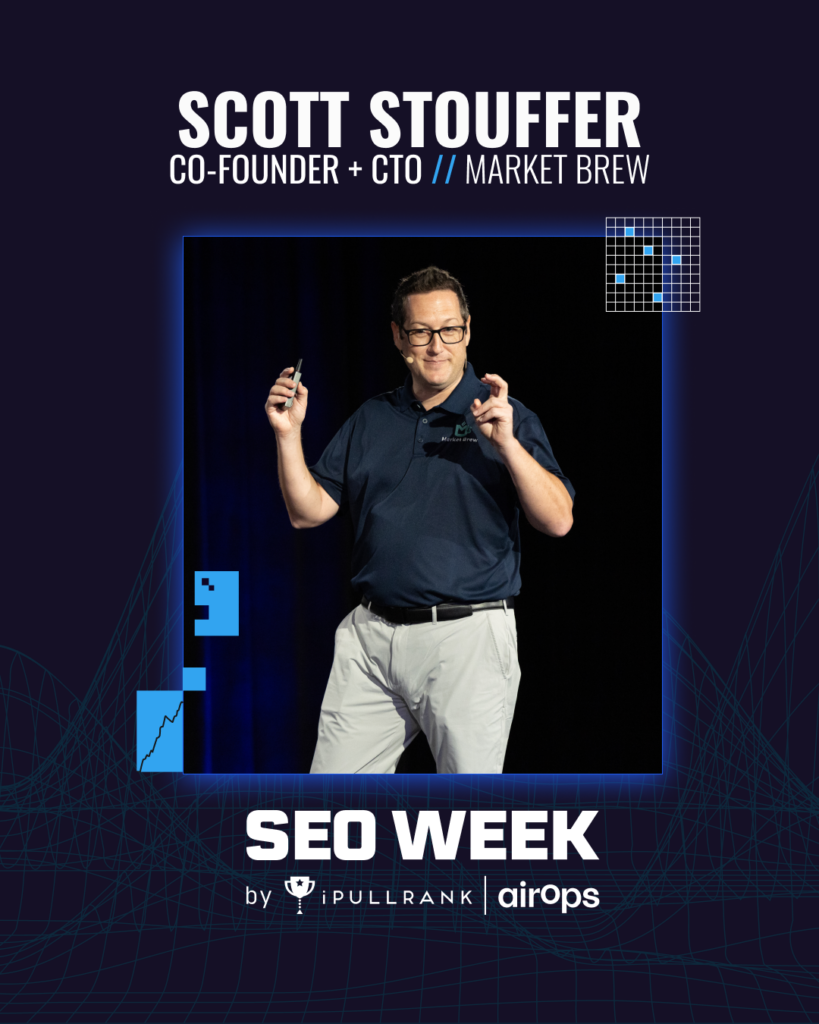
Scott Stouffer took the stage to talk about one of the more uncomfortable realities of AI search: your brand may not look the way you think it does inside retrieval systems.
He explained how AI systems break pages into chunks, map them into vector space, and retrieve information based on semantic similarity rather than traditional page-level evaluation. Meaning, a tiny passage can outperform your entire beautifully designed webpage.
Humbling stuff.
“If you’re not retrieved, you do not exist to AI.”
- Scott Stouffer
Key points
- AI retrieval operates at passage level, not page level
- Semantic similarity matters more than keyword matching
- Vector clustering reflects what your content actually says
- Small passages can outperform entire documents
- Brand perception inside AI systems is measurable

Important Takeaway
AI systems don’t evaluate websites the way humans do, and brands need to understand how they are actually represented inside retrieval systems.
From Showing Up to Winning: An Information Retrieval and Systems-Level View of AI Search
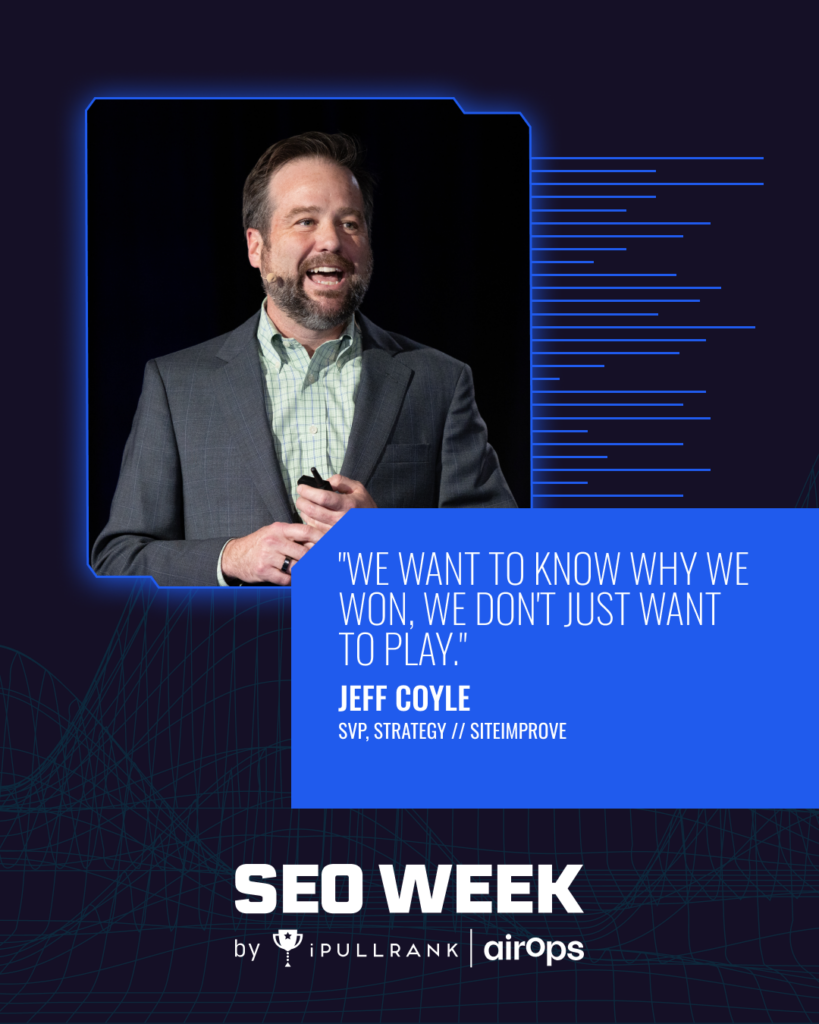
Jeff Coyle closed out the day with a systems-level walkthrough of how AI search pipelines actually work from retrieval through synthesis and citation.
His talk tied together many of the day’s themes: crawlability, accessibility, semantics, retrieval, information gain, topic depth, and differentiation. More importantly, he emphasized that eligibility alone is no longer enough. Plenty of content can technically enter the system. Much less actually gets selected.
“Most failures start with eligibility.”
- Jeff Coyle
Key points
- AI search exposes technical and content weaknesses quickly
- Eligibility is only the first step in modern visibility
- Query fan-out changes how systems retrieve information
- Information gain and differentiation matter heavily
- Teams need stronger diagnostic frameworks for AI visibility

Important Takeaway
Being technically accessible is now the minimum requirement. The real challenge is creating information valuable enough to survive retrieval, synthesis, and citation.
Resources
Welcome Soiree Sponsored by Lastmile Retail
After a full day of brain-tingling presentations, Day 1 of SEO Week wrapped up with the perfect vibe-reset: the Opening Soirée.
Held downstairs in the Central Park Expo area, the event space transformed into a buzzing social scene complete with a bar and passed hors d’oeuvres that had everyone mingling with plates in hand.

By the end of the night, the venue had completely shifted into full social mode. It hit a great balance of smart and fun. Attendees, speakers, and the very energized iPullRank team swapped ideas, debated session takeaways, laughed a lot, and made new connections.
Final Thoughts on Day 1
Day 1 of SEO Week 2026 basically covered the main point we’ve all been repeating to one another for the past year:
Search has not simply “changed.”
The entire underlying infrastructure of discovery, retrieval, interpretation, and visibility is being rewritten in real time, and we’re the ones writing it. Very exciting, kinda nerve-racking, and really hopeful.
The old SEO conversations about rankings and keywords still matter, but they now exist inside a much larger ecosystem involving embeddings, rerankers, grounding systems, agents, retrieval pipelines, and multimodal interfaces.
Casual. Ha.
However, there wasn’t much panic in this group. It was much more about curiosity. Every speaker approached these changes less like a catastrophe and more like an opportunity to rethink how we build, structure, measure, and distribute information online.
Also, everyone now has approximately 47 new tabs open. Which, let’s be honest, is exactly how Day 1 should have ended.
Next Friday, we’ll get into Day 2: The Psychology of SEO. Stay tuned.