
KPIs are at the top of all of our clients’ minds these days. That’s what we’re hearing about on every call as we discuss their business goals. What do we measure now in this new age of AI Search and what are these measurements showing us?
You’ve probably also been struggling with finding the right KPIs to prove value and ROI for your brand online. This could be impacted by what stage your business is in, what stage you want it to be in, or external factors like global economics, the supply chain, and other blockers.
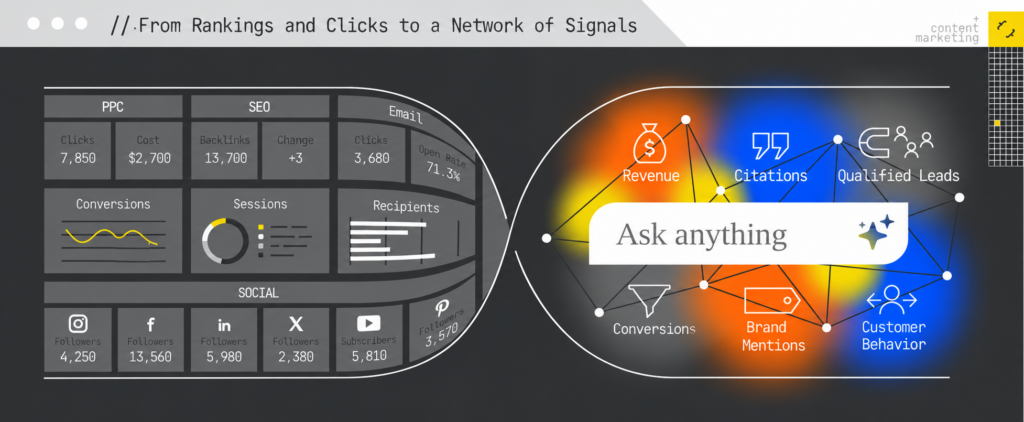
The old method of creating digital marketing KPIs, built around rankings and clicks, does not tell the whole story anymore. AI models are answering questions directly, citing sources, and sending people down entirely new paths to a decision, often bypassing brand domains completely. However, AI Search is probabilistic and uncertain with confusing attribution, which makes any metrics you measure based more on precision than accuracy.
There is no standard for KPIs in this industry, so it’s hard to know what questions to ask, who to trust, and how to know if what you’re doing is working.
“KPIs are crucial, but there’s no one answer to what your KPIs should be,” said Brittan King, fractional CRO at iPullRank.
So, the question now is what is a KPI anymore? How can we measure any kind of performance when everything is changing constantly?
The good news is that you do not need to reinvent measurement from scratch. You need a solid framework for your AI Search strategy, and then you need to choose KPIs that reflect your brand’s business goals.
The New Search Era
The reason for all of this KPI confusion is the advent of AI Search. These days, you need to be both findable by AI models and persuasive to the humans those models are talking to. Those are not the same skill, and they are not measured the same way.
Marketers simply got a little comfortable being loose about KPIs during the organic search era, when click-through rate was an easy stand-in for progress. That shortcut does not work anymore because the way people find and engage with brands has gotten far more personal.
The new era of search has caused a behavioral change in consumers, meaning brands have to pivot how they measure success. All those numbers represent a person doing something. It’s never fully accurate, but it’s directionally helpful. That’s all measurement is right now. It’s never totally accurate or perfect, but the numbers are consistent, contextual and personalized to your brand.
Research from Boston Consulting Group points to what it calls the “4S behaviors,” streaming, scrolling, searching, and shopping, as the forces that have reshaped how people discover brands in the first place. Understanding each behavior and adapting your marketing will be critical to reaching audiences, resonating with them, and driving sales.
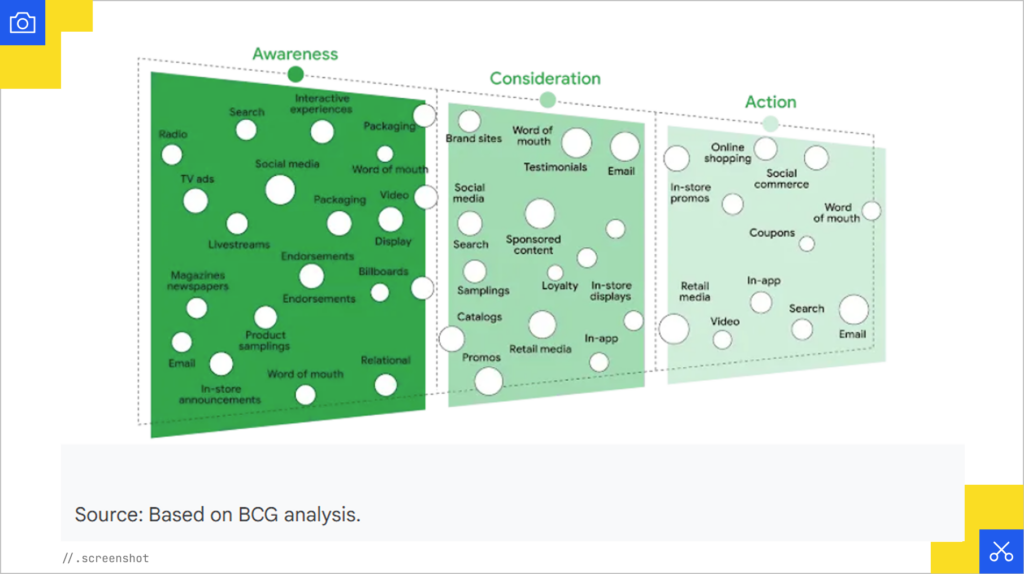
Layer AI Search on top of that, and you’re left with a collection of KPIs that aren’t really helpful anymore.
“We’re in a more mature phase of the internet where things aren’t growing, they’re changing,” Brittan said. “It’s not necessarily bad, but hard to predict.”
Hard to predict does not mean impossible to measure, though. It means the way you approach measurement has to change as well.
Optimizing for Business Goals
When the country went into quarantine in 2020, the exercise bike company Peloton saw their subscription base explode. People had to stay home, so they worked out at home. By every traditional measure the company looked unstoppable, but growth in accounts was never the same thing as growth in people who actually used the bike. And once gyms reopened, people were able to leave their homes to exercise again and interest in Peloton waned. The lesson was that Peloton had been watching the wrong number and didn’t focus on sustaining subscribers through the change.
Executives often default to needing more leads to convert when the real question is whether those leads are worth converting in the first place. As Brittan puts it, “You need quality leads, you don’t necessarily need quantity.” Chasing volume without chasing quality typically fails to move the needle and actively costs you money. You have to remember the goal.
“Remember what you’re trying to do,” Brittan said, “which is sell something, have your money go further, or make your marketing more effective.”
Ask yourself what would happen if you got half the leads you currently get, but converted them at twice the rate. That said, there is no shortcut here. Every business needs to work this out for itself, starting with its own personalized goals to drive revenue, then get the right leads from the right customers and convert them.
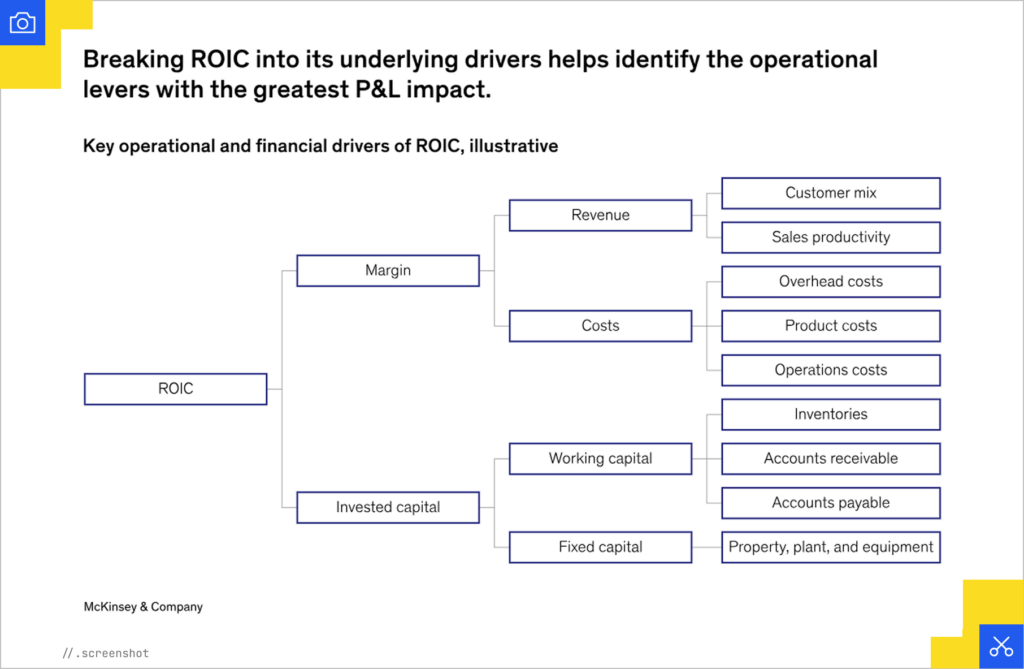
McKinsey studied 18 companies in 2023 and found that leaders used only 29 percent of the KPIs they had defined and tracked when actually making decisions. Most of what gets measured never gets used, and executives are often drowning in data. That is what happens when teams simply collect metrics instead of choosing them strategically.
As a result, executives often can’t tell if the changes they’re making are actually creating value. Furthermore, many transformations focus on KPI improvements without considering cost and market pressures, leaving leaders without a clear view of the net balance sheet impact.
Developing Modern KPIs
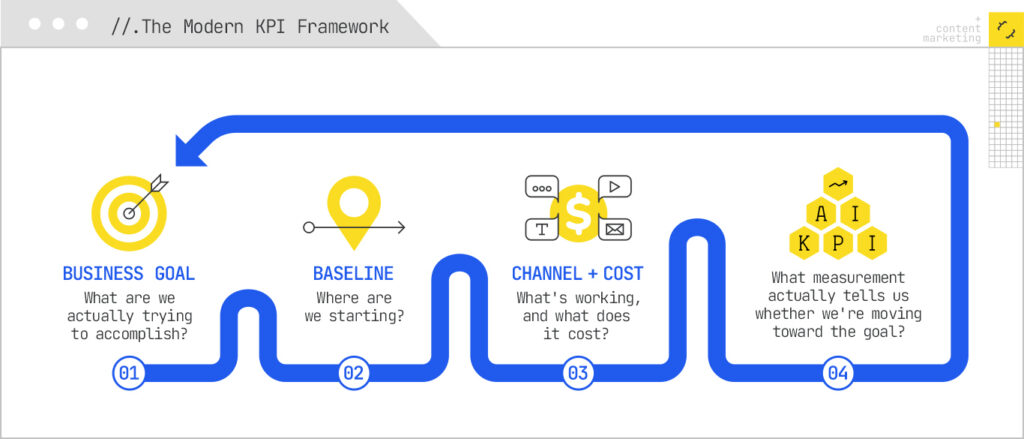
If you are trying to figure out where to start in developing new KPIs, work through these questions:
- What is your most effective channel right now? Before you can improve anything, you need to know what is already working.
- How are you measuring it? ROAS, ROI, time on site, whichever metric actually reflects performance for that channel.
- What is the cost of that channel? Paid search, for example, is not something you own. As Brittan describes it, it is more like renting than investing, since it is subject to shifting supply, demand, and competition. Investing in organic strategies may take longer and make it trickier to pin down overall impact, but it can help the equity of the brand, so integrated marketing efforts that rely on active media buys and budgets improve in efficiency and effectiveness. The luggage company Away found this out directly. They built early traction almost entirely on paid social, and for a while it worked, but rented attention gets more expensive every year you rely on it so they hit a wall when costs climbed too high.
- What is your baseline? Start where you are. Establish your business goals, identify your baseline, then keep checking back as you go to ensure you’re meeting it.
The Adobe for Business team writes that “the most important metrics to watch are the ones that connect AI visibility to brand influence, competitive position, and revenue.”
Their recommendations for KPIs to track include:
- AI visibility and brand presence
- Citations
- AI share of voice
- Brand sentiment and answer accuracy
- AI referral traffic and engagement quality
- Business impact and revenue contribution
But again, these need to be personalized to your specific brand and its business goals. Some of those might not apply to your business, and there might be other metrics that you want to focus on. The most important step is determining what will help your brand reach its goals, and sometimes that means reaching out for help.
Working with an agency up front is an investment, and you should not expect immediate results from anyone in this industry. If someone promises instant wins, that is worth questioning. Establish your starting point, then keep checking back against it.
“SEO is a long-term investment and we are building equity toward a stronger integrated marketing foundation that will increase across the board over time,” Brittan said.
How is Your Team Structured?
Sometimes a barrier to good KPIs is your org chart. Are your teams working toward competing goals? Is attribution constantly confusing? If different teams are running paid search, social, and video in their own silos, you need to unify that strategy and distribute the right content in a coordinated way.
Look at silos in your organization, break them down, and come up with programs that resonate from a brand perspective. Then, distribute the appropriate version and content strategically and in a unified way. The improvement you see from breaking down those silos is itself a KPI worth tracking. Rising tides raise all ships.

How Much is a Citation Really Worth?
If part of your goal is showing up more often in LLMs or in Google, you need to understand the value of a citation before you can measure it meaningfully. That value is not the same as a vanity metric where a CEO just wants to see the brand’s name pop up somewhere.
The better question is whether you have identified the commercial citations that actually drive your business, and whether you understand how those specific mentions connect to results. What is cited about your brand needs to resonate with prospective customers, so it’s important to see exactly how you show up in various LLMs and if it represents your brand the right way.

KPIs Go Beyond Marketing
None of this works in isolation. If your sales team is not equipped to convert the leads you are sending them, no KPI on the marketing side will fix that. Sometimes the business model itself needs to change before the numbers can follow.
There is no industry standard yet for exactly what questions to ask or who to trust, which makes it harder to know if what you are doing is actually working. In the end, you only know your marketing is working when your business is measurably closer to its goals.
If you came here hoping for a definitive list of KPIs that apply to every AI Search program, that doesn’t really exist. Yes, KPIs matter, but nobody can tell you what you should be measuring before they fully understand your business and specific business goals.
The path forward is less about finding the perfect metric on day one and more about building the right process to get there. That kind of alignment does not happen overnight, but the upfront effort is the price of the outcome.
“It’s going to take a while,” Brittan said. “It’s a heavy upfront lift for a long-term exponential value.”
If you take one thing from all of this, let it be that identifying your KPIs is not a task you finish once and forget. It is an ongoing conversation between your business goals, your baseline, and the reality of a search landscape that keeps changing. Start there, and the right numbers will follow.
“It has never been harder to sit down and make a business plan,” Brittan said. “It’s hard to predict markets, consumers, budgets, and changes. We’re all used to making data-driven decisions utilizing metrics from the past to predict the future, but we can no longer rely on that.”
If you need some help developing the right KPIs to measure your performance in AI Search, we can work with your organization to elevate your marketing, integrate your strategy, and align everything with your business goals. Reach out today to find out how.