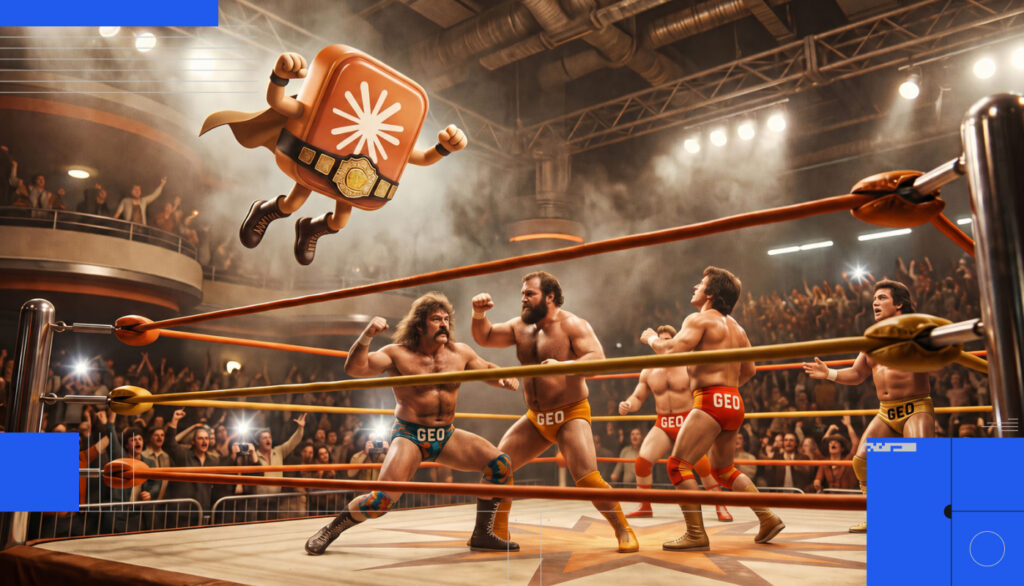

By Day 3 of SEO Week 2026, most of us had settled into a rhythm – which was good, as the day would end with a lotttt of rhythm.
But at the start! Places were set, the coffee lines were shorter, the typing was less intense. The extensive and frankly mind-bending content from Days 1 and 2 were spilling into hallway conversations, lunch meet ups, and random encounters in the elevators, the lobby and the “Central Park” and “Times Square” Expo areas.
We’d explored the science and psychology behind modern search, and Day 3 zoomed out and looked at the bigger picture: the ecosystem.

This was the day where a lot of pieces started connecting. We did the hugely technical side, we did the detailed personal side, and Day 3 was all about how these pieces fit together in a larger ecosystem.
The talks moved beyond rankings, traffic, prompts, citations, and whatever new acronym we’re all adding to our mental dictionaries. Instead, speakers focused on how all the surrounding systems interact: content, memory, data, discovery platforms, measurement, user behavior, organizational alignment, and the increasingly complicated relationship between humans and machines.
We already know after the past year or so that nothing works in isolation anymore. Day 3 of SEO Week 2026 approached how to understand this on a macroeconomic level.
Let’s get into it👇
Jump to the speakers
Download all of the decks from our SEO Week Day THREE speakers
Inception: How to Plant Your Brand Into the Memory Layer of Every LLM

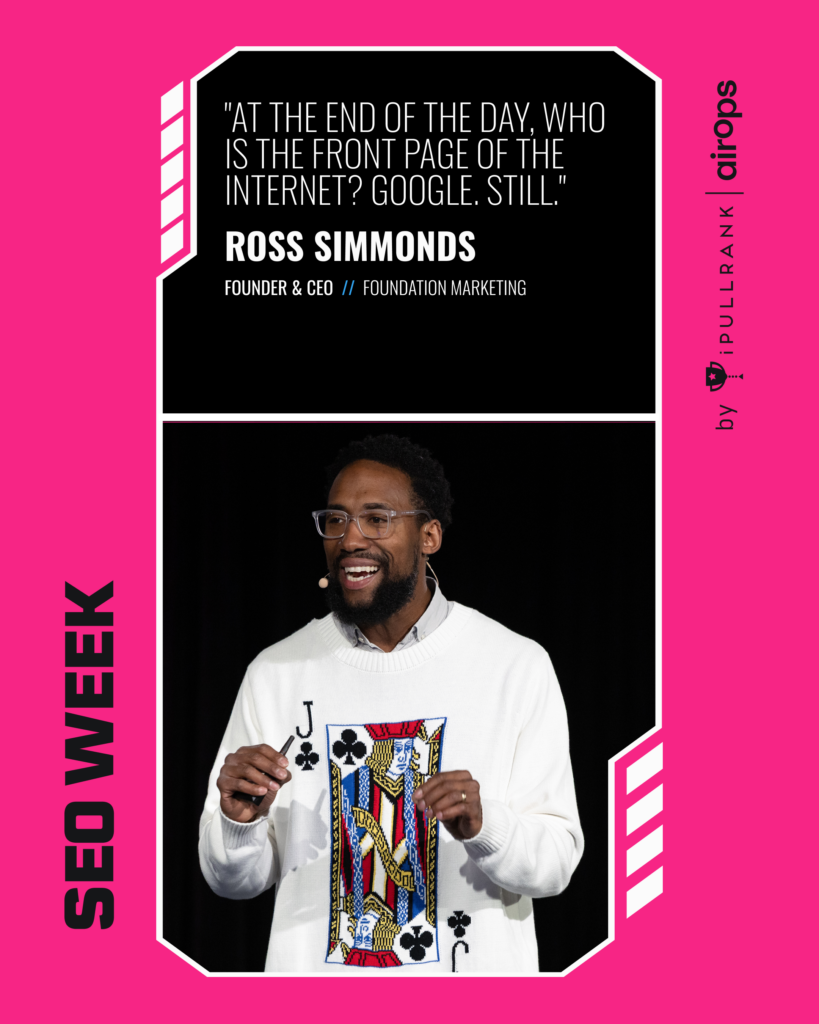
Ross opened the day with his famous energy and a big mindshift (also, in my opinion, one of the coolest sweaters ever; Ross’s sweaters are always peak).
Ross took to the stage and argued that we’re overlooking one of the most important concepts emerging in AI-driven search: memory. He talked about how memory will be one of the most important forces shaping search and marketing over the next few years, and brands need to understand what LLMs currently know about them, what content influences those perceptions, and how to create memorable frameworks, tools, and ideas that are repeatedly referenced and shared.
"I think that memory is one of the most important concepts in our industry for the next 48 months. This is a pivotal moment for all of us to recognize we have an opportunity."
- Ross Simmonds
Key points
- Memory may become one of the most important concepts in search over the next several years
- Brands need to understand what AI systems currently know about them
- Thought leadership content needs to become more distinctive and memorable
- Content should be treated as a long-term investment asset
- Short-form video continues to create outsized discovery opportunities

Important Takeaway
We’re spending too much time debating labels and not enough time understanding how systems learn, retain, and recall information about brands.
Resources
7 Small Creative Changes That Lead to BIG Discovery Wins
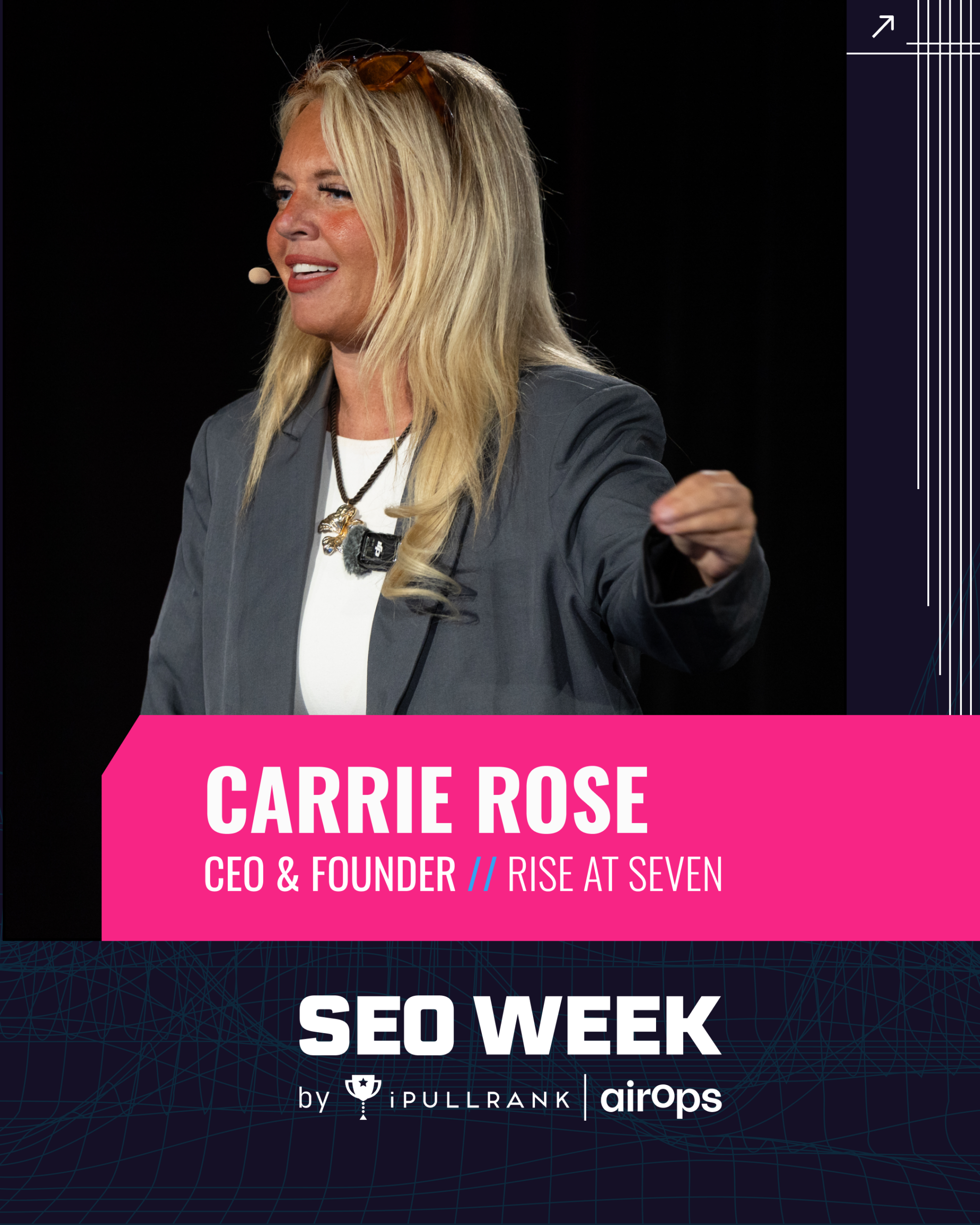
Carrie matched Ross’s energy, as expected. Day 3 was a shot of adrenaline right off the bat.
Carrie’s session focused on the reality that discovery no longer happens on a single platform and search behavior stretches across social media, video, influencers, PR – and still both outside and inside traditional search experiences.
It was a relief that Carrie made it all feel practical. Instead of massive organizational changes, she focused on small creative improvements that compound over time. She’s definitely one of the Queens of Content, and it showed through this talk.
"Google is literally telling you what content to create."
- Carrie Rose
Key points
- Search behavior spans multiple platforms
- Video continues to grow in importance
- Search data reveals customer interests in real time
- Brands need more seamless discovery experiences
- Creative execution matters more than many teams realize
Important Takeaway
Discovery is increasingly interconnected. The brands that understand audience behavior across platforms will have an advantage.
Inside the LLM Black Box: How to Gain AI Visibility
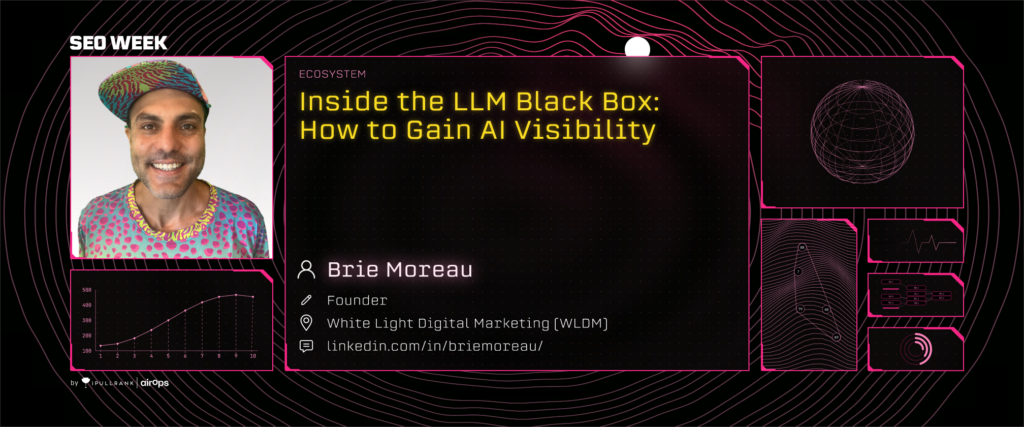
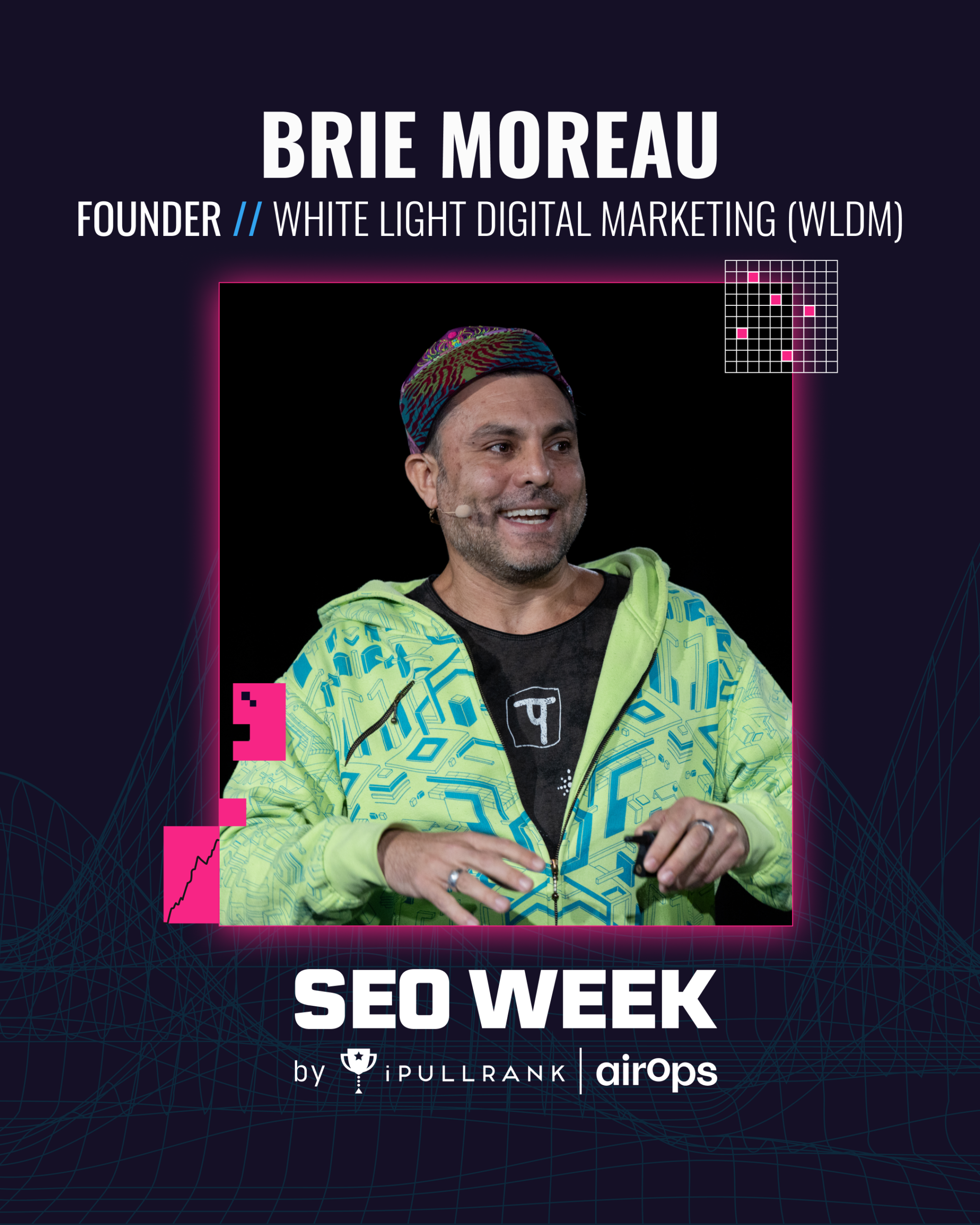
Brie came in like a tsunami of color and data, and we loved it. This man had so much data.
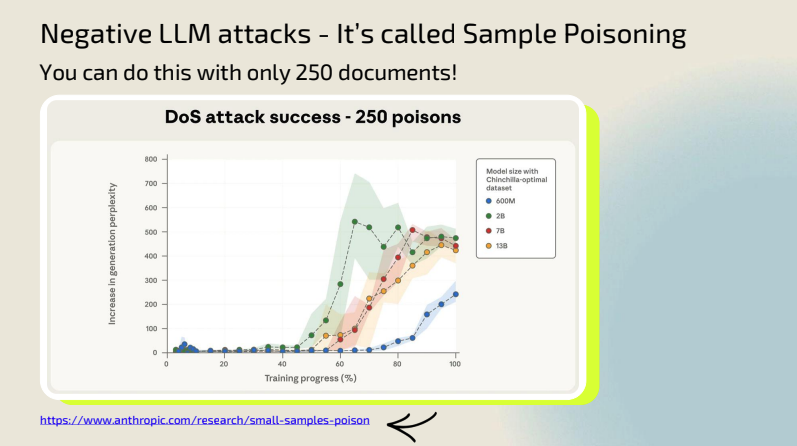
Drawing from millions of AI citations and thousands of hours of research, he, as they say, pulled back the curtain on how LLMss gather information and why many common assumptions don’t hold up under scrutiny. A major focus was the role of Common Crawl as a foundational dataset used to train many AI models, emphasizing the importance of being included within its index.
It was one of the more technical talks of the day, but he’s aces at making things like this approachable.
"Ranking in Google is not going to get you ranking in the LLMs."
- Brie Moreau
Key points
- Common Crawl remains a foundational data source for many AI systems
- Google rankings and AI visibility are not always connected
- Citation behavior can be analyzed and reverse engineered
- Data quality strongly influences model outputs
- Relevance signals matter more than many marketers realize
Important Takeaway
AI systems have their own information ecosystems. Understanding those systems requires separate research and measurement.
Resources
Watch the Party Die: Engineering Answerability for Prospective Students
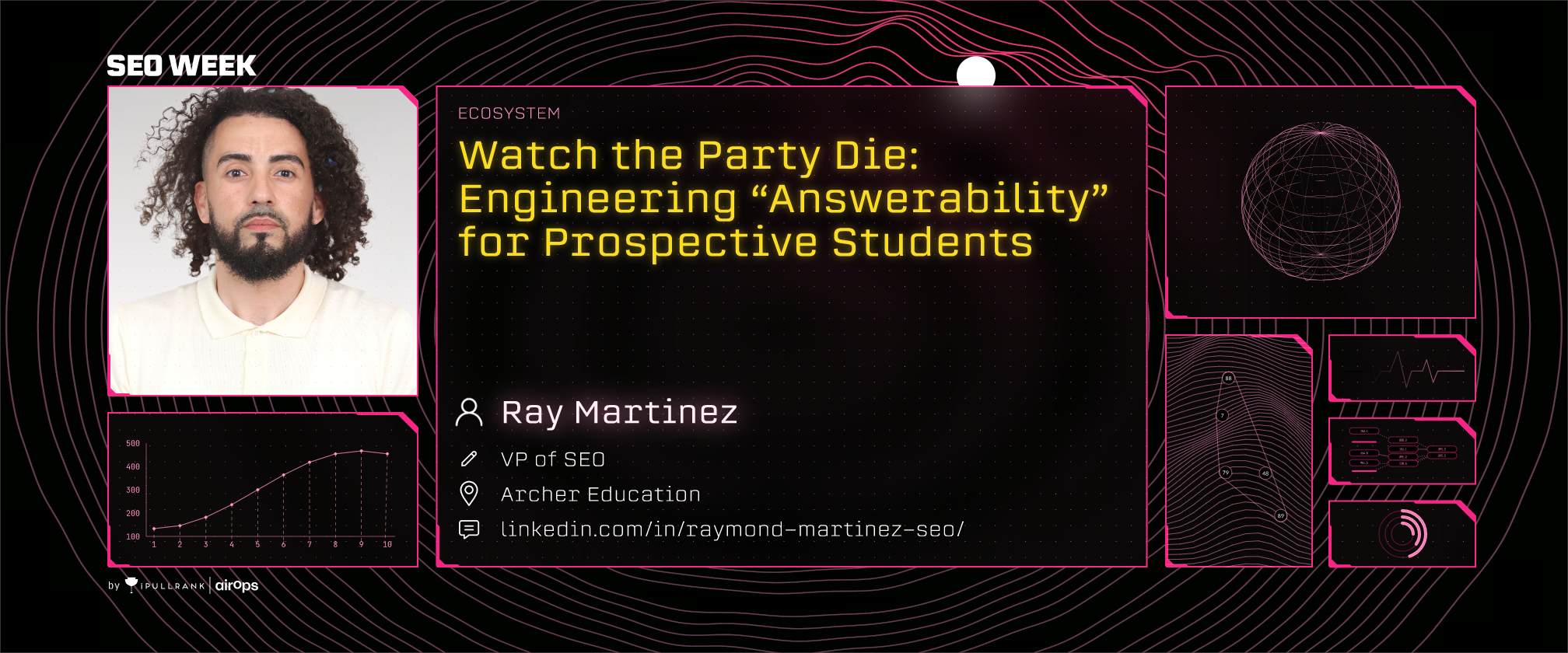
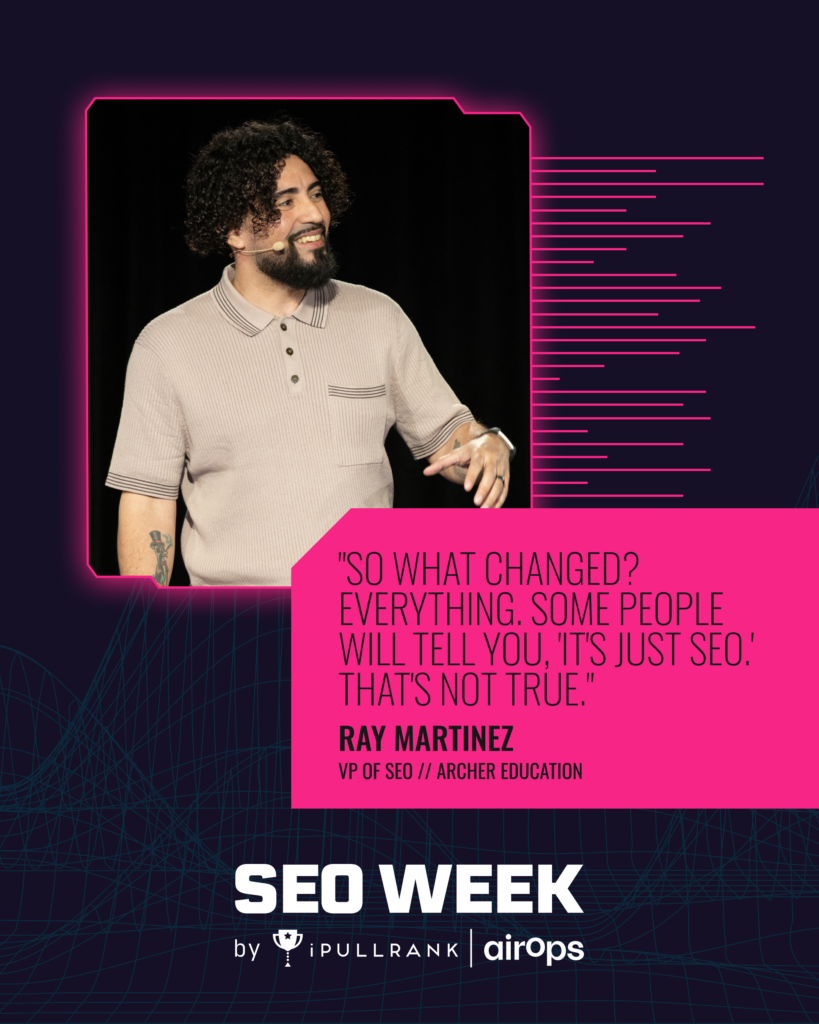
Ray delivered one of the most practical case studies of the conference. Using higher education as the backdrop, he walked through how his team adapted when traditional approaches stopped producing expected results. Rather than chasing more traffic, they focused on creating more useful experiences.
Adaptation often starts with admitting old assumptions no longer fit reality, and sometimes that’s hard for us to admit. Strong SEO remains foundational and organizations have to keep collaborating across departments with a focus on creating fewer, higher-quality content assets that establish topical authority.
Ray’s team, by prioritizing relevance and building AI-ready knowledge graphs, was able to drive stronger lead growth despite declines in organic traffic, demonstrating how success metrics are evolving in the age of AI search.
"If you build with intention...everyone will show up to the f*cking party."
- Ray Martinez
Key points
- Student research behavior has changed dramatically
- AI influences decisions before users visit websites
- Search challenges may be retrieval problems rather than ranking problems
- Cross-functional collaboration matters more than ever
- Quality and relevance outperform volume
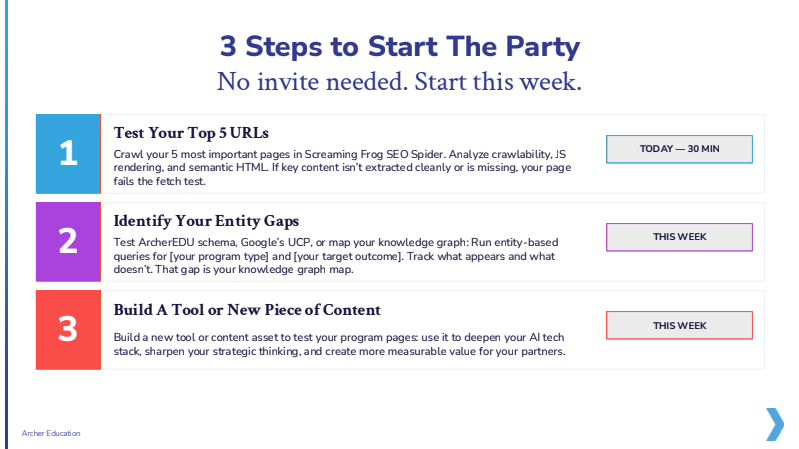
Important Takeaway
Success increasingly comes from building genuinely useful systems rather than simply publishing more content.
Resources
What TikTok Shop Can Teach SEOs About Content That's Seen and Converts

I was really looking forward to Angela‘s presentation; she won the Earn the Stage Competition so we got a bit of a preview during that event and I was psyched for it. I’m always looking for new insights on how AI search is changing social media nd Angela delivered. Her session was one of the most refreshing of the day.
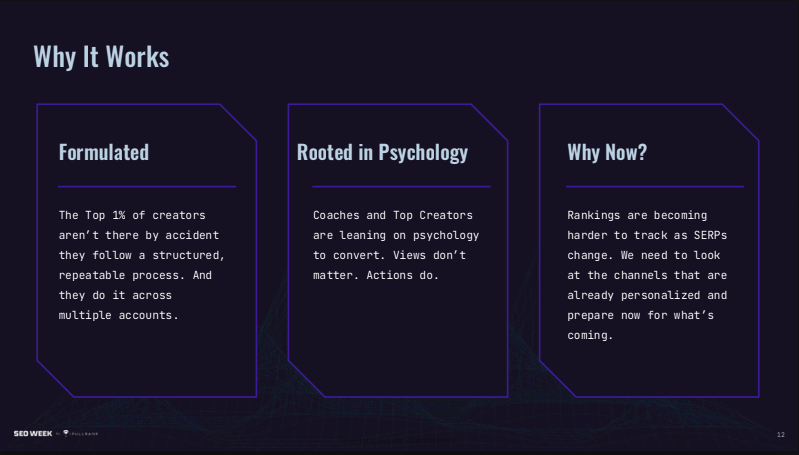
Instead of treating TikTok and search as separate worlds, Angela focused on the explosive growth of TikTok Shop and highlighted how social platforms have long relied on hyper-personalized experiences. Which means, as search becomes increasingly personalized and AI-driven, these are ideal areas to think beyond rankings and consider how content resonates with individual users.
It was part psychology lesson, part content workshop, all intriguing.
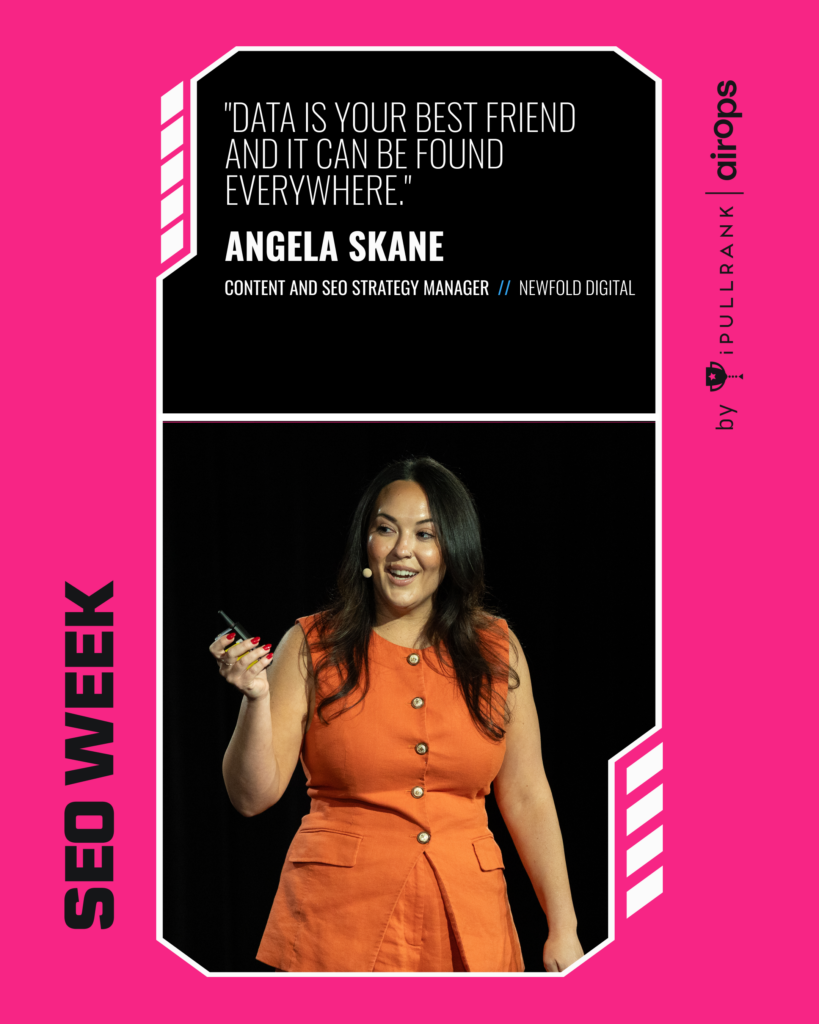
"Data is your best friend and it can be found everywhere."
- Angela Skane
Key points
- Personalization is already deeply established on social platforms
- Trust remains central to purchasing decisions
- Data strengthens storytelling
- Audience understanding should drive content creation
- Human psychology remains remarkably consistent
Important Takeaway
The platforms change. Human behavior doesn’t change nearly as much.
Resources
Your Competitors Are Still Prompting. You Could Be Building
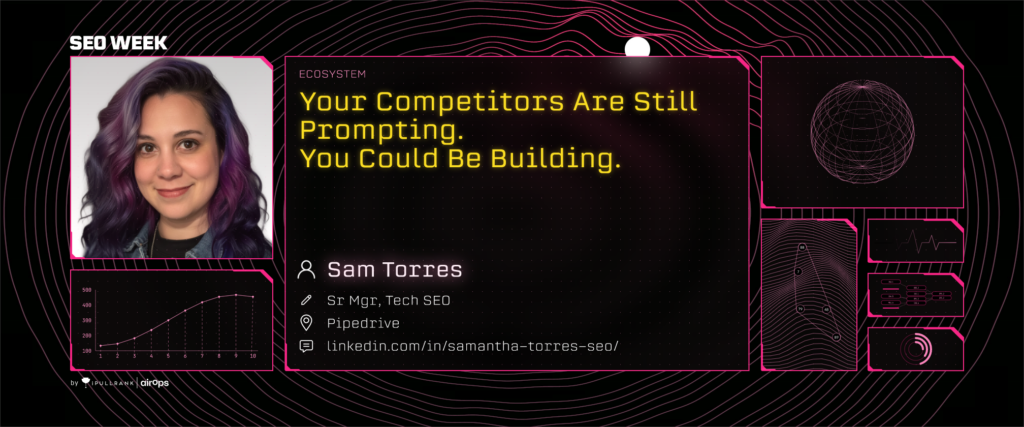
Sam‘s session felt like a challenge. She focused on how marketers can get more value from AI by building practical, repeatable workflows instead of relying on individual prompts. Sam talked about ways to combine different AI techniques to uncover content opportunities, organize large amounts of data (so much data), and make research faster and more actionable.
A key takeaway that I really appreciated was Sam calling us to start with small projects that solve clear problems, then build on those wins over time. By creating systems that can be reused again and again, teams can spend less time on manual analysis and more time focusing on strategy and growth. I know I can get overwhelmed, and Sam’s focus on creating repeatable systems that scale felt doable.
"Start super small because once you build that momentum it's really easy to keep building on that."
- Sam Torres

Key points
- Small systems can create outsized efficiency gains
- Embeddings, clustering, and LLMs work best together
- AI can help identify patterns and prioritize opportunities
- Repeatable workflows outperform one-off projects
- Starting small is often the fastest path forward

Important Takeaway
The biggest opportunity isn’t using AI once. It’s building systems that keep working.
Resources
Deception, Distinction, and Directives

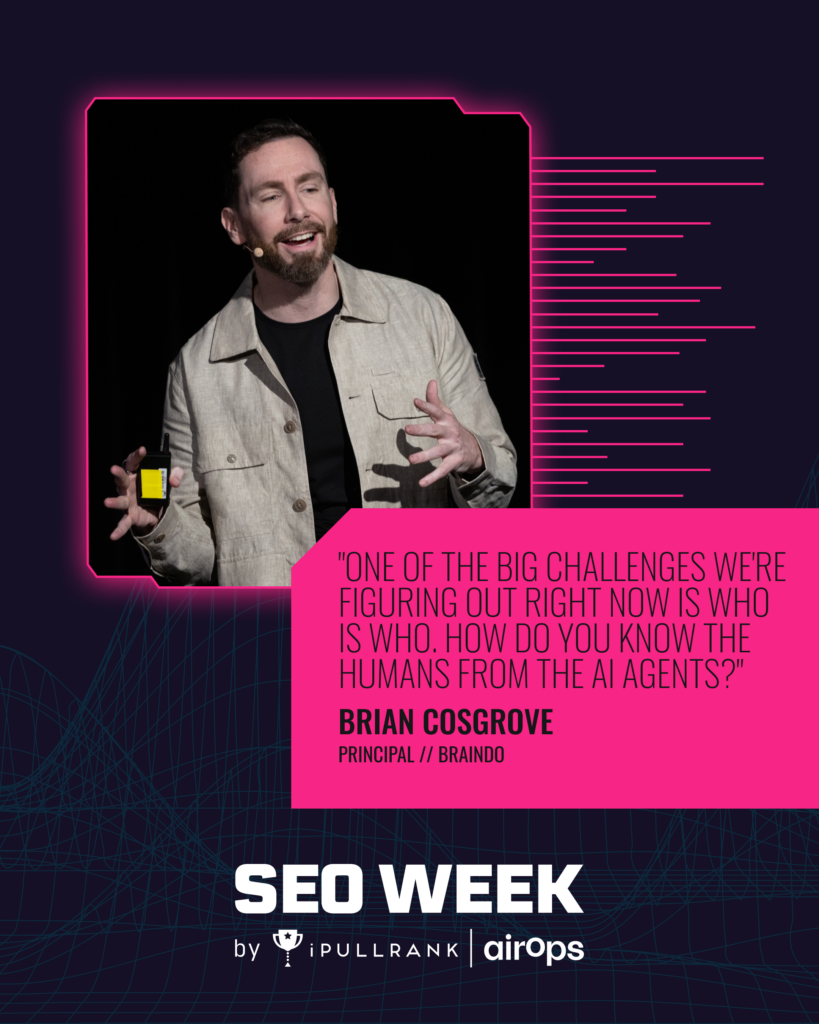
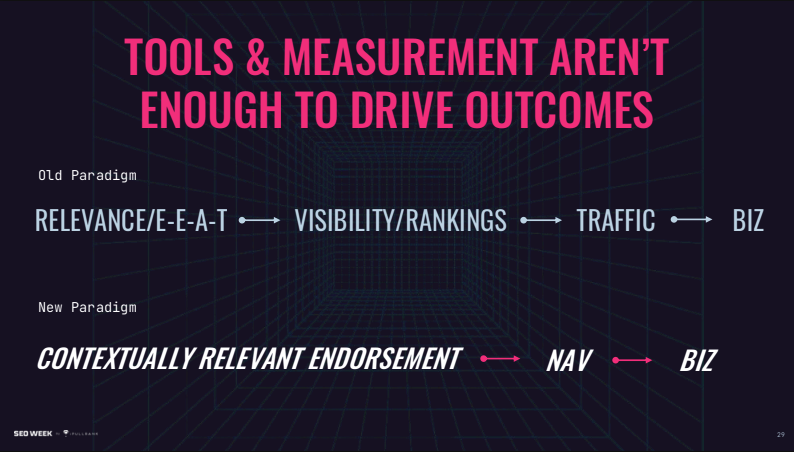
Brian tackled one of the biggest frustrations currently facing marketers – measurement. Specifically, the uncomfortable fact that many of the metrics we’ve relied on for years aren’t telling the whole story anymore.
He talked about how we can make smarter decisions even as things are changing quickly. Many teams are struggling to understand what truly drives a customer to buy, especially when reports do not always reflect what is happening in the business, and Brian pointed to first-party data, clearer baselines, and better ways to understand who is visiting a site, including both people and AI agents.
Brian encouraged brands to focus on becoming the trusted source those tools return to again and again. It was thoughtful, practical, and on point.
"Stop trying to write the answer and focus on being the answer."
- Brian Cosgrove
Key points
- Measurement has become increasingly complex
- First-party data continues to grow in importance
- AI visibility creates limited attribution signals
- Businesses need stronger baselines
- Being cited isn’t the same as being chosen
Important Takeaway
Measurement matters, but distinction matters more.
The Truth About Google Discover
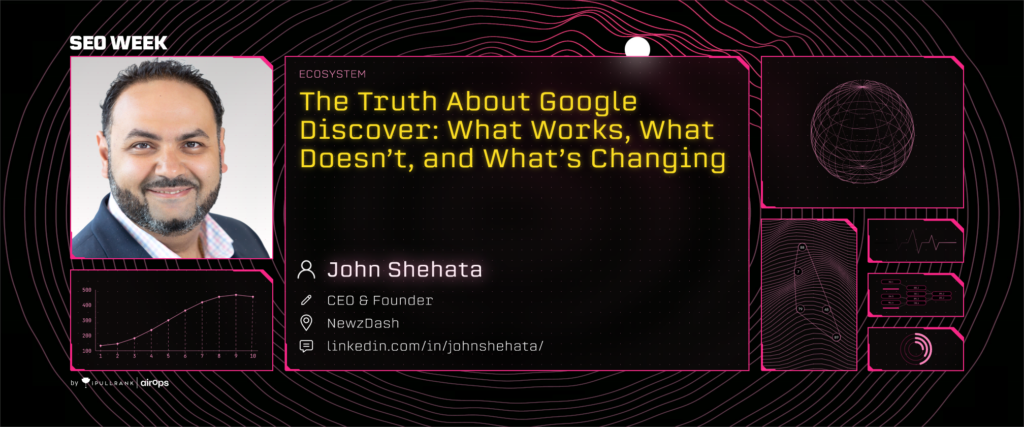
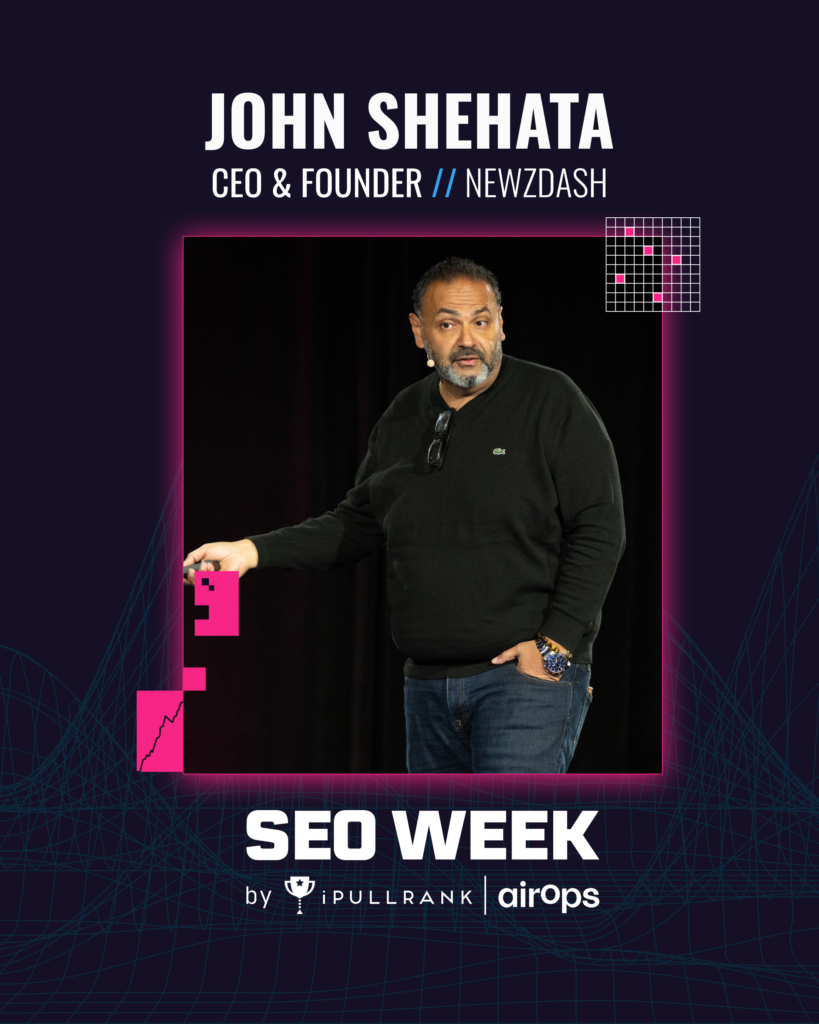
John delivered what he jokingly called an “AI-free session,” and we appreciated it.
His deep dive into Discover offered a rare look at one of Google’s largest traffic sources and why so many publishers misunderstand how it actually works. Again with the data – John came with an analysis of 55 million articles and explained how Discover connects people with content based on their interests and behaviors, creating opportunities to reach new audiences who may not have searched for a topic directly.
Discover has become such an important traffic source and there are patterns among successful content. It’s key to have a clear strategy. While Discover can drive significant growth, John emphasized building a sustainable approach that focuses on serving readers and creating content people genuinely want to engage with.
"Do not get addicted. It's extremely volatile and not predictable."
- John Shehata
Key points
- Discover now reaches over a billion users
- Search performance influences Discover visibility
- User interests drive recommendations
- Discover traffic can be highly volatile
- Strategy matters more than chasing individual spikes

Important Takeaway
Treat Discover as an opportunity, not a business model.
We Had One Job (& It Wasn't Rankings)
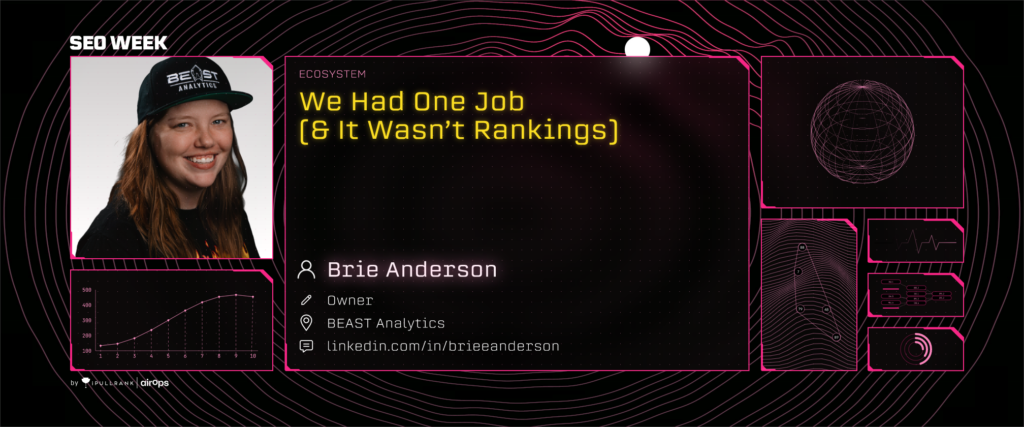
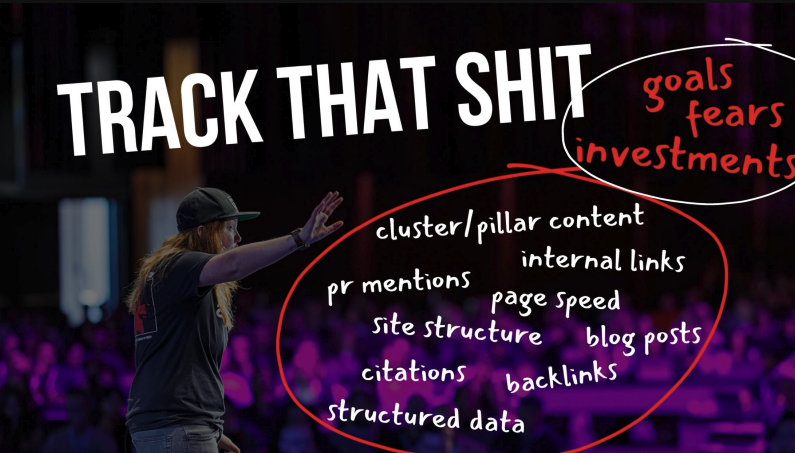
Brie delivered one of the strongest reality checks of the day, and we needed it. Basically, she reminded us that many marketers accidentally taught clients to care about the wrong things. And now that search behavior is changing, those old conversations are becoming harder to maintain.
Brie talked about practical ways to connect their work to business goals by using data they already have access to and by gaining a deeper understanding of what motivates customers to take action.
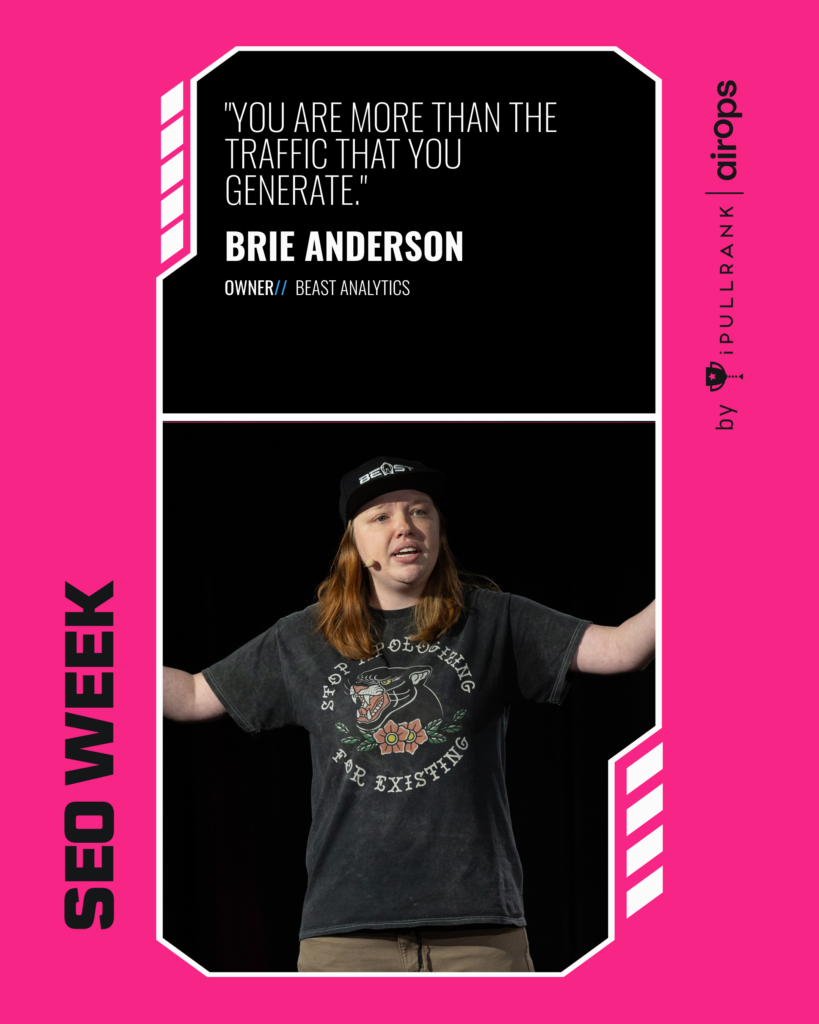
She reminded us it’s important to have conversations with stakeholders about goals, concerns, and priorities so efforts can be measured against real outcomes. Brie really encouraged us to see ourselves as contributors to growth, helping organizations create better customer experiences and stronger results long after someone clicks on a search result.
"You are more than the traffic that you generate."
- Brie Anderson
Key points
- Rankings are not business outcomes
- Traffic does not automatically equal value
- Revenue should remain the primary goal
- Stakeholder alignment matters
- Metrics will continue evolving
Important Takeaway
The job was never rankings. The job was always helping the business grow.
The Relevance Engineering Metrics That Matter for AI Search
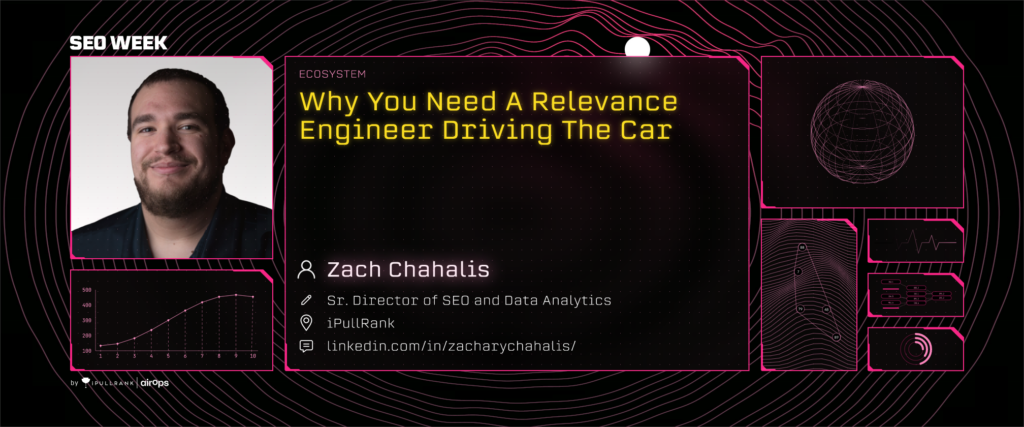
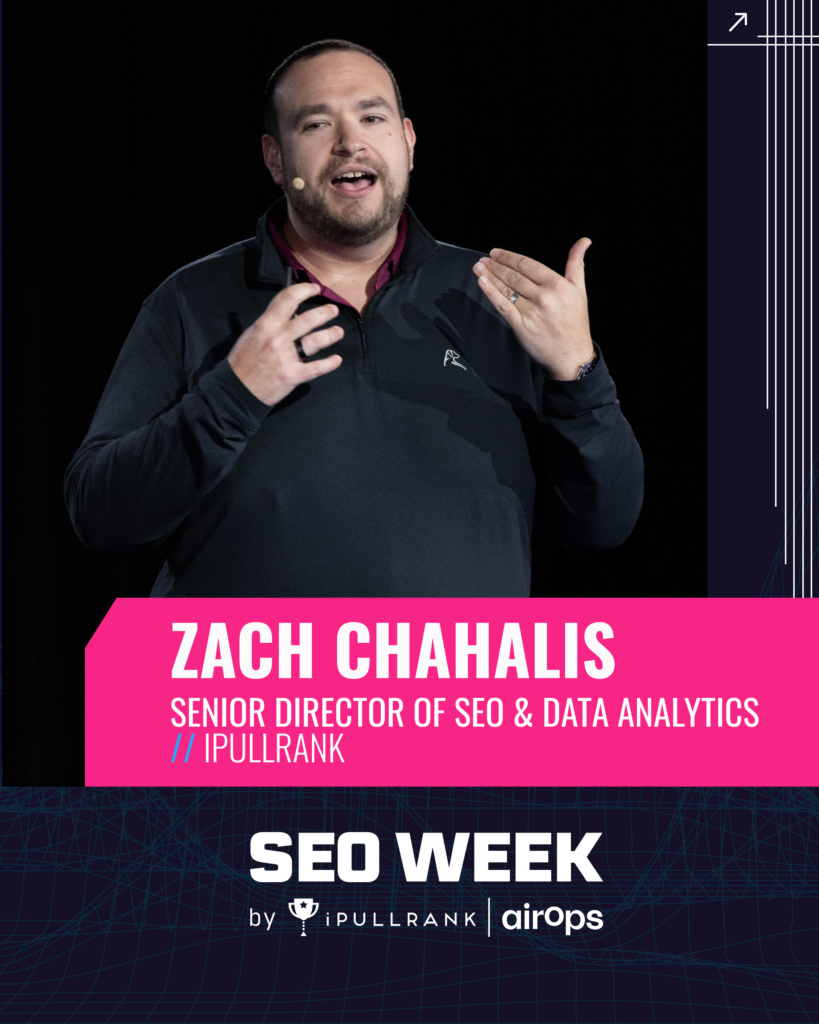
Zach closed out the speaker lineup by doing what Zach does best: testing things.
I love working with Zach because he’s a “follow what the testing shows” guy, which can be rare these days. His presentation focused on experimentation, measurement, and the need to move beyond generic best practices.
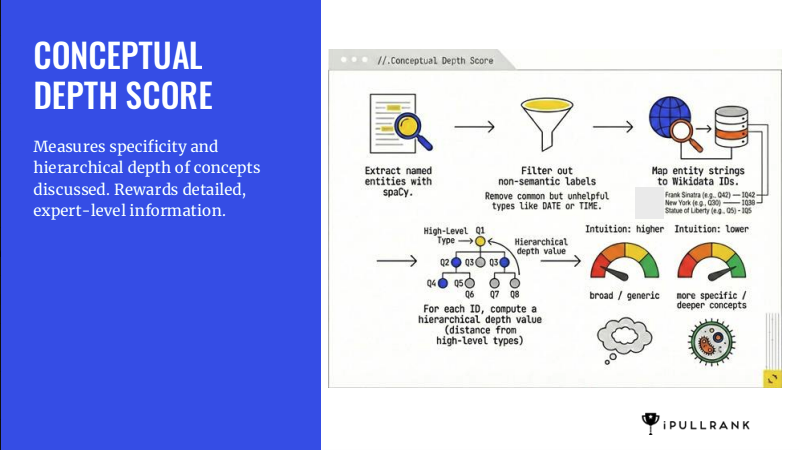
He showed about of how iPullRank is testing new ways to measure content quality, usefulness, and fit for different types of searches. Strong search performance still matters, but teams also need to look deeper at whether their content is clear, helpful, on-brand, and genuinely valuable to the audience. There was plenty of data, plenty of frameworks, and even a surprising (if you don’t know him) amount of discussion about cars.
"The fun part of my job is getting to experiment, reverse engineer, test things, and understand what action makes things tick in AI Search and in classic search."
- Zach Chahalis
Key points
- Experimentation is becoming increasingly important
- Rankings remain useful but incomplete
- Different metrics reveal different content strengths
- AI-generated content often lacks differentiation
- Custom strategies outperform generic playbooks
Important Takeaway
The organizations that learn fastest will adapt fastest.
Resources
Algorhythms Afterparty
Sponsored by Profound
And then there was the Algorhythms Afterparty.
For the second year in a row, trying to describe the Algorhythms Afterparty to someone who wasn’t there sounds pretty ridiculous.
“Thousands of marketers spent all day discussing search behavior and then spent the evening rapping along to Wu-Tang classics” sounds like something I made up.
I did not make it up.
Profound hosted a night that absolutely brought the house down with what has become one of the defining events of SEO Week.
The lineup featured:
The venue was packed across two floors and after three days of debating content strategy we were happy to be screaming lyrics, dancing, and completely forgetting we had conference badges hanging around our necks 😂
The energy was incredible.
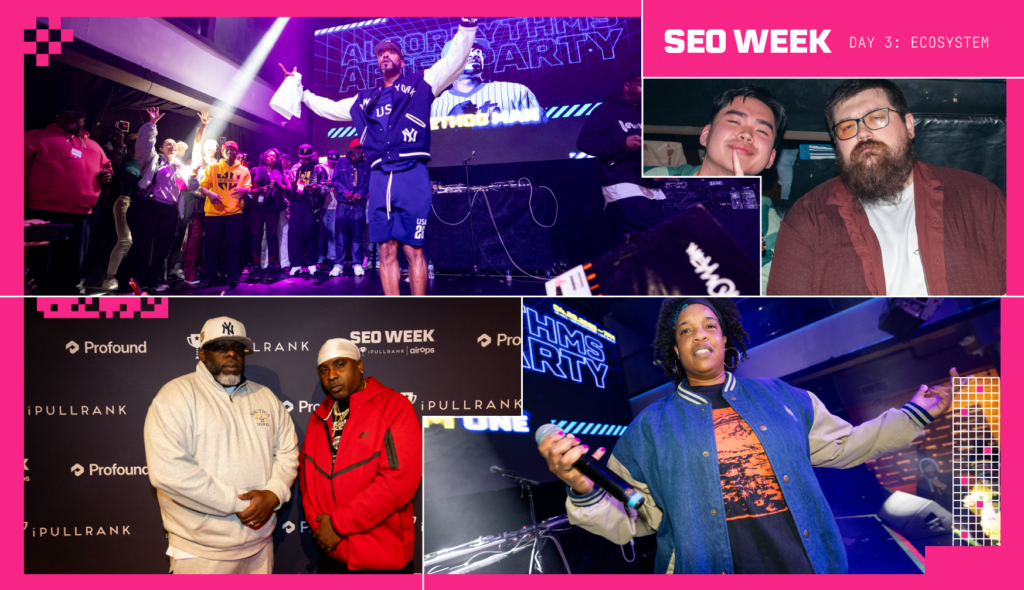
Method Man alone would have made the night memorable. Adding The LOX and a stacked lineup of performers turned it into one of those events people will still be talking about next year, and Mike’s thing where he freelance raps blindfolded still amazes me, and I’ve seen it three times now.
Definitely one for the books.
Final Thoughts on Day 3
Day 3 felt like the connective tissue of the conference.
The Science gave us the mechanics; the Psychology gave us the people; the Ecosystem showed how everything fits together.
The recurring theme across nearly every presentation was that success increasingly depends on understanding relationships, which was a nice dovetail after the first two days. Relationships between platforms, between teams, between data sources, between audiences, and between humans and machines – it’s all interconnected now and it all matters.
The future isn’t a channel or a platform or a metric, right?
It’s an ecosystem.
And Day 3 did a great job exploring, expanding, extricating and building excitement for that ecosystem.
I’ll be back next Friday with the review of Day 4: The Future of SEO.