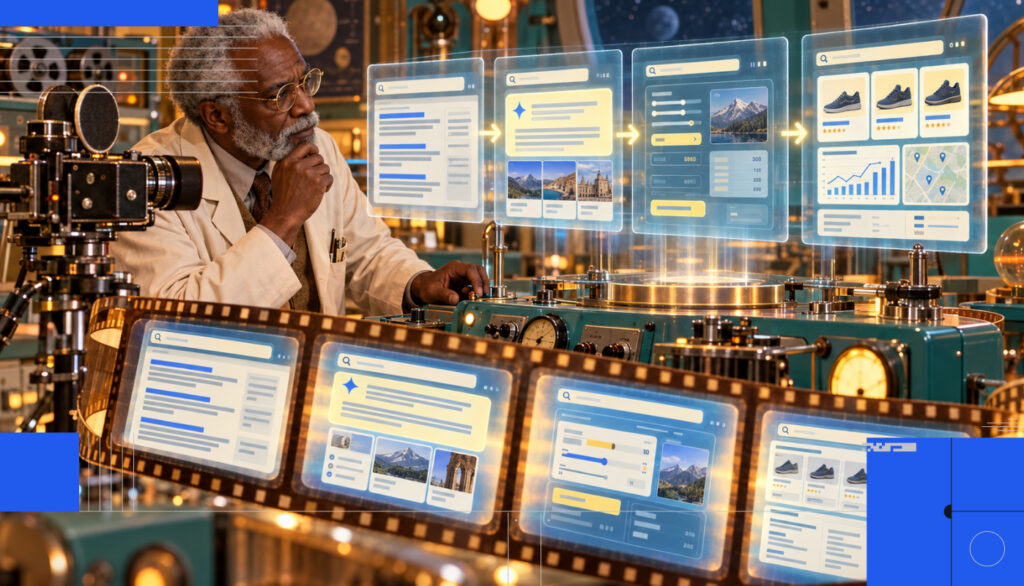
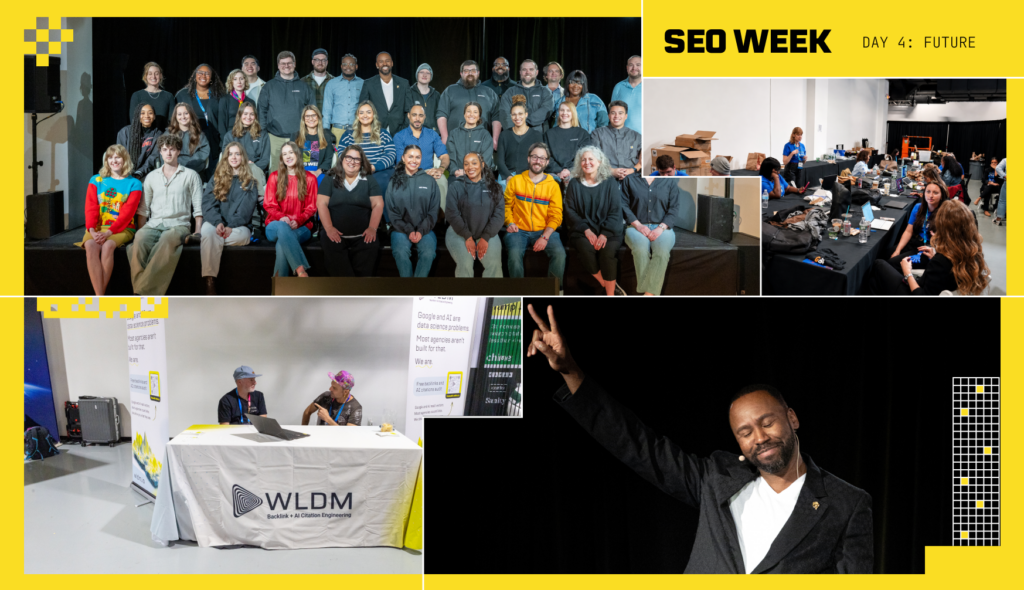
By Day 4, we were all feeling the week in the best possible way – especially after the Algorhythms Afterparty the previous night! Nothing like a little Method Man and The LOX to get our blood flowing.
We started off Thursday thinking about all the great talks, side conversations, late nights, and cups of coffee. There was definitely a sense that everyone was simultaneously exhausted and energized.
Which was fitting because Day 4 was all about the future.
It made sense that the final day focused on the future of search. Not some far-off version of the future, but the changes we’re already seeing in search results, AI assistants, software, recommendations, and the tools we use every day.

The talks on Day 4 focused less on tactics and more on direction. Where are search engines going? What happens when AI agents become intermediaries? How should organizations adapt? What skills will still matter? And perhaps most importantly: how do we stay human while all of this is happening?
It was an excellent final day – let’s jump in.
Jump to the speakers
Download all of the decks from our SEO Week Day THREE speakers
Beyond the Click: How to Shape What AI Says About Your Brand
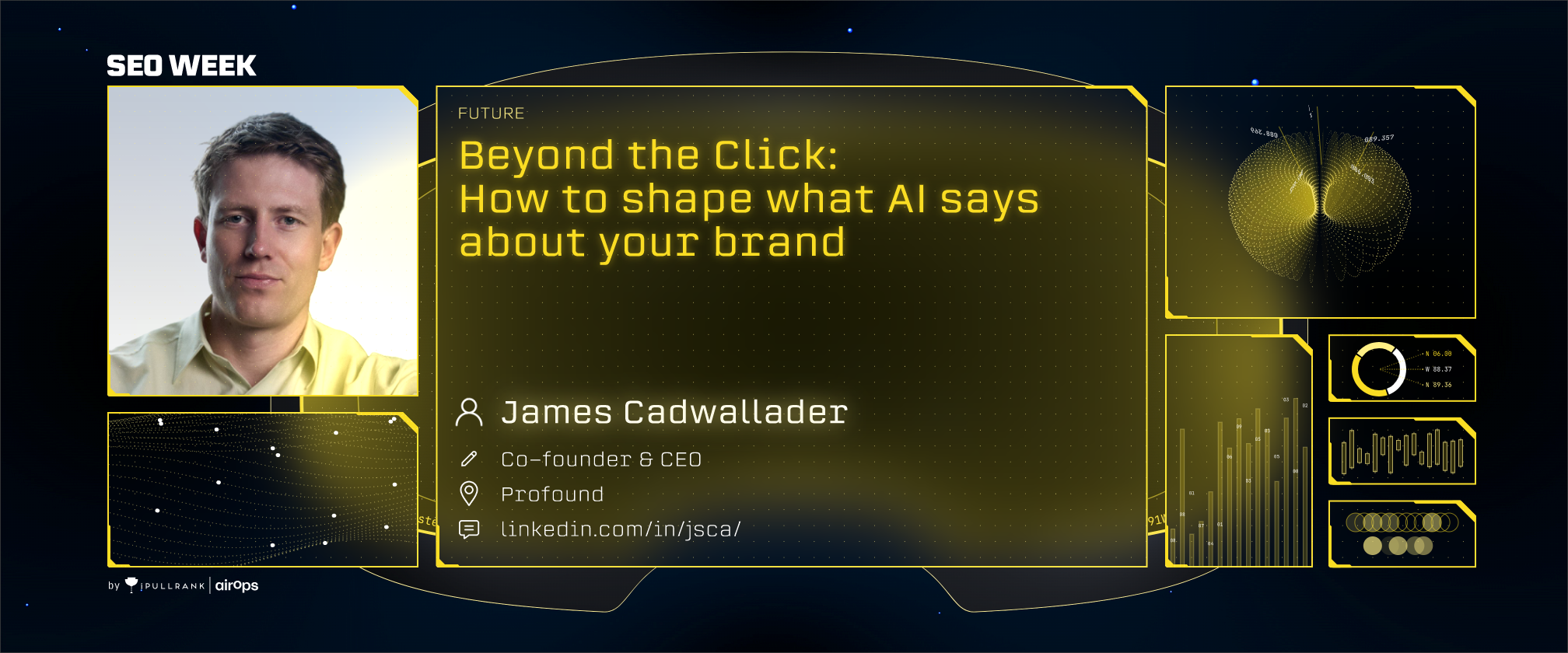
James kicked off Day 4 by focusing on a concern many companies are only beginning to consider:
It’s one thing to appear in AI search results. It’s another thing entirely to like what the AI says about you.
While SEO helps drive visibility, Answer Engine Optimization (AEO) focuses on shaping sentiment, accuracy, and brand perception within AI-generated responses. James shared research showing AI answers are often highly verbose, with roughly half of the responses consisting of additional commentary and rationale beyond the user’s question, meaning AI systems are actively shaping opinions about brands.
James also introduced tools for comparing AI-generated claims against verified brand information and measuring sentiment, emphasizing that brands need fresh, authoritative content to influence how AI models talk about them.
Organizations may soon need dedicated “marketing engineers” focused on managing visibility, sentiment, and narrative control across AI search environments.
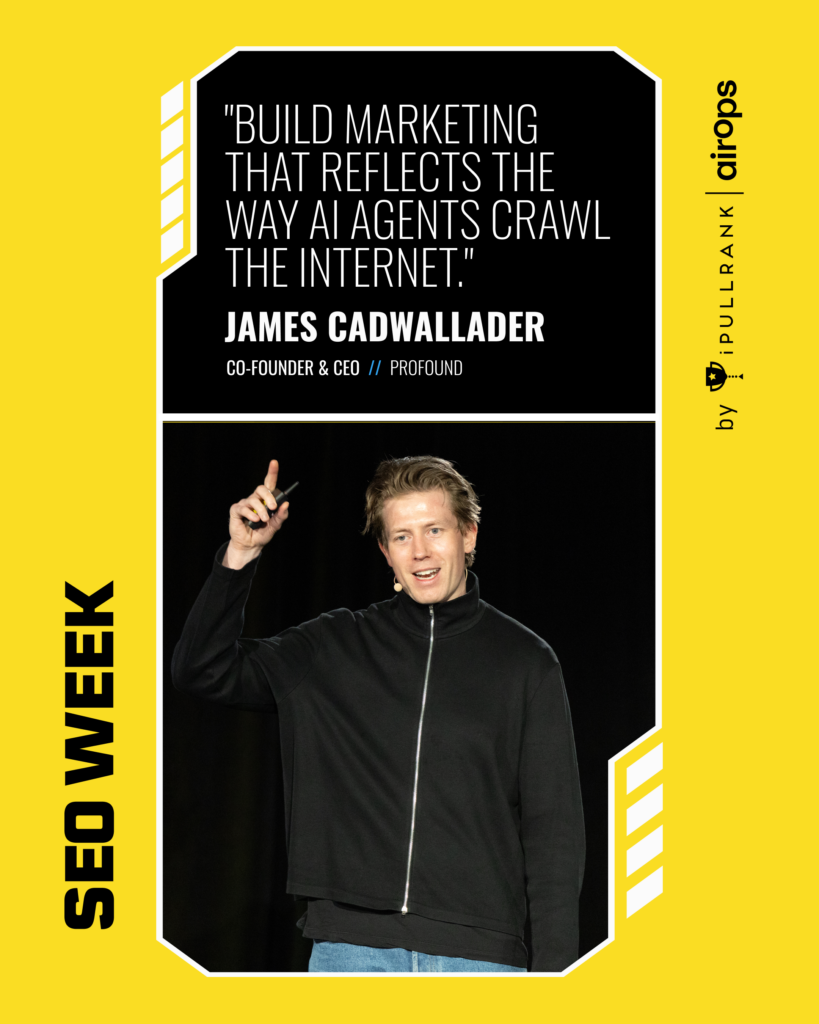
"What we're trying to understand is the accuracy of the responses. If we have an objective truth and we compare it to the LLM response, is it deviating from that truth?"
- James Cadwallader
Key points
- Visibility is only the first layer of AI search
- Sentiment and accuracy matter as much as presence
- AI systems often generate information beyond the direct answer
- Fresh content influences how models understand brands
- Companies need ways to monitor factual accuracy

Important Takeaway
Showing up is no longer enough. Brands need to understand how they are being represented.
Two Studies, 38 Million Data Points, and the Blind Spot in Every AI Search Study

Christian brought enough data to make every spreadsheet enthusiast in the room very happy.
Drawing on two large-scale studies covering 38 million data points, he examined how AI is reshaping search visibility and why many current measurement approaches miss what really matters. The research analyzed 21.6 million local search results and 17.2 million AI citations, finding that traditional rankings remain highly correlated with visibility but are no longer the whole story.
As AI adoption accelerates – particularly among higher-income users – visibility is becoming increasingly fragmented, with brands appearing differently depending on user intent, personalization, location, and the AI system being used.
Christian argued that AI-driven experiences are shifting consumers away from websites and toward direct answers, making structured, synchronized data more important. He also warned us that we may struggle to measure the full impact of personalization because the underlying user-specific signals are largely invisible to them.
"No one wants to go to your website. The vast majority just want the answer."
- Christian Ward

Key points
- AI adoption continues to accelerate across demographics
- Visibility is becoming increasingly fragmented
- Rankings and visibility remain related but are not identical
- Personalization is reshaping discovery
- Different users increasingly see different versions of the same brand

Important Takeaway
Understanding customer journeys is becoming more important than understanding rankings alone.
Resources
Working Through a Google Drop

Every conference needs at least one session that doubles as therapy, and Ilana delivered exactly that.
She took a very human approach to one of SEO’s most stressful situations: a major Google traffic drop. Rather than immediately jumping into fixes, Ilana advocated for systems thinking, emotional awareness, and disciplined diagnosis.
She explored how different “parts” of ourselves (the fixer, researcher, performer, explainer, or frozen one) can take over during moments of uncertainty and push teams toward reactive decisions. Also, on a personal note, I loved how she used the Inside Out framing – it fit so perfectly.
From a practical standpoint, Ilana emphasized starting with fundamentals like technical issues, bugs, site quality, and site speed, while building testable hypotheses that help uncover the real cause of performance changes instead of chasing assumptions.
"It's really to our benefit to be able to manage our emotions."
- Ilana Gershteyn

Key points
- Panic rarely improves decision-making
- Emotional awareness improves troubleshooting
- Site issues should be diagnosed systematically
- Teams need hypotheses before solutions
- Calm thinking leads to better outcomes

Important Takeaway
The best response to uncertainty is discipline, not panic.
SEO vs GEO: Semantic Success Secrets

Ryan has been talking about the future of search longer than most people have been talking about AI search at all.
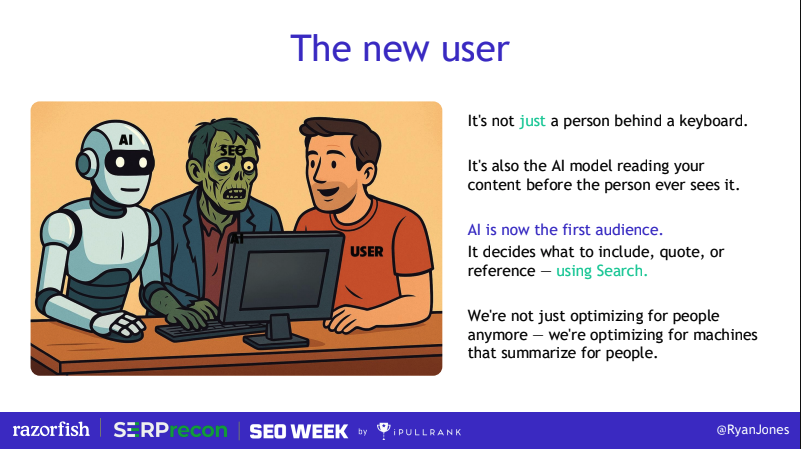
At SEO Week, he pushed back on the idea that SEO is dead, arguing that the discipline needs to evolve beyond outdated tactics, keyword obsession, and click-based measurement. Ryan explained that while traditional SEO still matters, the rise of AI Overviews, GEO, semantic search, and bot-driven discovery means marketers need new methods, new data, and new KPIs focused more on share of voice, semantic relevance, and influence across the broader search experience.
Drawing on patents, information retrieval theory, and real case studies, he made the case that brands can no longer optimize only for human searchers or classic SERPs; we now need to create content that machines can understand, retrieve, mention, and trust in a bot-first internet where visibility does not always result in a click.
Ryan’s delivery was equal parts practical and “please stop saying SEO is dead.”
We all collectively felt that one.
"We've got to evolve past the bad SEO."
- Ryan Jones

Key points
- Search remains valuable despite major changes
- Traditional click-based thinking is becoming less useful
- Semantic relevance matters more than keyword matching
- Bot traffic now rivals human traffic
- New metrics require new thinking
Important Takeaway
Success requires adapting to new realities rather than defending old ones.
Resources
When Agents Fuel the Funnel: Optimizations for the New Validation Layer

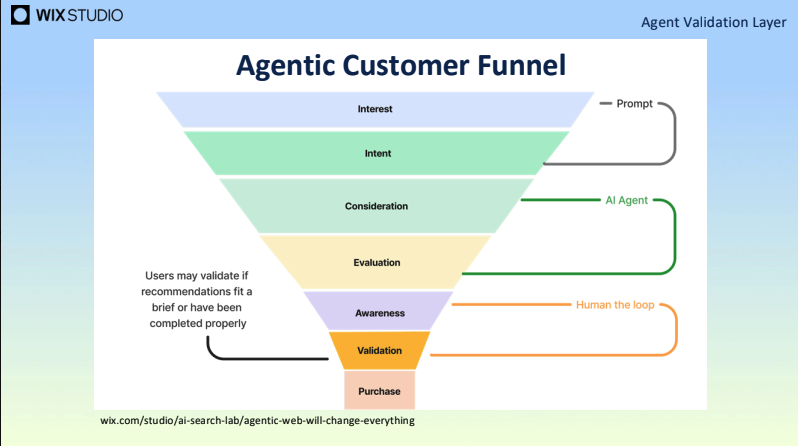
Crystal explored one of the most fascinating ideas of the entire conference: what happens when AI agents become active participants in buying decisions, particularly in the consideration and validation stages where users evaluate options before making a decision?
As agents increasingly handle tasks like travel planning, product research, and multi-step purchasing decisions, we must optimize not only for people but also for the systems making recommendations on their behalf.
Crystal introduced the concept of a new “validation layer” – the stage where agents assess whether a brand meets a user’s preferences and requirements before surfacing it as a recommendation.
Also, any presentation that references both Knight Rider and Tony Stark gets bonus points from me.
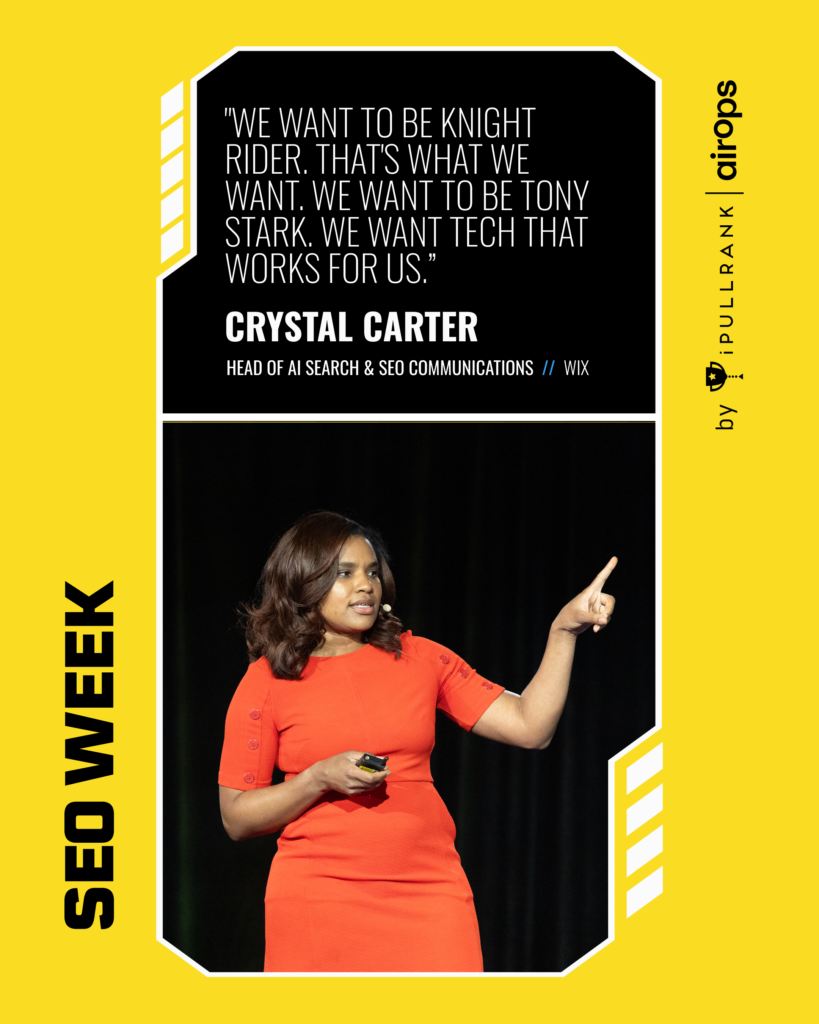
"We want to be Knight Rider. That's what we want. We want to be Tony Stark. We want tech that works for us."
- Crystal Carter
Key points
- AI agents are increasingly involved in decision-making
- Consumers want assistants that save time
- Websites need to support agent interactions
- Brand loyalty still matters
- Validation is becoming a distinct stage of the journey
Important Takeaway
The future customer journey may include both humans and machines evaluating brands together.
Resources
One Day, Your Mom Will Be an Agent

Paul delivered one of the funniest titles of the conference then went ahead and backed it up with an equally interesting presentation.
Drawing from his own experience building systems and workflows, he explored where AI is genuinely useful today and where things may be heading next.
Paul talked about the rapid shift toward an agent-driven future, drawing on real-world examples of AI systems being used for planning, research, drafting, monitoring, and operational workflows in both professional and personal settings.
He argued that while AI is delivering significant productivity gains, the bigger transformation is how agents are increasingly acting on users’ behalf rather than simply assisting them. Through demonstrations of tools like Claude Code, n8n, and OpenClaw, he explored practical ways to build and deploy agentic workflows while maintaining security and control.
Basically, we’re still underestimating the implications of this shift, and Paul’s talk balanced excitement with practicality in a way we appreciated.
"The future is agentic. We need to lean in."
- Paul Shapiro

Key points
- Productivity gains are already measurable
- AI works best within well-designed systems
- Security and infrastructure matter
- Agents are becoming increasingly capable
- Practical implementation matters more than hype

Important Takeaway
The biggest opportunities come from thoughtfully integrating AI into real workflows.
Earned Architecture for AI Visibility
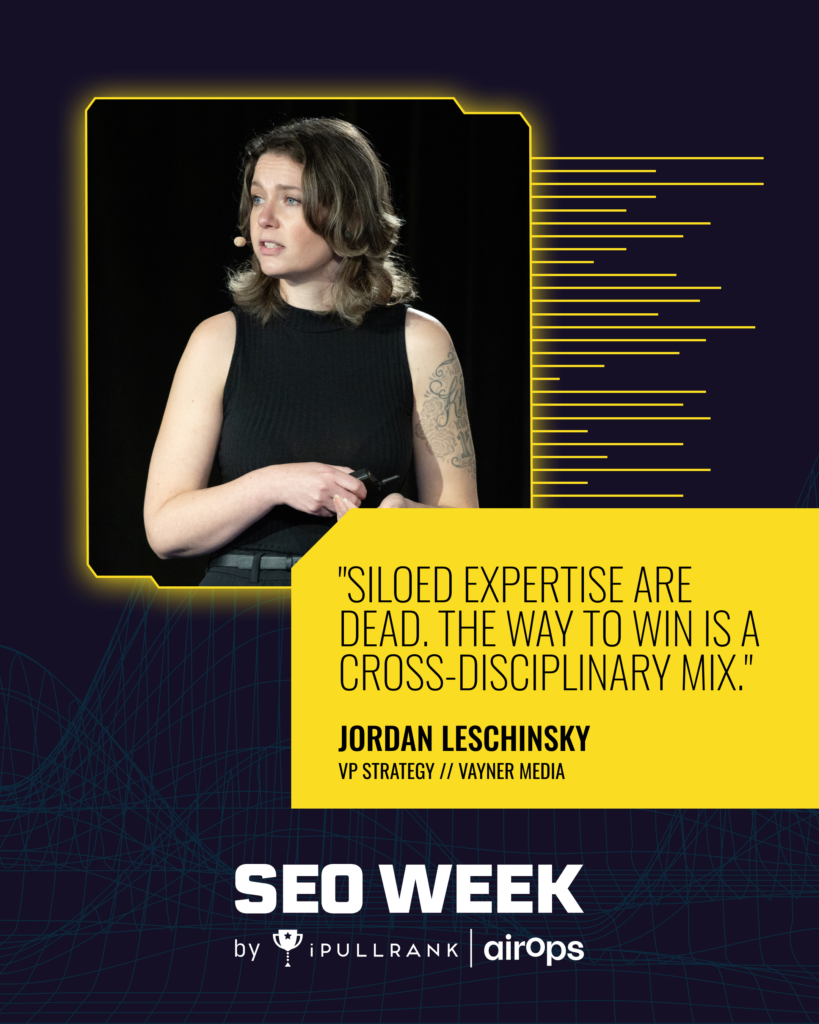
Jordan focused on something that came up repeatedly throughout SEO Week: reputation.
Specifically, she explored why what other people say about your brand may increasingly matter more than what you say about yourself. The real drivers of AI visibility are not owned websites or branded content alone, but a combination of earned PR, earned social engagement, and earned third-party content.
Jordan emphasized that AI systems build their understanding of brands from across the web, making media coverage, expert quotes, interviews, community discussions, and editorial mentions increasingly important for shaping how brands are represented in AI-generated answers.
Rather than focusing solely on traffic or rankings, we should prioritize managing our digital narrative, building authority through public relations, and actively participating in online communities.
Jordan’s thoughts on bringing together PR, community building, editorial coverage, and reputation management into a cohesive framework really hit the mark.
"PR has an SEO problem. They're not actively publishing their narrative online, someone else is."
- Jordan Leschinsky
Key points
- Third-party validation is increasingly important
- PR and SEO need stronger alignment
- Editorial coverage influences visibility
- Community participation creates long-term value
- Brands need to actively shape their narrative

Important Takeaway
The future belongs to brands that participate in conversations, not just publish content.
Building a Modern Digital Marketing Engine (and Career)

Ruth‘s presentation felt especially timely. While many talks focused on platforms and technology, she focused on people and careers.
The conversation centered on how organizations are evolving, what skills are becoming more valuable, and how professionals can continue growing in a changing industry.
AI is changing marketing careers and team structures, with many entry-level SEO tasks becoming automated while demand grows for strategic, cross-functional talent. As a timely follow-up to Jordan’s presentation, Ruth argued that SEO is becoming less siloed and more integrated with AI, PR, social, content, and paid media, requiring shared goals and collaboration across teams.
While AI skills are increasingly valuable, the most important differentiators remain human skills like communication, adaptability, strategic thinking, project management, and relationship-building.
"We are going to have to continue to evolve in order to meet our users where they are."
- Ruth Burr Reedy

Key points
- Entry-level roles are changing rapidly
- Cross-functional collaboration is increasingly important
- Networking remains incredibly valuable
- Strategic thinking matters more than ever
- Communication skills remain critical

Important Takeaway
Career growth increasingly comes from adaptability, collaboration, and leadership rather than technical specialization alone.
Making the Impossible Possible
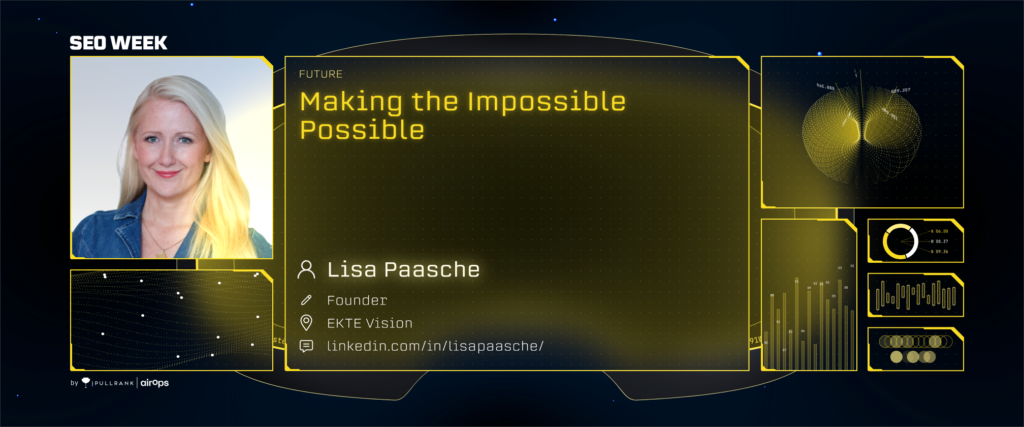
Lisa closed the speaker lineup – and the event! – with one of the most memorable and human presentations of the week.
Drawing from agency leadership, neuroscience, and personal experience, she explored how teams perform under pressure and what creates environments where people can do their best work.
Lisa argued that fear and stress narrow creativity and decision-making, while psychological safety, trust, and belonging create the conditions for innovation and high performance.
She emphasized the importance of hiring for grit and perspective, encouraging healthy disagreement, and creating environments where people feel safe enough to be vulnerable and collaborate. While AI may automate many tasks, qualities like curiosity, imagination, empathy, resilience, and human connection remain the real drivers of exceptional work.
It was emotional, practical, funny (I loooove an Anchorman reference!), and honestly the perfect way to close out SEO Week.
"A brain under threat is NOT a creative brain."
- Lisa Paasche

Key points
- Fear limits creativity and decision-making
- Psychological safety improves performance
- Curiosity remains a competitive advantage
- Connection strengthens teams
- Great leadership creates room for disagreement

Important Takeaway
Technology may change quickly, but people still do their best work when they feel trusted, supported, and connected.
Cache You Later Closing Reception
Sponsored by Peec AI
After four days of learning, debating, note-taking, networking, and occasionally questioning our entire career path, the Closing Reception was just what we needed.
The vibe was laid back: grab a drink, find the people you’ve been meaning to talk to all week, and enjoy a few final hours together before heading home.
Some conversations focused on ideas from the conference; others on future projects, new friendships, or just comparing flight schedules and levels of exhaustion (especially after the party the night before!).
One of the things I love about SEO Week is that the relationships often outlast the presentations. The Closing Reception embodied that for sure.
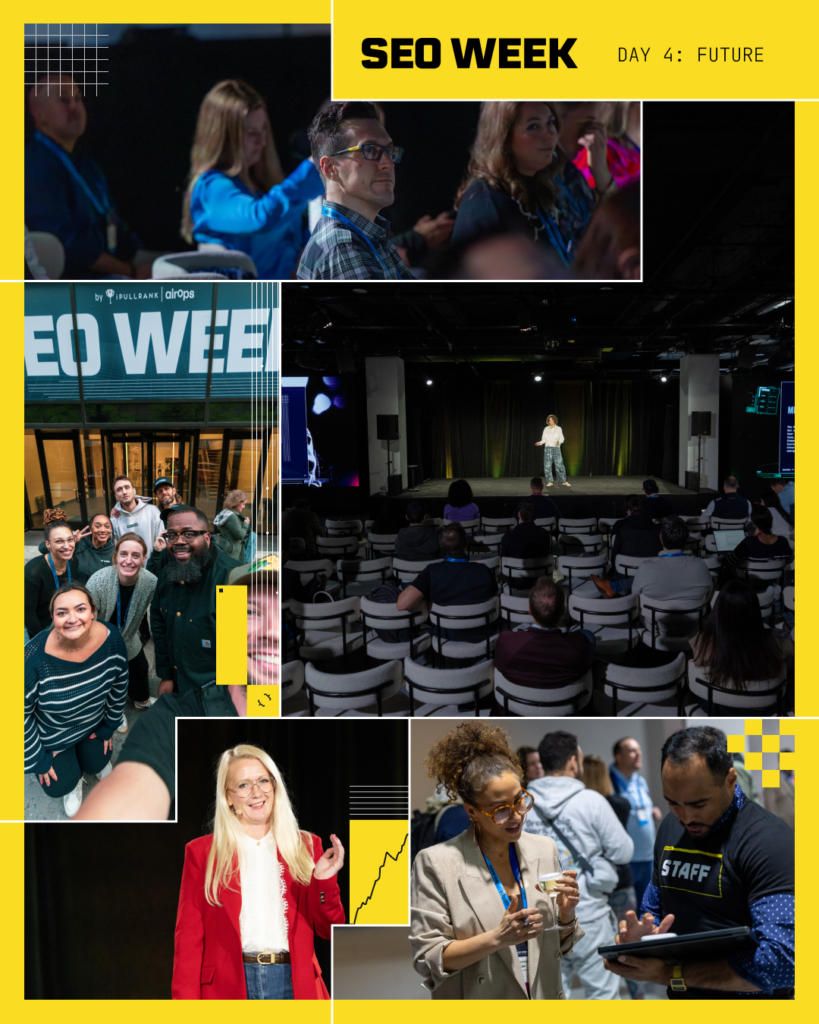
People stuck around. Nobody seemed particularly eager to leave. There were plenty of hugs, promises to stay in touch, and last-minute introductions.
Exactly the kind of ending you hope for.
Final Thoughts on Day 4
The Future theme could have easily turned into four hours of predictions and hot takes, but this was a seriously intelligent and clever crowd so it became something much more useful.
The speakers showed that while technology is changing rapidly, many of the things that matter most remain surprisingly consistent: trust, relationships, adaptability, curiosity, communication, creativity, and good judgment.
The tools, the interfaces, the platforms will all change. But the people willing to learn, experiment, collaborate, and stay curious will continue to find opportunities.
And you know what? That’s a pretty good note on which to end SEO Week 2026.
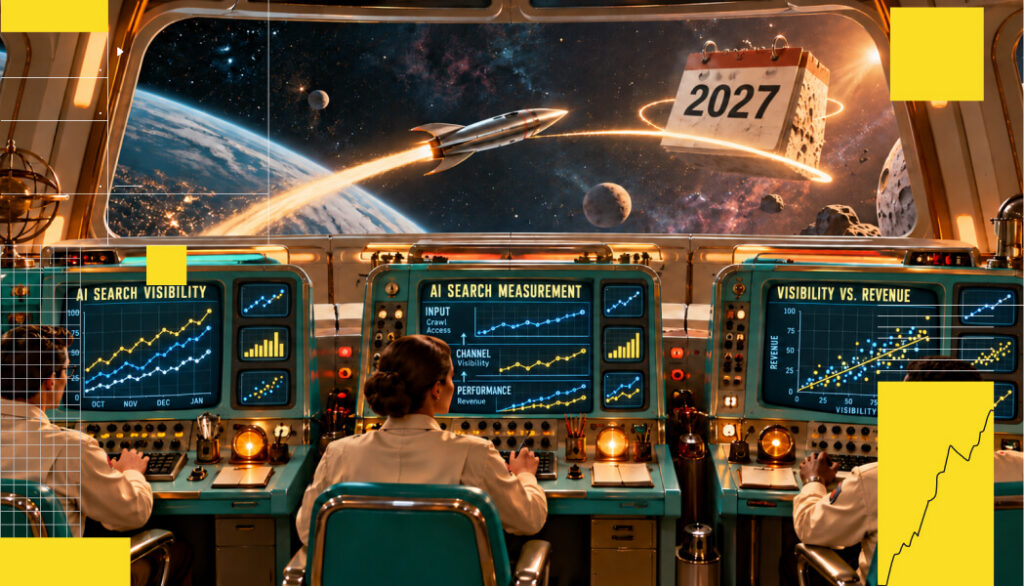
See you in 2027.