
I got my start in content by editing articles for a site that lived and died by clicks. We didn’t use the word “clickbait” (not out loud), but that’s exactly what it was. I’m not proud of headlines like “3 Frustrating Toyota Tacoma Problems That Send Drivers Into a Rage” or “Aaron Rodgers Sends Packers Fan a Clear Message With Latest Podcast Appearance”, but hey, I had to pay the bills.
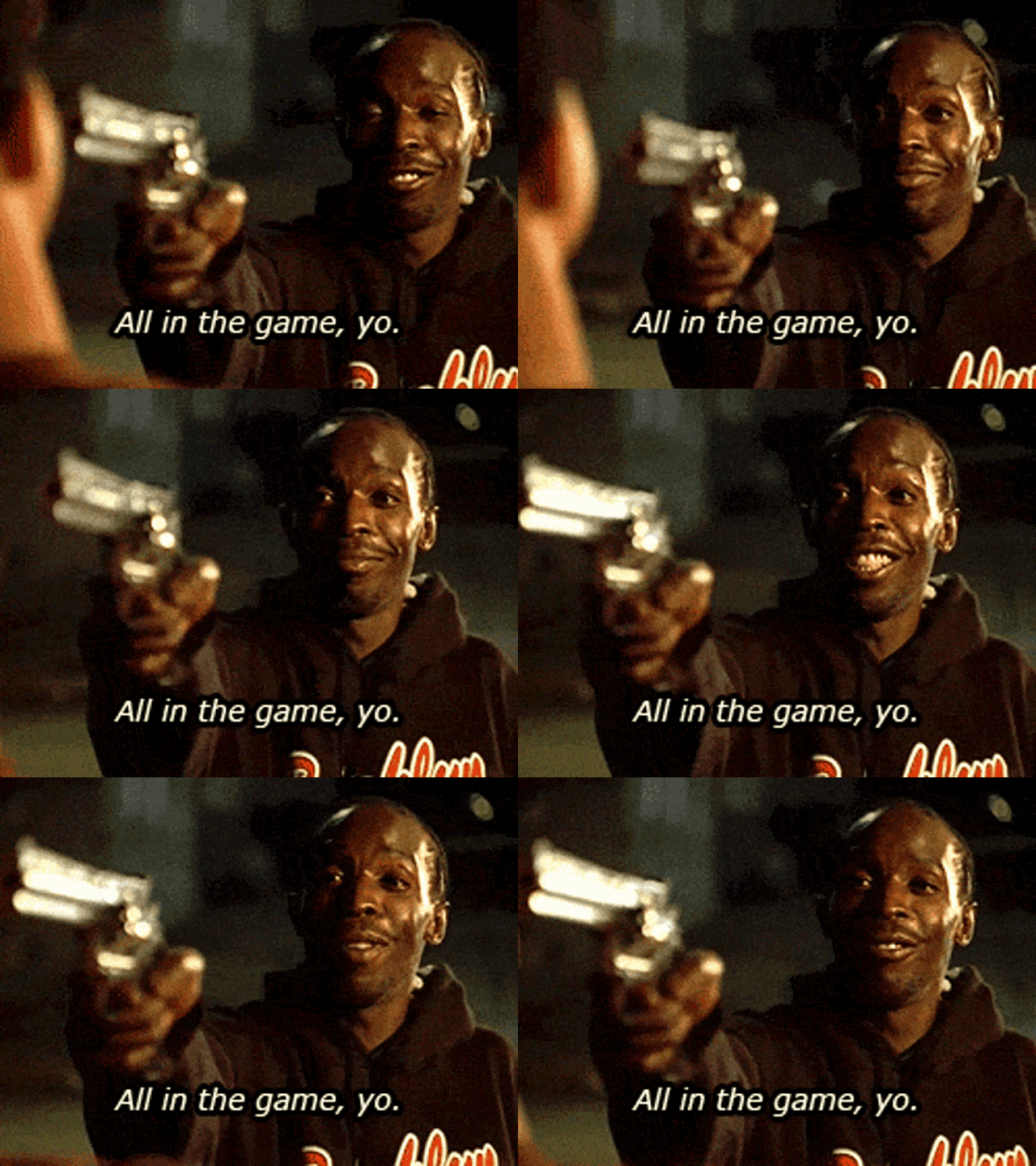
And in the wise words of Omar Little from the TV show The Wire:
Clicks equaled money, and making people feel something was how you got them to click. That was the incentive. That was the game.
These days, we’re seeing a new game forming. The incentive structure is shifting.
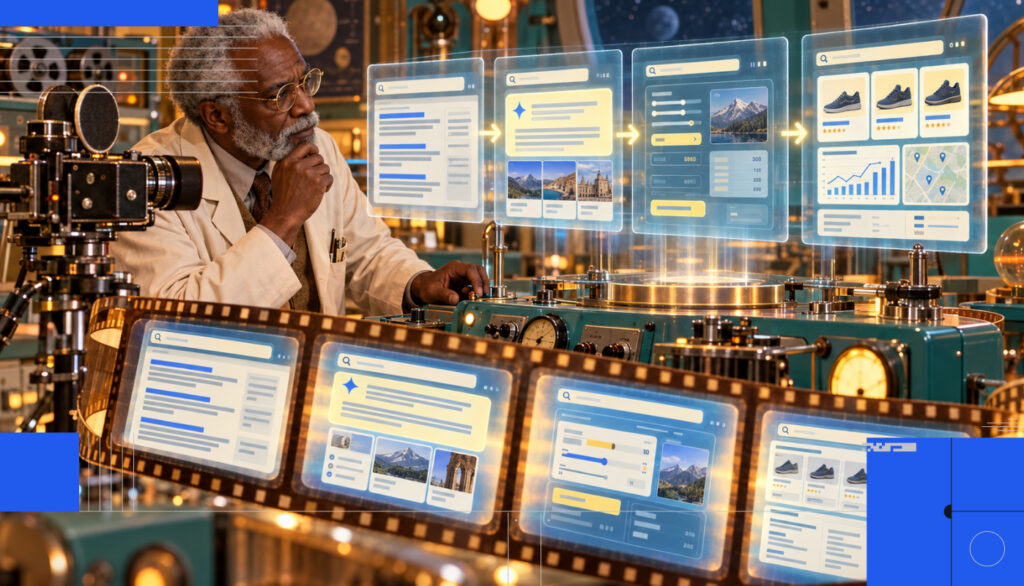
For many types of content, visibility now comes from being useful to something that isn’t human at all; not a reader, but an amalgamation of three different LLMs and a swarm of search, retrieval, grounding systems, summarizers, re-rankers, and answer engines I just (incorrectly) lump under the catch-all: “AI.”
It doesn’t feel outrage. It doesn’t get curious. It just scans, slices, and decides in a fraction of a second whether your page contains an answer. And what it sees first, namely your title, url slug, and a short text snippet, is the first and most decisive signal it has to go on. If those don’t scream relevance, you probably don’t get cited.
This means the headline’s job isn’t to tease; it’s to plainly declare what you know and who you’re useful to. It’s not clickbait; it’s AI bait. And once again, the game is rewarding those who know how to write to the system.
How an AI "Sees" Your Page: The Snippet-First World
Contrary to what many assume, an AI doesn’t “see” your webpage in its entirety. It doesn’t load the full HTML, parse the layout, or admire your design. Instead, As Dan Petrovic explains in How GPT Sees the Web, its first interaction is with a small, ruthlessly efficient packet of data: the page title, the URL, and a short text snippet.
When an LLM is grounding an answer via search, this is the initial context it’s given to decide whether your page is worth retrieving at all.
This is the core idea behind what we at iPullRank call Relevance Engineering: intentionally shaping content so its meaning is legible at the exact moment a system is deciding whether your page is useful. Before design, before UX, before persuasion — relevance has to be established.
Think of it as a high-stakes, single-chance audition. If that preview doesn’t scream “I have the answer!” for the user’s query, the AI will logically and instantly move on to a source with a stronger, more relevant signal.
It is an automated process of elimination designed for maximum efficiency. The AI’s decision to “click” and investigate your page further is won or lost in this initial glance, making the quality of that preview paramount.
Not to mention, even when a page is retrieved, the model still isn’t consuming it all at once. It’s evaluating the content in constrained windows, pulling only the portions most likely to resolve the question at hand.
Tools like Relevance Doctor exist to diagnose this exact moment: what signal your page sends in that first interaction, and whether it’s strong enough to survive the cut.
From Human Clickbait to "AI Clickbait"
Over the years as the web evolved, headlines changed as well.
You can think of headline evolution like this:
- Early SEO (Late ‘90s to late ‘00s): Keywords signaled topical relevance (“Fixing Crawl Budget Issues”)
- Content marketing era (Early to mid 2010s): Curiosity and emotion drove clicks
- Social era (Late ‘10s to early ‘20s): Outrage and intrigue maximized engagement
- AI Search era (today): Explicitness and semantic density determine inclusion
The incentive hasn’t changed. Visibility still rewards alignment. What’s changed is who’s doing the selecting.
You can see this incentive shift play out in real traffic patterns.
Below is an anonymized traffic chart from a content site that leaned heavily on curiosity-driven, emotionally charged headlines. For a few years, that approach performed extremely well by optimizing for human behavior: intrigue, open loops, and the promise of a payoff after the click.

That strategy wasn’t wrong. It was perfectly aligned with the distribution systems of the time. But as discovery began to move upstream into AI-powered summaries, re-rankers, and answer engines, the same ambiguity that once drove clicks became harder for machines to interpret.
When the selector changes, the headline has to change with it.
That same snippet-first, elimination-driven efficiency leads to a new way of thinking about titles and snippets: a concept we’ll call AI Clickbait. But unlike its human-focused cousin, it’s about radical clarity.
Let’s look at a real-world example of an old-school title and see how it would have to change for today’s game.
To do that, we’ll pull out a certified banger from the archives, written by none other than the founder of iPullRank, 2025 Search Marketer of the Year, and my boss (please don’t be mad at me): Mike King.
This 2016 headline was a masterclass in playing to the human incentive:
“How I Sped Up My Site 68% With One Line of Code.”
Certified banger. I want to click that right now.
But that headline would for sure be ignored by an LLM. A machine isn’t curious; it’s a logician. It can’t process the intrigue. The title offers a compelling result but hides the actual subject matter, giving the AI nothing concrete to latch onto.
For today’s AI-first world, you’d have to flip the formula and close that information gap instantly:
“How to Improve Page Speed Using the rel=prerender HTML Attribute”
Definitely not as catchy. However, that’s the version you write when the reader is a summarizer, not a person. Just topic, method, and outcome.
Human-Optimized | AI-Optimized |
|---|---|
“This One Line of Code Changed Everything” | “How to Improve Page Speed Using rel=prerender” |
Here are a couple of examples from the BBC news site. Do either of these inspire you to click and find out what they’re talking about?

You’re not trying to trick the AI; you’re trying to give it the most efficient signal possible. It proves that the core of the game remains the same: you have to know your audience. The only thing that’s changing is who (or what) you’re playing to.
Is It Time to Rethink Title Tag Length?
For years, SEOs, editors, and writers were taught to treat 60 characters like gospel. Not because Google cared about brevity, but because that’s where the snippet cut off in search results. Anything beyond that risked getting truncated.
In this guide to page titles created by Screaming Frog, these are the recommended title length maximums and minimums:
- Title Maximum Length – 580 pixels or 60 characters.
- Title Minimum Length – 200 pixels or 30 characters.
But AI doesn’t operate under a visual pixel constraint. It’s not laying out a search results page. It’s parsing meaning. Truncation doesn’t matter as much anymore; data loss does.
As written in this article by Krishna Madhaven at Microsoft, “Your page title, description, and H1 tag (the top-level HTML heading) are important signals AI systems use to interpret purpose and scope.”
The real risk isn’t your title getting cut off. It’s your most important concepts never making it into the snippet that gets passed to the LLM.
Take an old-school headline like:
“Fixing Crawl Budget Issues” (26 characters)
It’s short and technically accurate, but semantically flat. Instead try:
“How to Fix Crawl Budget Issues That Prevent Googlebot from Indexing Your Site” (77 characters)
It’s longer, but also denser: how-to intent, crawl budget, Googlebot, indexing problems. It gives the AI more reasons to believe your page directly addresses the user’s query. Not just “this is about SEO,” but “this is about exactly the issue you asked about.”
In a small internal analysis of one site, we compared high-ranking pages that were cited by AI systems against high-ranking pages that were not. While both groups performed well in traditional search, pages that were cited tended to use longer, more semantically dense titles on average.


This doesn’t prove that longer titles guarantee more AI visibility. But it does suggest something worth testing further: when relevance is evaluated programmatically, titles that surface more context upfront may have an advantage.
The takeaway isn’t “write longer titles.” It’s to stop treating length as the constraint and start treating meaning as the variable that matters.
The goal isn’t to jam in keywords; it’s to front-load meaning.
How to Craft a Headline for an AI-First Interface
Writing an AI-legible headline is about removing ambiguity at the moment of evaluation. Screaming Frog suggests following these best practices for page titles:
- Concise
- Descriptive & Relevant
- Unique
- Includes Brand
- Optimal In Length
- Enticing
A practical way for marketers to approach it:
- Start with the question your page answers. If you can’t phrase it as a question, the page probably isn’t answer-shaped yet.
- Name the core entity and problem explicitly. Don’t assume prior context.
- Front-load meaning, not modifiers. Lead with what the page is about, not how impressive the result is.
- Reduce intrigue that hides subject matter. Curiosity gaps work on humans; they slow down machines.
- Sanity-check for isolation. If the title were stripped of its surrounding page, would its purpose still be obvious?
As Krishna writes, “Page titles should clearly summarize what the content delivers, using natural language that aligns with search intent.”
A New Title Length Best Practice Worth Testing
This isn’t about throwing out everything you know about SEO. It’s about recognizing that the rules of visibility are evolving, and the audience is changing.
You’re no longer writing just for humans. You’re also writing for models that don’t scroll, don’t skim, and don’t guess. They parse titles, weigh snippets, and choose what to cite based on how clearly your content signals that it’s an answer.
But let’s be real: not every headline needs to be AI Clickbait. If your content is built for humans (email, social, or storytelling) then cleverness still has its place. A good curiosity gap still works where curiosity lives.
The point isn’t to kill creativity but to optimize for the interface you’re speaking into.
When the goal is LLM visibility, AI Overviews, or zero-click citations, semantic clarity wins. In those cases, your headline isn’t a hook. It’s a claim.
So experiment. A/B test longer, clearer titles. Revisit old blog posts that rank well but get ignored by AI search. Give your best content a second chance by making it unmistakably answer-shaped.
Because like Omar said, it’s all in the game. And these days, the game picks the clearest answer.